Custom DBC Ceramic Substrates: Thickness, Copper Layers, and Supplier Selection Guide
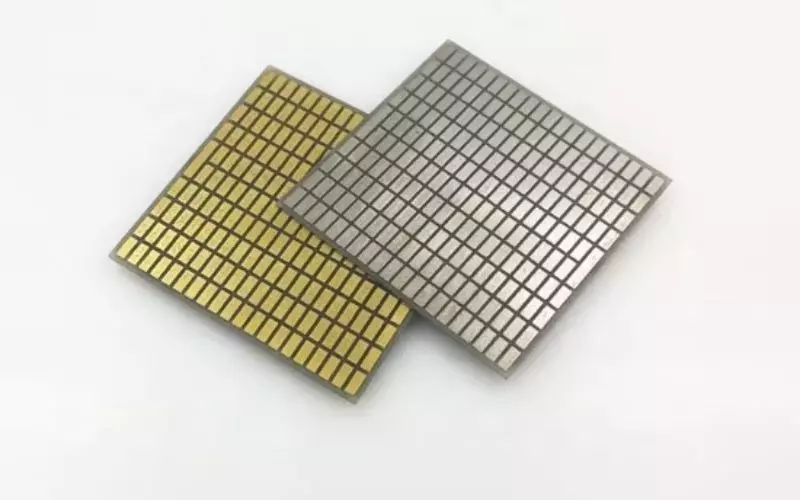
You need custom direct bonded copper (DBC) ceramic substrates, but standard sizes would not fit your power module design. This guide shares information on ceramic thickness, copper layer options and what to consider when searching for suppliers that can provide you with your specific needs at the quantity you require.
What Ceramic Thickness Options Are Available for Custom DBC Substrates?
The alumina DBC substrate is supplied in five sizes: 0.25mm, 0.38mm, 0.50mm, 0.63mm and 1.0mm. These are suitable for normal heat and voltage requirements in typical IGBT modules and motor drives.
Custom thickness is important if you are looking to obtain improved voltage protection or if you are working with higher power. The alumina ceramic can be produced by the supplier from 0.2mm to 3.0mm. Over 1.5mm will be a longer time as it’s specialty work.
The thickness of alumina and AlN
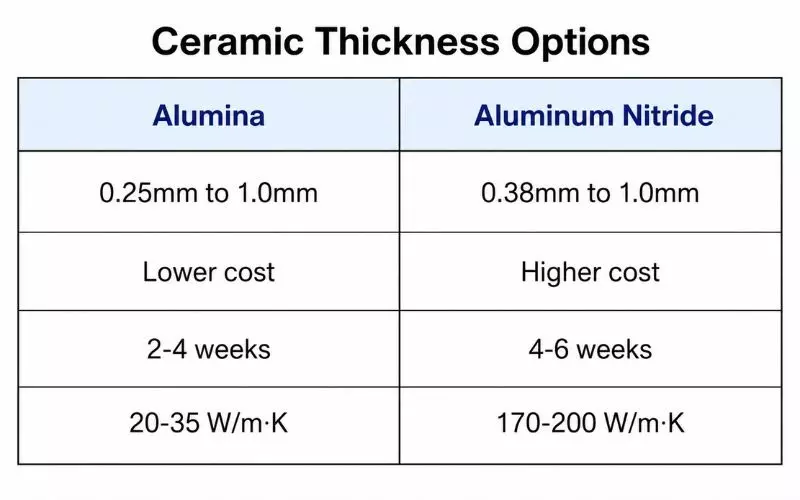
Alumina is available in a range of size 0.25mm to 1.0mm for most of the custom jobs. It is price competitive and is quicker to ship as there are more suppliers that stock raw alumina ceramic sheets.
This is not the case for aluminum nitride. AlN will cost more than other materials and is not readily available, so custom orders will typically begin at 0.38mm. Aluminum nitride substrate is rarely thin, since it has a high thermal conductivity ranging from 170 to 200 watts per meter kelvin, which is able to dissipate heat very effectively and so thin versions are not needed.
The effect of thickness on performance
The thicker the ceramic the higher the voltage. The alumina substrate with thickness of 0.63mm can withstand the insulation voltage of 3.5-4.0KV, and the thickness of 1.0mm can withstand the insulation voltage of 5.0KV. In grid inverters and EV charging, thicker ceramic decreases the failure risk.
The tradeoff is thermal resistance. More ceramic material results in a longer heat path from the chips to the baseplate. At normal thickness, aluminum nitride can frequently be used in modules where temperature control is most critical, a situation that is often the case when a thick alumina is not suitable.
How Does Copper Layer Thickness Impact DBC Performance?
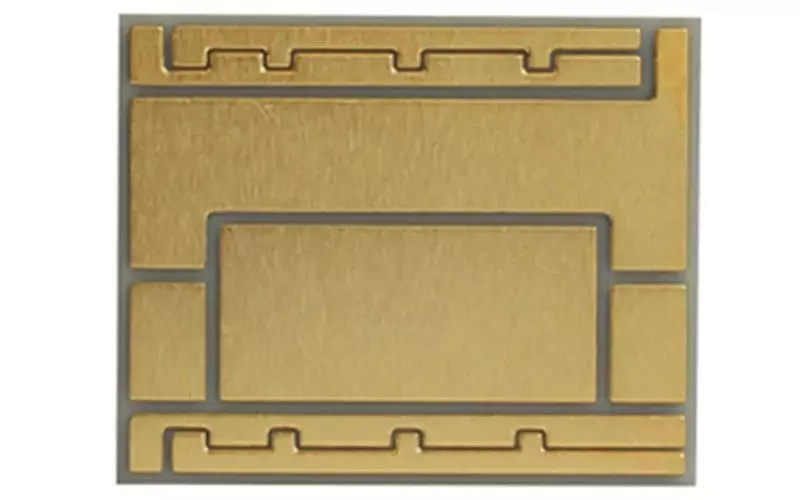
The thickness of copper used in DBC is 0.2mm-0.6mm. Most power module manufacturers prefer to use 0.3mm or 0.4mm copper as it offers a good compromise between current capacity and cost.
Current capacity/cycling heat.
A 0.3mm copper layer is able to carry 150-200 amps per square inch. The capacity increases to 250-300 amps per square inch at 0.5mm copper.
Copper thickness affects thermal cycling survival. Thinner copper from 0.2mm to 0.3mm bends more during temperature changes, which helps in some cases. Thicker copper (0.5mm to 0.6mm) does not flex and will cause stretching of the ceramic bond during heating and cooling.
When using very thick copper, modules can fail prematurely compared to moderate thickness copper. Thicker is not always the answer.
Single vs Double Sided Copper
Copper is only on one side of the ceramic in Single-sided DBC. This is used for LED substrates or for simple power circuits, where copper is required only on the circuit side.
Copper is bonded to both surfaces with double-sided DBC. The lower copper layer is soldered/brazed to the baseplate/heat sink. Double sided DBC is required for mechanical and thermal connection for most of the IGBT modules and power electronics.
What Copper Layer Configurations Can Suppliers Customize?
Symmetrical vs asymmetrical copper.
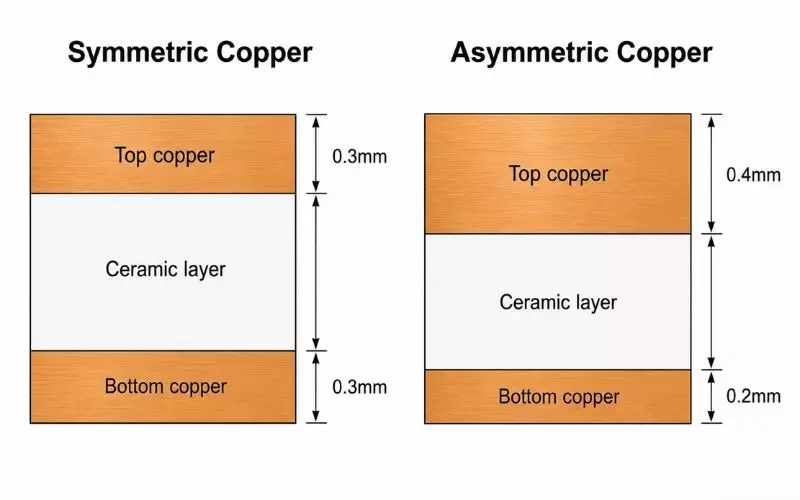
Symmetric, as in 0.3mm equal thickness on top and bottom. This is a standard product most suppliers offer.
Asymmetric uses different thickness. You can have 0.4mm copper on top and 0.2mm on bottom for just brazing. This reduces the cost of copper in large orders.
Not all suppliers offer asymmetric copper custom. You need a maker who manages the bonding process in-house and employs various copper foils within one furnace cycle.

Custom circuit patterns
Some suppliers will pattern your circuit before delivery. This eliminates the need for a photolithography and etching process in your production line.
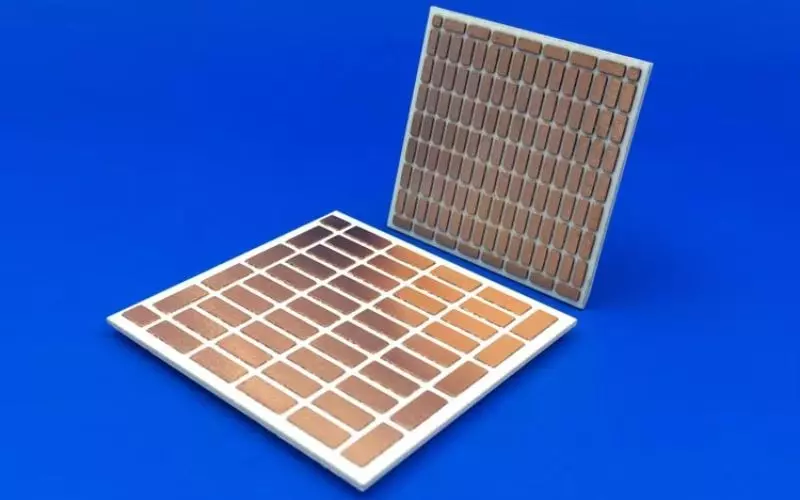
Custom DBCs require a minimum order of 500 to 1,000 pieces, as the supplier will have to make photomasks for your circuit design. The lead time is extended to 6 to 10 weeks as compared to 4 to 6 weeks for blank DBC.
How Do You Specify Custom DBC Requirements to Suppliers?
The material and thickness of the ceramics.
Identify the ceramic type (such as alumina, aluminum nitride or silicon nitride) and the thickness to the correct tolerance. For instance, “Alumina 0.50mm plus or minus 0.05mm” or “Aluminum nitride 0.38mm plus or minus 0.03mm.
Copper thickness spec
Specify the thickness of copper on top and bottom separately. Top copper 0.4mm, bottom copper 0.3mm (asymmetric), or Both sides 0.3mm (symmetric).
Indicate whether you require oxygen-free copper (typical for DBC) or special purity (required for high reliability applications).
Size and dimensions
Provide length, width and size tolerance. Standard DBC panels are available in sizes such as 114mm x 140mm, but custom sizes can be used for optimized layouts.
Surface finish
Choose wire bonding finish: nickel/ gold plating or OSP for SMT assembly or bare copper for self-finish.
Nickel and gold plating are done as an additional step after DBC bonding and patterning, which requires 2-3 weeks.
Quantity and timing
Describe the number of pieces required and when. Include whether it is a one-time or recurring event. Suppliers reduce MOQ and prices for continuing custom orders.
What Should You Check Before Choosing a Custom DBC Supplier?
In-house vs outsourced production
Inquire about whether the DBC supplier has bonding furnaces or outsources.
Suppliers who do outsource bonding have less control of custom specs. They do run on MOQ and timing of the vendor; so, if there are larger customers, your order may be delayed.
In-house manufacturers tweak the furnace settings based on your copper set-up and ceramic thickness. They don’t have third party minimums, so they’re able to take on smaller custom runs.
Minimum order quantity
The minimum amount of standard DBCs can be 50 to 100 pieces. Custom specs go up to 200-500 pieces as furnace time is set aside and custom cut ceramic sheets are ordered.
If you are prototyping or are running a low volume, look for suppliers that have custom sampling programs. Others offer small quantities, between 25 and 50, at a premium price to attract new customers.
Lead times
Standard DBC substrates are available from stocked suppliers in 2-4 weeks. Alumina, aluminum nitride (AIN) custom thickness or copper take 4-6 weeks, 6-8 weeks respectively.
The extra time comes from cutting custom-thickness ceramic sheets from larger panels and scheduling furnace runs according to the thickness of copper you need.
Rush orders do occur but are 30-50% more expensive.
Engineering help
Good custom DBC suppliers assist you select the right specs. They suggest the thickness of ceramic required for your voltage requirements, and the thickness of copper required for your current load. When a supplier only quotes without finding out about your application it is a red flag.
What Are Typical MOQ and Lead Times for Custom DBC Substrates?
These are the different custom orders and what they need:
-
Alumina custom thickness: 200-300 pieces, 4-6 weeks.
-
AlN Custom Thickness: 300-500 pieces, 6-8 weeks.
-
Copper symmetric: 200-400 pieces, 4-5 weeks custom.
-
Custom copper asymmetric: 400-600 pieces, 5-7 weeks
-
Pre-patterned circuit: 500 to 1,000 pieces, 6 to 10 weeks
Numbers are subject to change based on the supplier and production schedule.
Prototype vs production pricing
Prototype runs that are less than 100 pieces will be 50 to 100 percent higher per piece than production runs that exceed 500 pieces. The price break typically comes at 200 to 300 pieces, which is when the set up costs are distributed over additional pieces.
If you are testing a new custom DBC specification, ask for both prototype and volume pricing to budget for both.
FAQ
1. Is it possible to order custom DBC with different ceramics on both sides?
No. DBC substrates are made with one ceramic surface and copper on one or both sides. Two different types of ceramics cannot be bonded together.
2. What is the thinnest custom DBC available?
Most suppliers will go down to 0.2mm alumina or 0.25mm AlN. Thinner is easily broken when being made and assembled.
3. What is the difference in cost between custom thickness and standard thickness?
Custom thickness is 10-25% above the base DBC price, depending on the thickness deviation and quantity of order.
4. Do suppliers provide custom DBC with holes?
Yes, after bonding by CNC machining or laser cutting. This will incur extra cost and time, so specify hole patterns when getting a quote.
5. What is the thickness of the copper?
The tolerance is normally plus or minus 10 percent, 0.3mm copper might be 0.27mm to 0.33mm. More stringent control is more expensive.
6. Is it possible to use the same DBC substrates for all projects?
Typically not, but automotive or aerospace requirements require IATF 16949 or AS9100 certification. Please consult for custom specs.
7. Is it possible to get custom DBC with 3 copper layers?
Some manufacturers have multi-layer DBC, but it requires high MOQs and a long lead time from 10 to 12 weeks. Rare outside aerospace.
Conclusion
The custom DBC ceramic substrates provide you with the desired thickness and copper of your power module. Choose suppliers that have their own bonding and MOQ terms, and provide engineering assistance. Obtain prototype prices, not production prices. Review lead times prior to committing to custom specs for project schedule.