The temperature and atmosphere directly influence ceramic sintering. These factors affect volume shrinkage, improvements in strength and hardness, density increases, and grain phase transformations in ceramics. Let’s reveal the correlation of temperature, atmosphere, and performance in ceramics technology and the sintering process.
What is Ceramic Sintering?
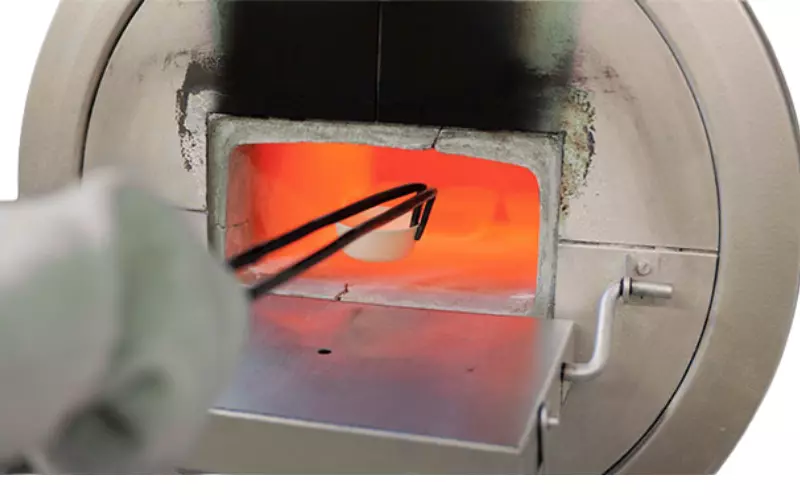
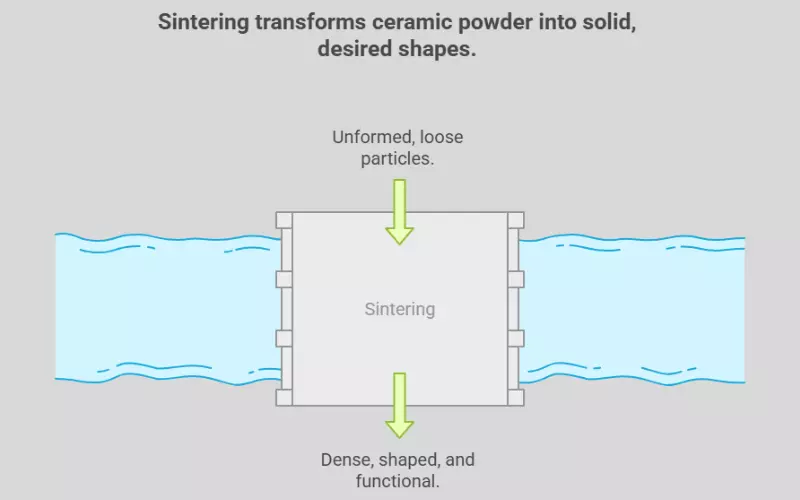
Sintering is the basic process in ceramic manufacturing from the powder mixers. It is a thermal transformation of ceramic materials into the desired shapes at a designated temperature.
The solid-state diffusion is the main phenomenon in the sintering process. The characteristics of the sintered materials, such as porosity, are controlled strictly based on the previously determined standard.
Sintering is a complicated method regulated by some factors such as temperature, pressure, atmosphere, and sintering time. These factors fix the properties of your desired final product. Therefore, ceramics manufacturing depends much on the properly maintained sintering techniques.
What is The Impact of Temperature in Ceramic Sintering?
Maintaining proper temperature is the most important factor you must remember in the sintering process. It determines the materialistic characteristics of the ceramic component. It regulates the atomic bonding and sintering of the ceramic powder to transform it into a solid component.
Any incorrect temperature can cause a serious failure in making high-performance ceramics.
Sintering is a precisely regulated thermal process that fixes the atomic diffusion rate and then the microstructure of the final product. It determines the grain size, porosity, and finally the hardness, strength, and durability of the product.
You have to understand the impact of temperature on the microscopic level of sintering to understand its role in atomic transformation.
Temperature as the Diffusion Catalyst:
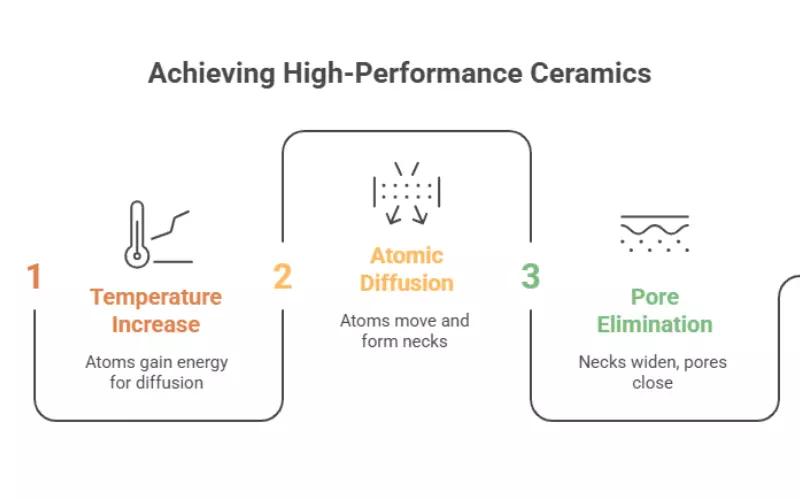
As you know, sintering is a thermal process that bonds individual atoms together by eliminating the porosity(space) between them. This is gained without melting the ceramic material into a liquid. The purpose is to manufacture a solid component with specific physical and mechanical properties.
Temperature works as the catalyst of diffusion in this process. Here, the heat yields the energy required for the atomic movement. When the temperature of the material rises, the atoms start to diffuse at the connection point and create necks to cross the gaps.
Effects of Temperature on Density and Strength:
The primary purpose of the sintering process is to achieve the required density. Because higher density directly correlates with higher durability and mechanical strength. You can close most of the pores of the powder material through the diffusion process by maintaining proper temperature.
In the results, you will get a strong and solid component that can perform according to your design.
Results of Incorrect Temperature in the Sintering Process:
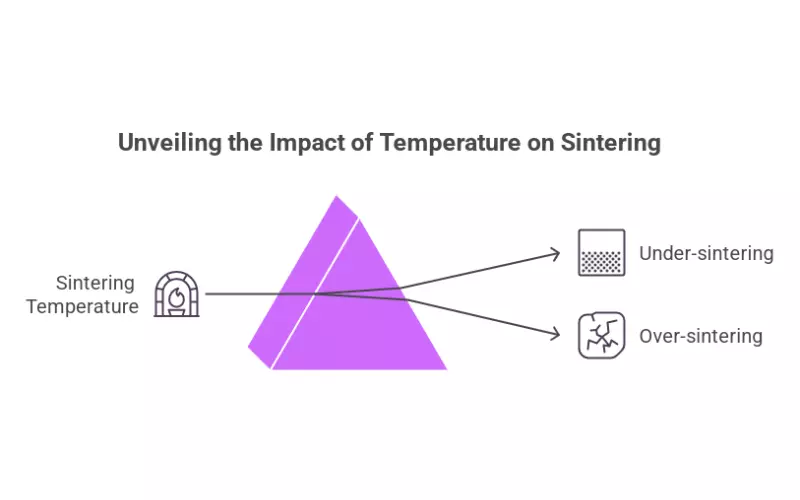
The ideal ceramic sintering temperature range is limited. Any deviation from it can create significant flaws.
-
Under-sintering: The Risk of Fragility
If you apply too low a temperature in the sintering or keep the temperature for too short a time, insufficient atomic diffusion will occur. This results in high residual porosity of the part. This excess porosity makes the final product fragile and susceptible to breakdown under load.
-
Over-sintering: The Risk of Brittleness
Over-sintering occurs when you apply too high a temperature for a long time. It eliminates the porosity and promotes uncontrolled grain growth. These excessively large grains make the material harder. Thus, the final component becomes brittle.
It leads to the cracking and chipping of components, which is a common occurrence in over-sintered ceramic material.
Effect of Temperature in Sinterization: A Summary Table
|
Temperature |
Effect On Material |
Results |
|
Too low |
Poor diffusion, excessive porosity |
Weak component prone to breakdown |
|
Optimal |
Proper diffusion and perfect grain growth |
High-strength and durable parts |
|
Too High |
Over-grain growth and excess densification |
Brittle parts with cracking and chipping risk |
What is The Impact of Atmosphere in Ceramic Sintering?
The influences of the atmosphere in advanced ceramic sintering are described below:
-
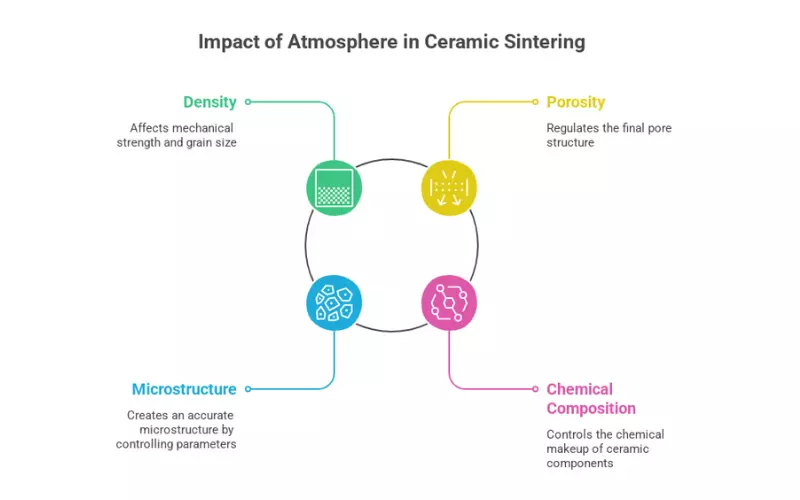
Density: The atmosphere fixes the rate of densification and grain size of the material, which is essential for the mechanical strength.
-
Porosity Regulation: The atmosphere helps to regulate the final porosity of the material.
-
Microstructure: The proper sintering atmosphere assists in creating an accurate microstructure by controlling some parameters.
- Chemical Composition Control: The sintering atmosphere controls the chemical compositions of the ceramic components.
Different Sintering Atmospheres and Their Functions:
|
Atmosphere |
Functions |
|
Air(Oxidizing Atmosphere) |
It is the most cost-effective atmosphere that uses ambient air to maintain a standard oxidation environment. You can use it for sintering clays or some oxide ceramics. |
|
Inert Gas(Argon/Nitrogen) |
An inert atmosphere is used to prevent unwanted chemical reactions. Most metal sintering is accomplished in inert conditions. |
|
Vacuum |
A vacuum atmosphere removes contaminants and improves purity. It allows processing highly reactive materials in a vacuum environment. |
|
Reducing Atmosphere(Hydrogen) |
A reducing atmosphere controls oxidation by removing oxygen. It improves the bonding and density of your ceramic components. |
What is The Relationship Between Temperature, Atmosphere, and Sintering Performance:
The relationship between temperature and atmosphere influences the overall performance. Here is the breakdown of this complex relationship.
-
High Temperature and Air: If you perform sintering at high temperature in an ambient air atmosphere, you will be at risk of oxidation.
-
High Temperature and Vacuum: If you sonter at high temperature and at vacuum, it ensures high purity and improved density of the components.
-
Controlled Temperature and Atmosphere: When you accomplish sintering your ceramics at controlled conditions, it can create balanced, targeted strength and stability of the components.
-
Rapid Temperature Increase and Poor Atmosphere: When sintering is performed under rapid heating conditions, it can lead to cracking and defects in ceramic parts.
What Are Advanced Sintering Technologies in Modern Ceramics Manufacturing?
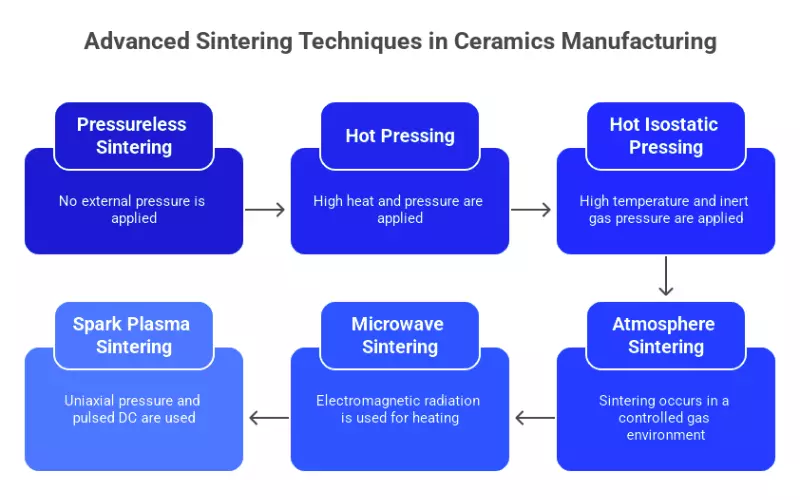
You can get different microstructures and performance of your final ceramic components by applying different sintering techniques. Commonly used advanced sintering techniques are:
-
Pressureless sintering: No external pressure is applied in this process.
-
Hot pressing: High heat and pressure are applied in it for rapid densification.
-
Hot Isostatic Pressing: High temperature and inert gas pressure are applied in this process.
-
Atmosphere sintering: The sintering occurred in a controlled gas environment in this technique.
-
Microwave sintering: This advanced sintering process utilizes electromagnetic radiation for heating materials.
-
Spark plasma sintering: This technique uses uniaxial pressure and high-intensity, low-voltage pulsed direct current (DC) to perform sintering.
Frequently Asked Questions:
What is the optimum temperature for sintering?
The optimum temperature for sintering is between 1006 and 1342 °C.
What are the factors affecting sintering?
The complex ceramic sintering process depends on some factors such as temperature, atmosphere, heating rate, and sintering time.
What are the three stages of sintering?
The three major stages of sintering are:
-
Presintering
-
Intermediate sintering
-
And final sintering
How many types of sinter are there?
There are three types of sinter:
-
Acid or non-fluxed sinter,
-
Basic or self-fluxing sinter,
-
Super basic or super-fluxed sinter.
How are ceramics made?
Ceramics are made by several steps, such as raw material extraction, extraction processing, forming, drying, glazing, and sintering.
Who Are The Leading Sintering Companies?
Advanced Ceramics Engineering Pte Ltd. is one of the leading sintering companies, renowned for fabricating high-temperature ceramic products.
Conclusion:
Manufacturing of ceramics is a complex controlled technique that follows some critical techniques like sintering. Ceramics manufacturers need to maintain proper temperature and atmosphere during ceramic sintering. A balanced sintering environment ensures accurate advanced ceramic production.