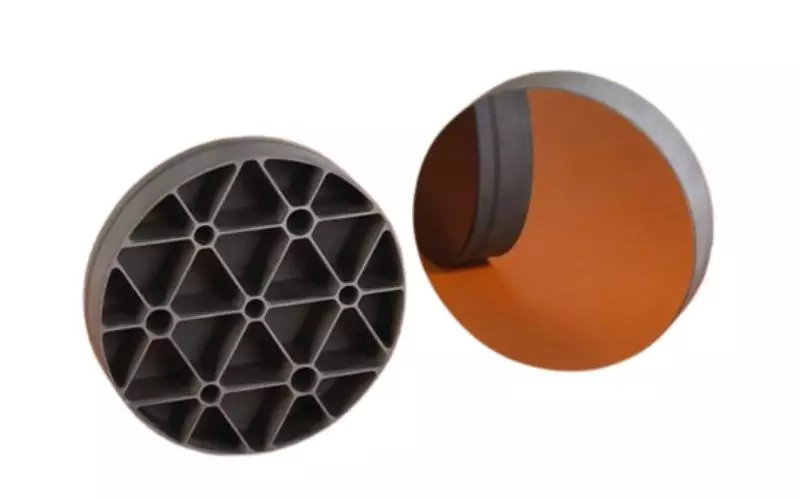
Glass mirror blanks add weight and warp from temperature changes in space. Silicon carbide mirrors deliver better thermal stability with 50% weight reduction. In this article, we will compare performance, verify material advantages, study applications in aerospace, and guide the selection of suppliers of SiC mirror blanks.
What Are Silicon Carbide Mirror Blanks?
Silicon carbide mirror blank is a substrate that polishes to a precision optical mirror. SiC mirrors use advanced ceramic instead of conventional glass.
Space presents extreme environmental conditions. The temperature varies from -150 °C to +150 °C. Glass mirrors can distort when exposed to repeated thermal cycling. Silicon carbide mirrors handle these conditions more effectively.
Chemical vapor phase growth method, reaction bonding, sintering method are used for production. Most applications in aerospace use reaction-bonded SiC mirrors for a balance of strong performance and manageable cost.
How Do Silicon Carbide Mirrors Compare to Glass?
Here’s how silicon carbide mirrors stack up against traditional materials:
|
Property |
Silicon Carbide |
Zerodur Glass |
Aluminum |
|
Density (g/cm3) |
3.2 |
2.5 |
2.7 |
|
Specific Stiffness |
Excellent |
Moderate |
Good |
|
Coefficient of thermal expansion (10 − 6/K) |
2.2 |
0.05 |
23 |
|
Thermal Conductivity (W/mK) |
120 |
1.6 |
237 |
|
Weight vs Glass |
50% lighter |
Baseline |
30% lighter |
|
Relative Cost |
Higher (3-4 times) |
Lower |
Moderate |
Note: CTE = Thermal expansion coefficient. The smaller the number the less distortion as a result of temperature change.
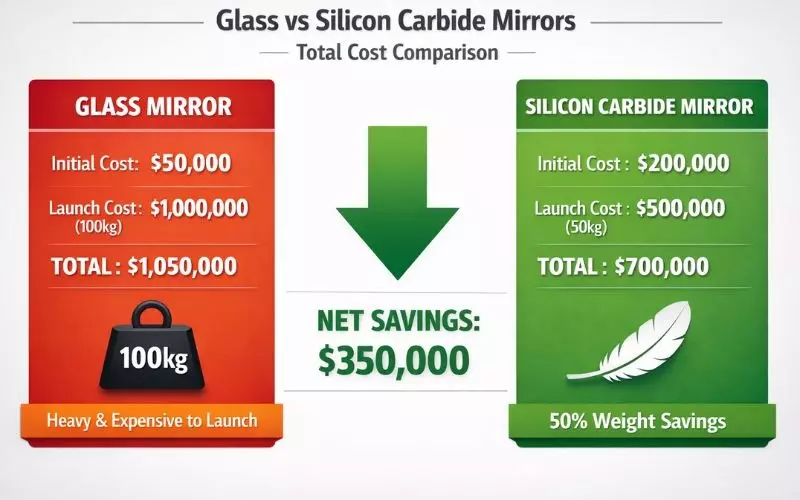
Its initial cost is 10000 USD per kilogram. The initial price of a 100 kg glass mirror is a million dollars. That same silicon carbide mirror weighs 50 kg, which would lead to a cost-saving of about half a million dollars at launch.
Glass has almost zero coefficient of thermal expansion. However, thermal conductivity is poor. The mirror is distorted by the temperature difference. The SiC mirror has 75 times faster thermal conductivity. This reduces the likelihood of thermal distortion.
Why Choose Silicon Carbide for Aerospace Mirrors?
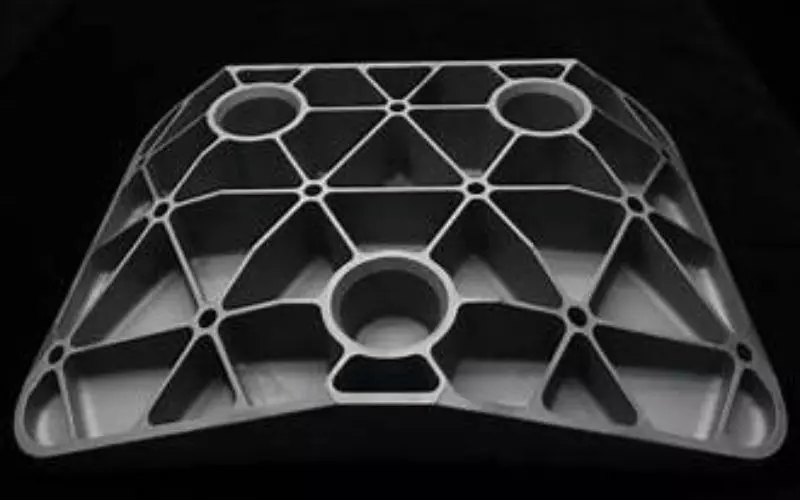
Excellent thermal stability
The space telescope faces temperature fluctuations per orbit. Silicon carbide mirrors tolerate these changes without losing optical precision. This material maintains rigidity throughout the temperature range.
Aluminum mirrors require an active cooling system that increases weight and complexity. The SiC mirror functions without extra thermal-control components.
Excellent rigidity weight ratio
Every kilogram effects the launch cost. Silicon carbide mirror blanks are half the weight of glass. One meter glass mirror is 100 kg. 50 kg of silicon carbide.
This 50kg weight reduction means a $500,000 reduction in launch costs. The material maintains rigidity and reaches thermal equilibrium quickly.
High thermal conductivity
Sunlight hits the mirror. If the thermal conductivity is low, the high and low temperature parts are created, and the shape of the mirror is distorted.
Silicon carbide mirrors quickly diffuse heat. The whole mirror evens the temperature in minutes. Image quality remains clear.
Dimensional Stability
Some glass materials can slowly change shape over long periods (gradual changes in shape). The SiC mirror maintains its shape for decades. The space telescope has been operating for 10-20 years. In-orbit re-polishing is not feasible.
What Are the Real Advantages and Disadvantages?
Glass/Zerodur Mirrors: Proven Technology, Weight Penalty
Advantages:
-
Lower material costs
-
Ultra-low thermal expansion
-
Proven spaceflight legacy
-
Multiple Certified Suppliers
Drawbacks:
-
Heavy weight - double launch cost
-
Vulnerability in handling
-
Low thermal conductivity
-
Time required for temperature stabilization
The Hubble Space Telescope uses glass (828 kg). In modern design, such a choice would not be repeated considering the current launch cost.
Silicon Carbide Mirrors: Performance Worth the Premium
Advantages:
-
Silicon Carbide Mirror reduces weight by 50%
-
Lower launch costs offset material costs
-
Excellent thermal conductivity
-
High rigidity
-
Temperature stabilized in minutes
Drawbacks:
-
3-4 times higher material cost
-
Thermal expansion coefficient is higher than zerodur
-
Fewer certified suppliers
-
Long lead time
The $200,000 SiC mirror reduces launch costs by $500,000. Net savings: $300,000. The ROI is clear when including the cost of the entire system.
Where Do Silicon Carbide Mirrors Perform Best?
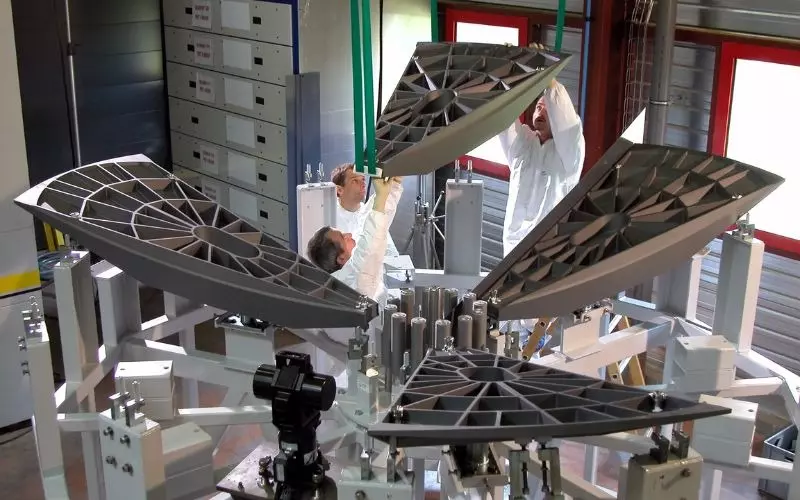
Space Telescopes
The James Webb Space Telescope uses beryllium, but many new designs choose silicon carbide mirrors. SiC mirrors can build larger telescopes within the launch constraints.
The 1.5 meter silicon carbide mirror is the same weight as the 1 meter glass mirror. With the same launch budget, you can get higher light-gathering power.
Earth Observation Satellite
Commercial imaging satellites photograph Earth in high resolution. Temperature changes occur rapidly - - every 90 minutes from sunlight to shadow.
Silicon carbide mirror blanks quickly stabilize temperature. Shorter waiting times mean more time per trajectory. This is directly linked to revenue for commercial operators.
Aerospace Laser Systems
High power lasers generate heat. SiC mirrors process several kilowatts of laser output without distortion. Thermal conductivity efficiently removes heat from the optical surface. Military and communication systems depend on this characteristic.
Ground-Based Telescopes
Adaptive optical systems adopt lightweight deformation mirrors. Silicon carbide provides rigidity and realizes precise shape control while reducing the actuator’s power. The weight of large mirrors is reduced, making installation easier.
How Do You Select the Right Supplier?
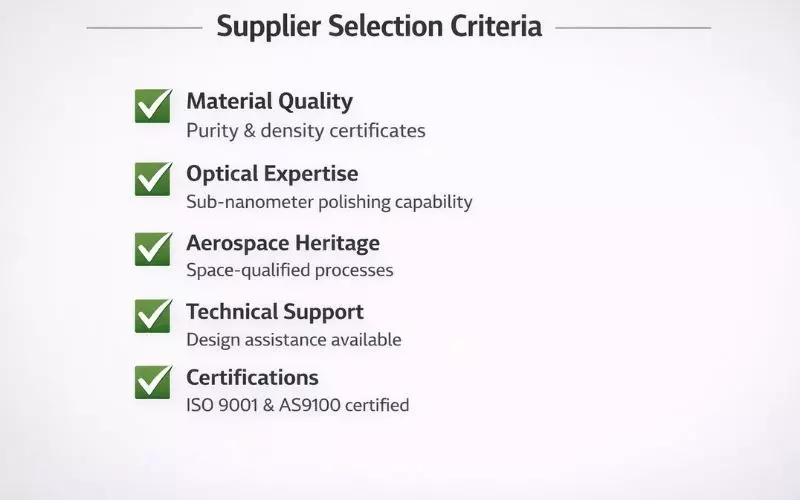
Do not choose by price alone. The key elements are:
Verification of material quality
Check the purity and density specifications of silicon carbide. High quality SiC mirror blanks require uniform characteristics. Obtain a certificate indicating density uniformity, purity level and thermal characteristics. If there is no test data, it means there is a variation between lots.
Optical Technology
Can they polish to sub-nanometer roughness? Silicon carbide mirrors require special technology. Request a sample showing surface accuracy <ω/20.
Aerospace Performance
Look for space-qualified processes. Do you have actual space missions? Companies without aerospace experience do not understand contamination control and testing protocols.
Technical Support
Will they help with mounting design analysis? Good suppliers become partners. Average vendors simply ship boxes.
Certification Requirements
Required: ISO 9001, AS9100, clean room facilities, material traceability.
What Manufacturing and Handling Considerations Matter?
Manufacturing Process
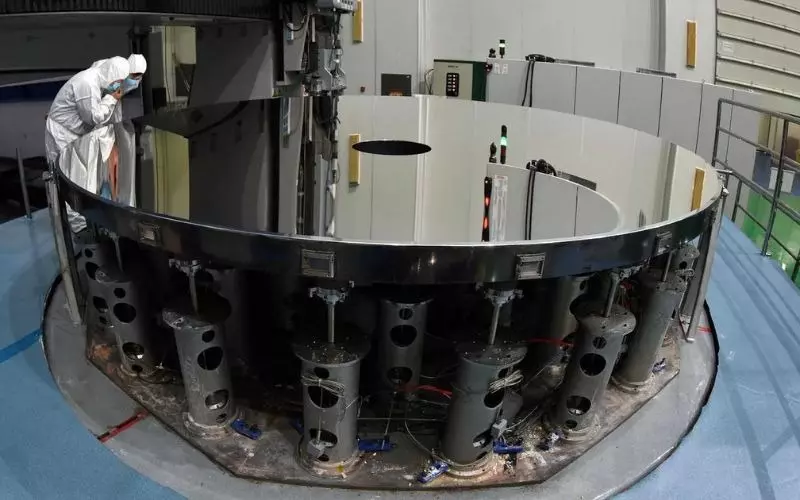
Silicon carbide is lower cost than CVD, but has better performance. After forming, the blank material is fired and ground to accurate dimensions.
Handling Requirements
Silicon carbide is a brittle material. When it falls, it cracks. Transportation requires dedicated packaging. Clean room environment is required for storage.
Technicians need training in proper lifting and mounting methods. The point load breaks the material.
Quality and Integration
Verify performance in surface measurement, material testing and thermal cycle testing. Installation design should consider the properties of silicon carbide. Use Kinematic Mount. Run thermal and vibration analysis before hardware construction.
Common Questions
What is the reason as to why silicon carbide mirrors are more costly than glass?
Silicon carbide mirror blanks are more difficult to produce and harder to polish. But the material premium in space applications is countered by savings of launch costs of $10,000 per kilogram.
What is the typical weight reduction effect of SiC mirrors?
Silicon carbide mirrors are about 50% lighter than glass. A 100kg glass mirror becomes 50kg in SiC. This reduces launch costs to orbit by $500,000.
How does thermal expansion coefficient (CTE) affect mirror performance?
The CTE of the silicon carbide is 2.2 × 10 − 6/K, higher than the zerodur glass. However, excellent thermal conductivity compensates for this. The mirror reaches uniform temperatures quickly and minimizes distortion.
Is silicon carbide able to get the quality of the surface of glass?
Yes. SiC mirrors have regularly attained surface roughness values of less than 1 nanometer and 1/20th wavelength accuracy of figures. Sophisticated polishing yields the same results as glass.
What is custom blank lead time?
The standard lead time for custom silicon carbide mirror blanks is 6-12 months. The sintering cycle alone takes several weeks. Please plan in advance.
Which space telescope uses SiC?
The Gaia Space Telescope and Herschel Space Observatory use the SiC mirror. Many Earth observation satellites also use silicon carbide optics.
How do you calculate ROI (return on investment)?
Compare the price of SiC mirror plus launch cost and the price of glass plus launch cost. The savings of 50kg at a price of 10,000 per kilogram is 500,000. Assuming that silicon carbide is increased by 200,000 dollars, you would still save 300,000 dollars.
Conclusion
In aerospace optics, silicon carbide mirrors achieve 50% lighter weight and superior thermal performance compared to glass mirror blanks. If launch costs and thermal stability are of utmost importance in space telescopes and satellite systems, choose SiC.
Please consult with us about the requirements of the optical system. Contact our engineering team for SiC mirror blank specifications and custom design support.