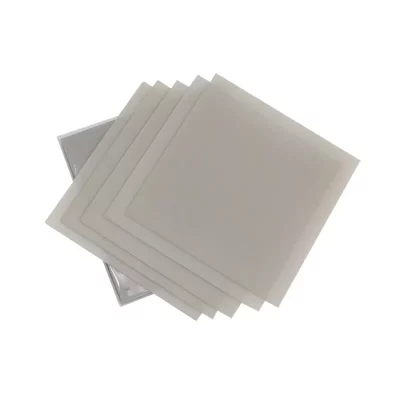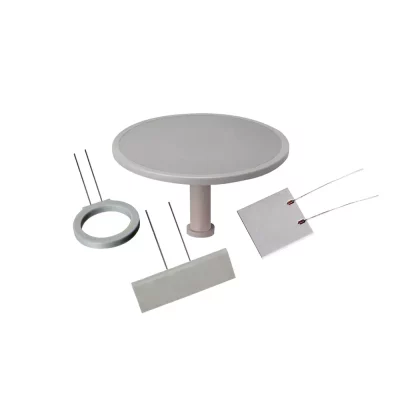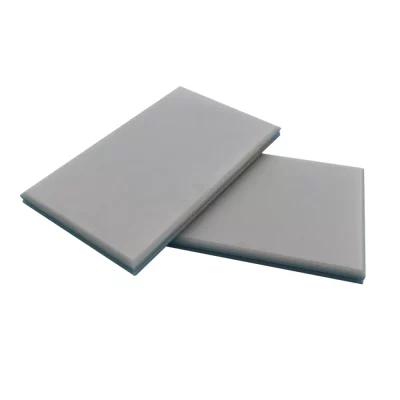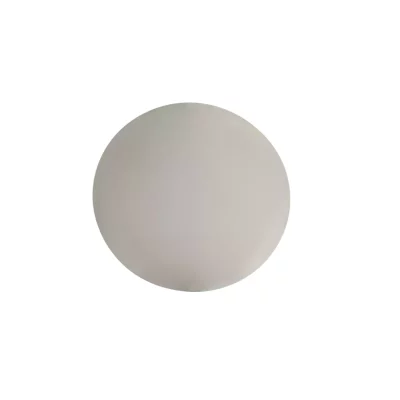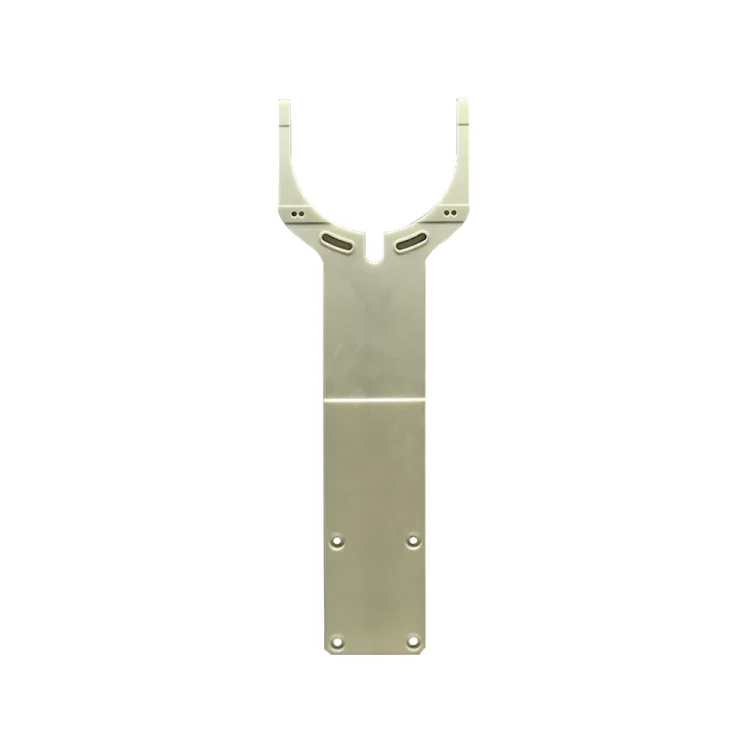
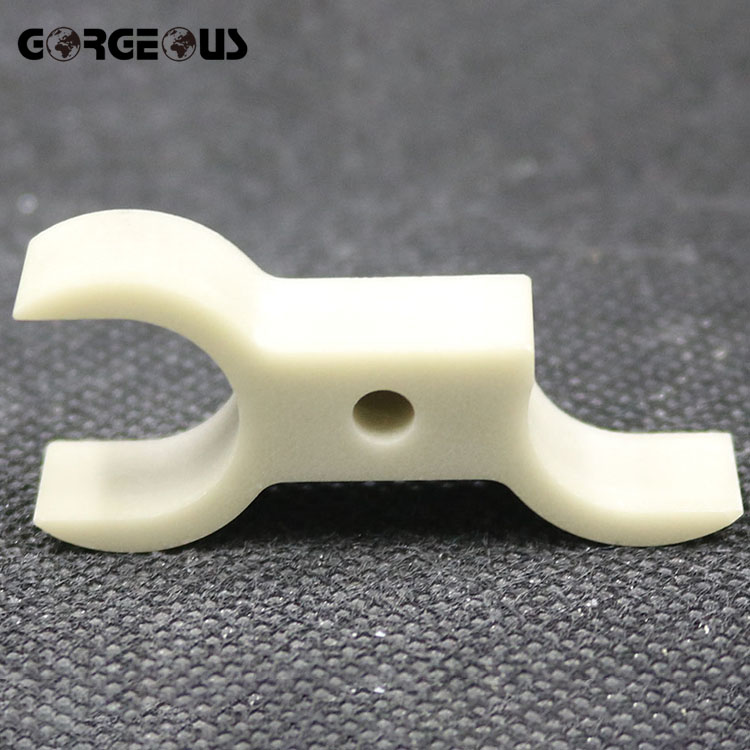
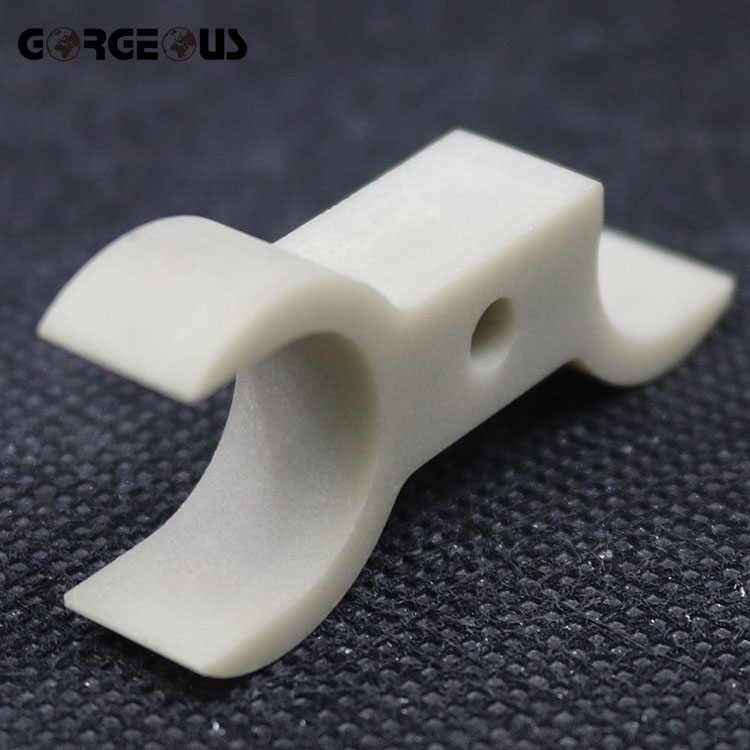
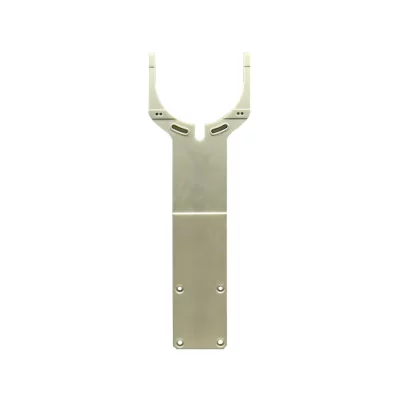
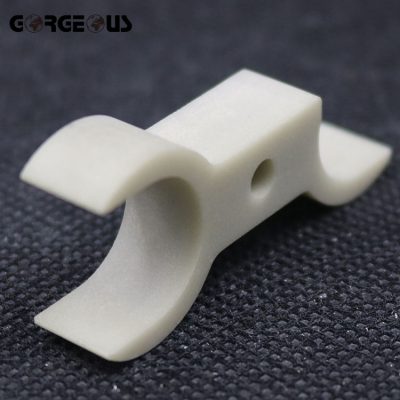
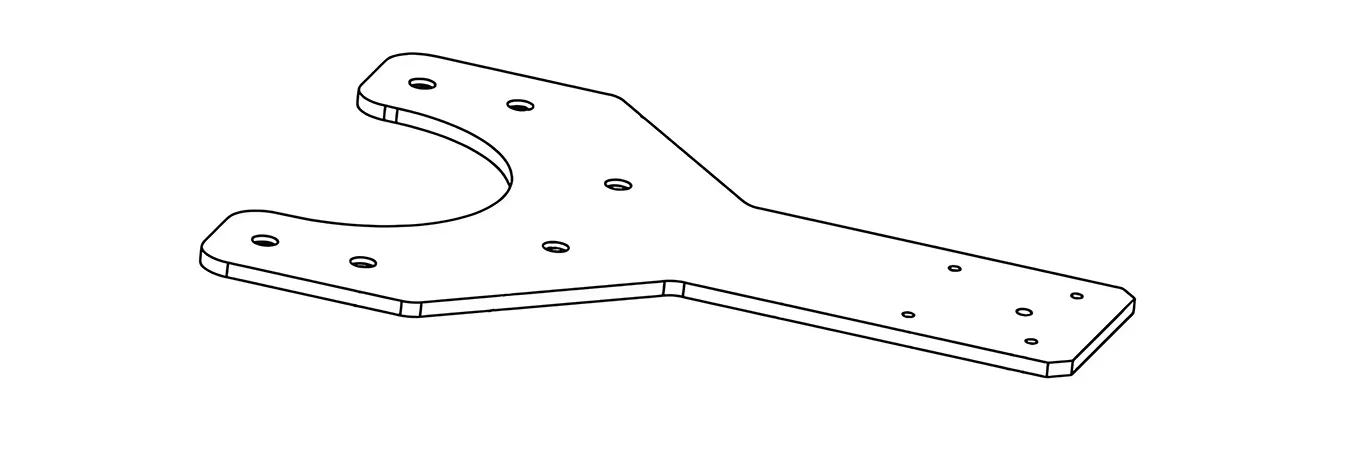
Aluminum nitride ceramic robotic arms, also known as aluminum nitride ceramic robotic fingers, wafer trays, or round wafer robotic arms, are mainly used for the transportation and handling of semiconductor equipment, responsible for delivering silicon wafers to designated locations.
Aluminum nitride robotic arms combine high thermal conductivity, excellent electrical insulation, a low coefficient of thermal expansion, and superior dimensional stability, greatly contributing to ensuring precise wafer transport and minimizing particle generation and thermal deformation.
GORGEOUS CERAMICS (GGS) can custom-produce aluminum nitride ceramic robotic arms based on customer-provided drawings and supports semiconductor equipment manufacturers (OEMs), automation integrators, and advanced equipment manufacturers worldwide.
Key Properties of Aluminum Nitride Ceramics
Thermal Conductivity
Aluminum nitride ceramics boast a high thermal conductivity of 170–200 W/m·K, enabling rapid heat dissipation and minimizing temperature gradients during wafer processing.
Electrical Insulation
The electrical insulation properties of aluminum nitride ceramics provide reliable electrical isolation for semiconductor devices operating under high voltage or sensitive process conditions.
Vacuum Compatibility
Aluminum nitride ceramics are ideally suited for vacuum chambers and cleanroom environments due to their low gas release characteristics.
Lightweight and Highly Rigid
Compared to metal robotic arms, aluminum nitride ceramic arms maintain structural integrity while minimizing deformation.
Ceramic Arm/End Effector Standard Size Reference
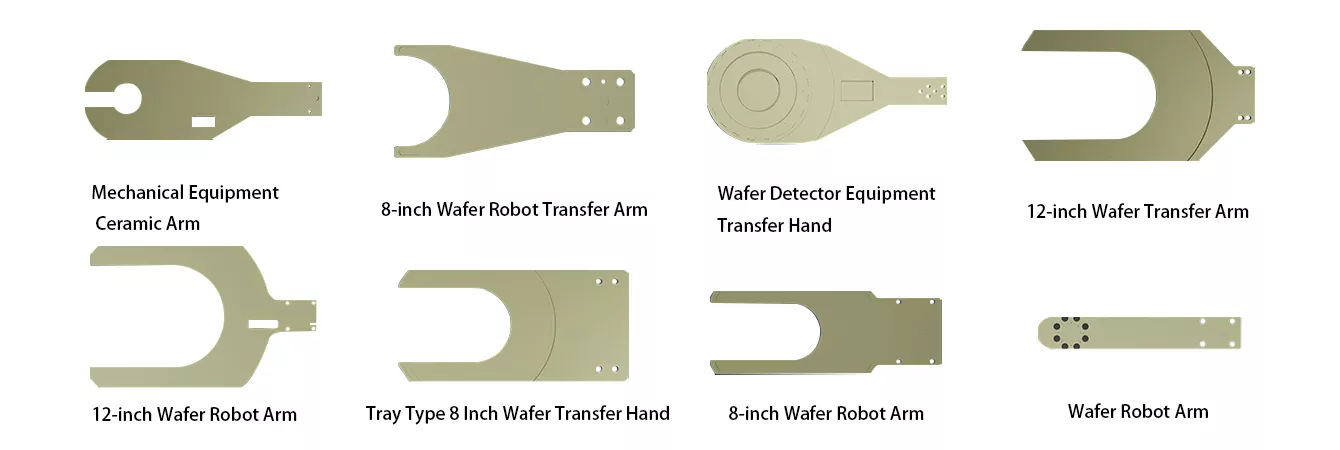
Choose the Length of The Ceramic Arm According to The Wafer:
6-inch wafer (150mm): Arm length: about 200-250mm
8-inch wafer (200mm): Arm length: about 250-300mm
12-inch wafer (300mm): Arm length: about 350-400mm
18-inch wafer (450mm): Arm length: about 500-550mm
Ceramic Arm Width and Thickness
Width: Typically 20-50mm, depending on your wafer size and required arm load capacity.
Thickness: Typically 5-15mm, to ensure adequate strength and rigidity and reduce weight.
Arm End Design
Fork design: commonly used for handling wafers, the width and spacing of the forks match the slots of the wafer box
Vacuum suction cup design: can directly absorb the wafer, the common suction cup size is 10-20mm
Edge clamping design: used for special processes, the clamping area width is 5-10mm
Applications of ceramic arms
In the chip manufacturing process, silicon wafers need to be transferred between different process steps (such as lithography, etching, deposition, etc.), and ceramic arms can act as handling manipulators in a dust-free environment.
Electronic manufacturing ceramic arms are suitable for processes with high cleanliness requirements such as vacuum coating, chip manufacturing, and OLED display manufacturing. They can avoid the influence of thermal expansion of metal materials and improve stability.
In laboratory equipment that requires resistance to corrosion and high temperature environments, ceramic arms can be used in fields such as chemical synthesis, plasma experiments and superconductivity research.
Ceramic materials do not contain metal ion precipitation and are suitable for fields such as food processing and pharmaceutical packaging that require extremely high material cleanliness.
FAQ
What is an aluminum nitride ceramic robotic arm?
An aluminum nitride ceramic robotic arm is a type of precision ceramic component widely used in semiconductor and automation equipment for wafer handling and material transfer.
Why choose aluminum nitride over metal robotic arms?
Because aluminum nitride ceramics have high thermal conductivity, excellent electrical insulation, and dimensional stability.
Can GORGEOUS CERAMICS (GGS) manufacture robotic arms according to customer drawings?
Yes, we can provide customized services based on customer specifications and CAD drawings.