Opening Summary
SiC ceramic has high thermal stability, mechanical strength, and chemical resistance. This guide discusses the properties of silicon carbide material and compares SiC with Si3N4 ceramic. It also explains the major applications of silicon carbide in clean energy and environmental protection systems.
Introdução
SiC ceramic is common in industries where heat, corrosion, and mechanical stresses pose severe challenges. It is very strong, conducts heat, and is highly chemically resistant. This article outlines silicon carbide ceramic, its material characteristics, a comparison with cerâmica de nitreto de silício, and highlights its applications in clean energy and environmental protection systems.
What Is Silicon Carbide Ceramic?
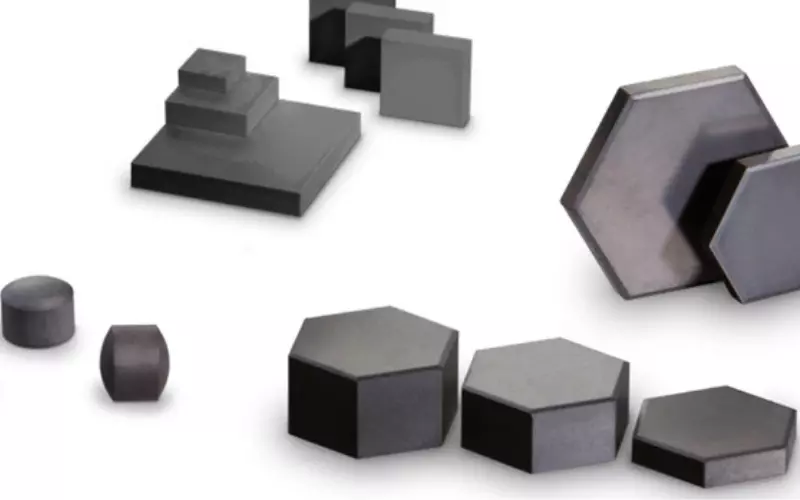
Cerâmica de carboneto de silício is a high-tech non-oxide engineering ceramic that is made of silicon (Si) and carbon (C). Its chemical formula is SiC, and it is also known as SiC ceramic in the industry. This substance has a good covalent bond, which makes it hard and thermally stable.
Common applications of SiC ceramics include high-temperature parts, wear components, and filtration systems, which are in demand. Due to its functionality, it is the best option in various sectors such as energy, aeroespacial, e químico manufacturing.
What Are The Core SiC Material Properties?
Silicon Carbide (SiC) is a high-performance ceramic and wide-bandgap semiconductor. It possesses high hardness (approximately 2800 kg/mm²), high thermal conductivity (120-200 W/m·K), low coefficient of thermal expansion, and high resistance to thermal shock, enabling it to operate at high temperatures (up to 1650°C-1800°C). Furthermore, it exhibits chemical inertness, corrosion resistance, and a high elastic modulus.
All the SiC material properties play a role in durability and efficiency when working under high demands.
-
Mechanical Strength: SiC ceramics are highly strong, and they do not crack under heavy loads. It is best to use it in bearings, cutting tools, and structural parts.
-
Thermal Conductivity: SiC has good thermal conductivity that ensures smooth heat transfer, preventing overheating and hence eliminating thermal stress. This is great for use in heat exchangers and energy systems.
-
Maximum Operating Temperature: It is capable of working at very high temperatures up to 1600 °C or even more. It has structural integrity where the metals or other ceramics may fail.
-
Corrosion and Oxidation Resistance: It is resistant to acid, alkali, and oxidizing conditions. This maintains the durability of performance in chemical, energy, and environmental performance.
-
Thermal Expansion: It has a low thermal expansion that decreases cracking during thermal shock. This is stable in high-temperature repeated cycles.
Hardness: Their hardness is extremely high, as required in wear-resistant components and cutting tools, as well as protective coatings. It resists scratches and abrasions in non-sensitive environments.
What Are the Typical Silicon Carbide Material Properties Values?
Common SiC material properties values are dependent on grade. The following are the standard values of silicon carbide material properties that engineers use when choosing SiC ceramic as a high-performance material.
|
Propriedade |
Valor típico |
Units |
|
Densidade |
3.0–3.2 |
g/cm³ |
|
Resistência à flexão |
350–600 |
MPa |
|
Resistência à fratura |
~3.0–4.6 |
MPa·m¹/² |
|
Dureza |
~2500–2900 |
Knoop |
|
Condutividade térmica |
120–170 |
W/m·K |
|
Max Operating Temperature |
~1400–1600+ |
°C |
|
Expansão Térmica |
~4.0–4.5 |
×10⁻⁶/K |
What Is the Difference Between SiC Ceramic and Si3N4 Ceramic?
Carboneto de silício (SiC) e nitreto de silício (Si3N4) are both advanced engineering materials. However, they differ in their performance depending on application needs.
When Should You Choose SiC Ceramic Instead of Si3N4?
Silicon Carbide (SiC) should be used instead of Silicon Nitride (Si3N4) when maximum hardness, better heat transfer, extreme temperature resistance, or high-power electrical performance is required. This is perfect in heat exchangers, filters, and reactor components.
When Is Si3N4 Ceramic a Better Option Than SiC?
Silicon Nitride (Si3N4) ceramic is a better option than Silicon Carbide (SiC) when an application needs high thermal shock resistance and fracture toughness, or reduced density. Therefore, it works well in rotating machines, turbines, and systems with vibration.
Let’s compare Silicon carbide (SiC) Vs silicon nitride (Si3N4):
How Do SiC and Si3N4 Ceramics Compare in Performance?
The performance difference between carboneto de silício (SiC) e nitreto de silício (Si3N4) ceramics mainly depends on operating conditions. SiC ceramic performs well in continuous high-temperature, corrosive, and heat transfer environments.
On the other hand, Si3N4 ceramic is used in mechanically stressful environments with impact, vibration, and cyclic stress.
Below are the comparison between the two:
|
Recurso |
SiC Ceramic |
Si3N4 Ceramic |
|
Dureza |
Very high, suitable for abrasive environments (25-28 GPa) |
High, with better resistance to crack growth (15-16 GPa) |
|
Condutividade térmica |
High, supports fast heat dissipation (120–270 W/m·K) |
Moderate, slower heat transfer (~20–30 W/m·K) |
|
Temperatura máxima de operação |
Up to about 1600°C in air |
Around 1300°C in air |
|
Resistência à fratura |
Moderate, requires careful design under impact (~3–5 MPa - m 1/2) |
Higher, better for dynamic loading (~6–12 MPa - m 1/2) |
|
Resistência ao choque térmico |
Good under controlled conditions |
Excellent under rapid temperature changes |
|
Melhores Aplicações |
Abrasive, High-Heat like Filters, plates, heat exchangers, reactors |
Tough, Impact-Resistant like Bearings, turbines, rotating machinery |
What Are The Advantages And Disadvantages Of Silicon Carbide Ceramic?
You must need to understand the strengths and the limits of silicon carbide ceramic before choosing it. This material works well in demanding environments, but it is not applicable to all applications.
Its main benefits are thermal shock resistance and low density. Their disadvantages include low fracture toughness (high brittleness), high cost of production/machining, and also being hard to produce complex shapes.
What Are the Key Advantages of Using SiC Ceramic?
-
High Temperature Endurance: Silicon carbide ceramic ensures that the mechanical strength will be maintained even at high temperatures. It can be used in continuous high-temperature conditions without losing its functionality quickly.
-
Excellent Thermal Conductivity: The material conducts heat so well. This makes it suitable for heat exchangers, energy systems, and thermal management components.
-
Wear and Corrosion Resistance: SiC resists abrasion, acids, and harmful gases. You also enjoy increased service in chemically aggressive or abrasive environments.
-
Dimensional Stability: It has a lower thermal expansion, which means there’s less distortion when things heat up or cool down. This enhances tight tolerances over repeated thermal cycles.
What Are the Main Limitations of Silicon Carbide Ceramic?
-
Brittleness: Silicon carbide does not have high ductility, like most ceramics. If the designs are not optimized, sudden impact or poor loading may cause cracking.
-
Processing difficulty: This requires the use of special tools and operations. That raises the complexity and cost of production as opposed to oxide ceramics.
How Can Silicon Carbide Ceramic Improve Environmental Protection and Filtration Systems?
Silicon carbide (SiC) ceramic enhances environmental protection and filtration systems with a highly durable, chemically inert, and thermally stable material. It performs better than traditional polymers and other ceramics in harsh environments.
It has special properties of materials, extreme hardness, extreme hydrophilicity, and high thermal conductivity. This enable more efficient water treatment, air cleaning, as well as handling of industrial wastes.
How Does SiC Ceramic Enhance Hot Gas Filtration Performance?
The use of Silicon Carbide (SiC) ceramics has a strong impact on improving the performance of hot gas filtration. It offers excellent thermal stability, chemical inertness, and mechanical strength in harsh, high-temperature (usually >800°C) industrial conditions.
SiC filters, especially in asymmetric or fibrous designs, have greater than 99% collection efficiency for particulate matter (PM), such as fly ash and soot, with low and constant pressure drops.
Why Is SiC Ceramic Ideal for Chemical Processing Equipment?
Silicon Carbide (SiC) ceramic is a perfect material to design and use in chemical processing equipment. This is because of the combination of extreme chemical inertness, high thermal stability, and high mechanical strength.
It is particularly useful in applications in which metals and other substances fail due to aggressive, corrosive, or high-temperature conditions. It provides a longer service life and less maintenance.
How Does Silicon Carbide Ceramic Support Pollution Control Systems?
Silicon carbide (SiC) ceramic helps to control pollution by serving as a high-performance material for filtration, membrane-separation, and catalytic support in harsh or highly corrosive environments.
Its outstanding chemical inertness, thermal stability, and mechanical strength eliminate industrial gases and wastewater pollutants more effectively than conventional materials.
Why Are Silicon Carbide Plates Used in Environmental Systems?
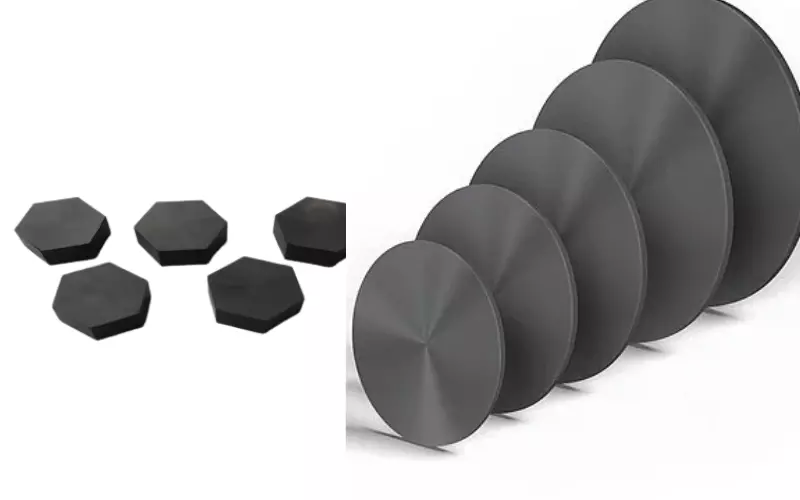
Silicon carbide (SiC) plates are ideal for environmental and industrial systems. This is because of their excellent thermal stability, non-reactive nature, high strength, and wear resistance.
They perform well in harsh, high-temperature, and corrosive conditions in which traditional materials such as metals or alumina would not work.
How Is Silicon Carbide Ceramic Used In Clean Energy Systems?
Silicon carbide (SiC) ceramic is a critical advanced material in clean energy systems, where high temperature, harsh conditions, and long life of service are key factors. Its strength, thermal stability, and wear resistance are used to enhance the efficiency of the system and minimize maintenance over time.
How Is SiC Ceramic Used in Solar Thermal Energy Systems?
Silicon carbide (SiC) ceramic is used in the solar thermal energy system as a high-temperature solar absorber and heat exchanger material. It has a high thermal conductivity (120-270 W/mK), solar absorptance (up to 96%), and overall thermal shock resistance.
It allows high-temperature (up to 1000 °C) and efficient operation in concentrated solar power (CSP) towers, which serves as a resistant receiver material.
How Does Silicon Carbide Ceramic Support Hydrogen Production?
Silicon carbide (SiC) ceramics support hydrogen production primarily by acting as a durable, highly conductive catalyst. It also supports methanol steam reforming, enabling high-efficiency, high-temperature operation.
They also find application in water splitting as photocatalysts because of their good band structure and pyroelectric properties.
Why Is SiC Ceramic Important for Nuclear and Biomass Energy Systems?
Silicon Carbide (SiC) ceramics, especially in the form of the SiC fiber-reinforced SiC matrix (SiC/SiC) composites, are essential to the advanced nuclear and biomass energy systems. They are capable of operating in extreme environments, offer structural stability during irradiation, and offer high thermal stability.
They are considered enabling materials in Generation IV reactors, fusion reactors, and in high-efficiency biomass conversion systems.
What Role Does Silicon Carbide Fiber Play In Advanced Systems?
Silicon carbide fiber is one of the important materials in improving work on high-demand engineering systems. It is not only the reinforcement, but also makes it stronger, more energy-efficient, and reliable in extreme conditions.
Silicon carbide fiber’s special ability is to be strong and resistant to heat, enabling engineers to create components that are more durable and efficient.
-
Reinforcement: SiC fiber strengthens SiC/SiC composites, which increases the stiffness and mechanical longevity. This is used to support the structures against massive loads and pressures in the long run.
-
Thermal Stability: SiC fibers retain their properties over highly elevated temperatures; they do not deform or become weaker. This ensures good performance at high heat conditions.
-
Advanced Applications: SiC fibers are commonly found in gas turbines, aerospace components, and advanced energy systems. It provides components with vibration, thermal shock, and mechanical fatigue resistance.
What Forms and Components Are Manufactured from Silicon Carbide Ceramic?
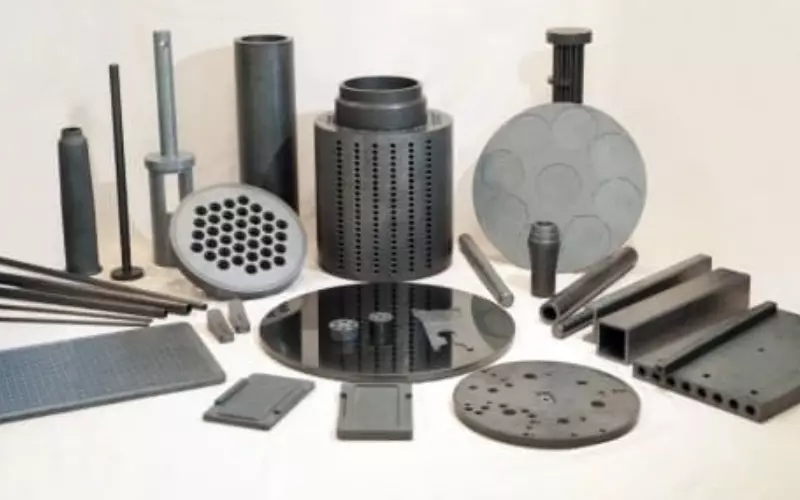
Silicon carbide ceramics are manufactured intoa large variety of forms and components, mostly used in industrial, automotivo, aerospace, and eletrônica. These shapes enable the engineers to choose the proper component of filters, reactors, seals, or composite systems without compromising performance.
What Are Silicon Carbide Plates and Where Are They Used?
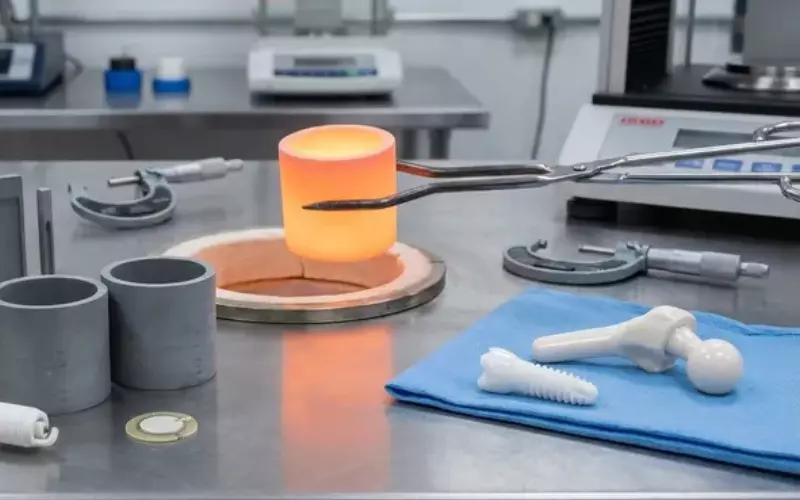
Silicon carbide (SiC) plates are high-performance, wear-resistant, and chemically inert ceramic materials. They are designed to resist very high temperatures (up to approximately 1600°C) and thermal shock as well as abrasion.
The plates are mostly used in severe industrial environments such as kiln furnishings, metallurgical furnaces, chemical reactors, body armor, and semiconductor processing apparatus.
What Types of Custom SiC Ceramic Parts Are Available?
Custom Silicon Carbide (SiC) ceramic elements are high-performance elements designed to be used in extreme conditions.
They come in materials such as Reaction Bonded (RBSiC/SiSiC), Sintered (SSiC), and Recrystallized (RSiC). These are commonly used in semiconductors, aerospace, and industrial sealing.
What Are Fiber-Reinforced SiC Composites and Their Benefits?
Fiber-reinforced silicon carbide (SiC/SiC) composites are high-performance ceramic matrix composites (CMCs). It has high-strength SiC fibers embedded in a silicon carbide-based matrix, frequently with protective fiber coatings.
They have high toughness, light weight, and high temperature resistance up to 2700 °C (1482 °C). This makes them suitable for aerospace, nuclear, and engine applications.
Why Should You Choose GORGEOUS for SiC and Si3N4 Ceramic Manufacturing?
GORGEOUS is an advanced manufacturer of ceramic products, and our team has extensive knowledge of silicon carbide (SiC). silicon nitride (Si3N4) products.
The processes, equipment, and quality systems used in the factory are meant to match the strict requirements of these high-performance ceramics.
-
Specialized SiC and Si3N4 Production: Our main focus is on the production of SiC and Si3N4 (silicon nitride ceramic) with customized processes. It is used to handle the hardness, thermal conductivity, and chemical resistance.
-
Precision CNC Machining: Our CNC machining offers tight tolerances along with smooth finishes on our SiC and Si3N4 components. This is basically necessary in high-temperature or mechanical applications.
-
High-Temperature Furnace Processing: Silicon carbide and silicon nitride ceramics are processed in high-technology furnaces that are capable of exceeding 1600 °C. The result ensures optimum density, strength, and thermal performance.
-
Custom Part Manufacturing: Our team designs custom plates, rods, and tubes, fiber-reinforced composites, and complex shapes. They manufacture peças de cerâmica according to your engineering drawings.
-
Material Versatility: Our team can give you options of purities, grain size, and composites of SiC and Si3N4 ceramics. So, you can match your needs for thermal, mechanical, or chemical stress.
-
End-to-End Support: From the prototyping stage through to the production stage, we guide you on material choice, design optimization, and finishing. It helps your SiC and Si3N4 components to achieve the desired results.
Conclusão
SiC ceramic offers outstanding performance in high-temperature, corrosive, and abrasive conditions. It has efficient and reliable material properties in clean energy and environmental protection systems.
For SiC and Si3N4 ceramic components that require precision, it is best to work with some established manufacturers, such as GORGEOUS.