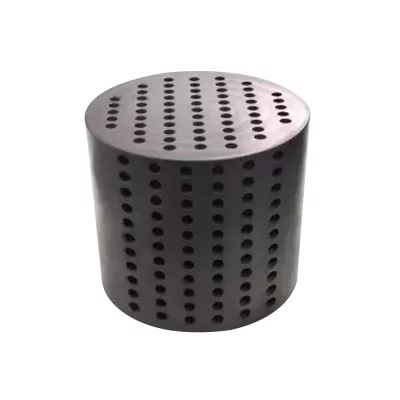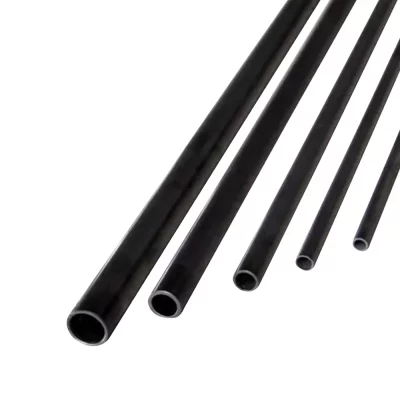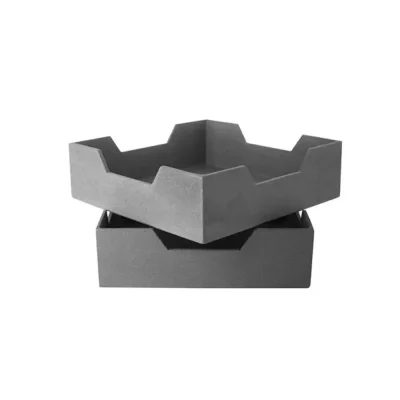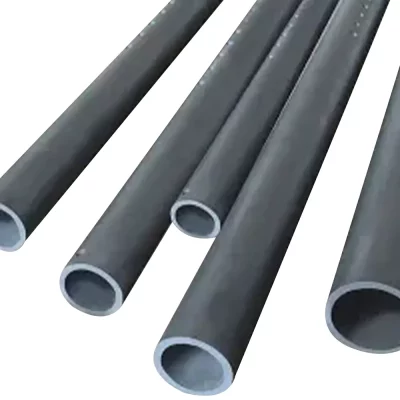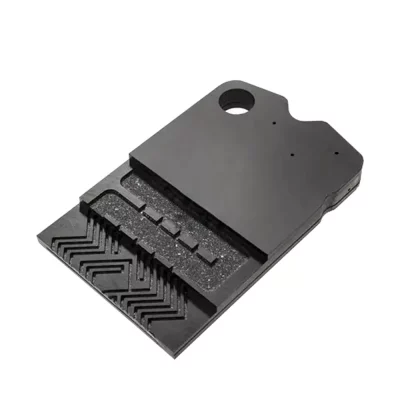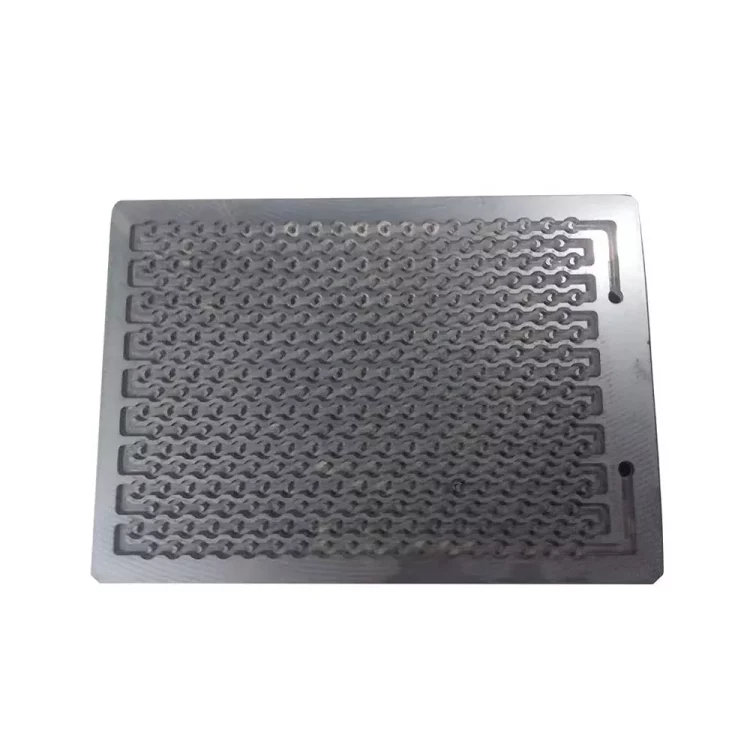

GORGEOUS CERAMICS carburo di silicio microreactors are made from spray-granulated silicon carbide powder, formed by isostatic pressing and high-temperature sintering.
We can flexibly customize products to meet your specific needs, and also perform precision machining on silicon carbide products, such as single-sided or double-sided grooving (patterning), drilling, engraving sealing grooves, and double-sided surface grinding.
Related products:Silicon Carbide Microreactor Module
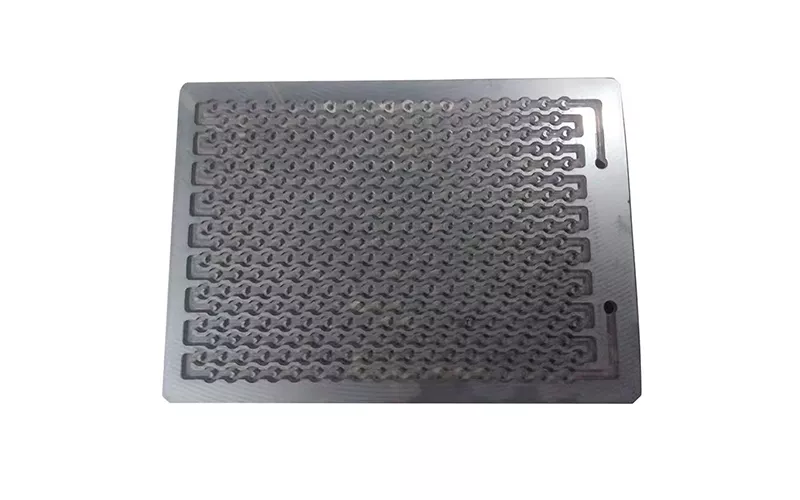
Performance Advantages of Silicon Carbide Microreactors
Our SiC micro-reaction plates have very high purity (SiC content >99%) and comprehensive chemical corrosion resistance, capable of withstanding mixed acid corrosion such as strong acids, strong alkalis, and hydrofluoric acid. They also have good thermal conductivity, with the material’s thermal conductivity reaching over 160 W/m·K.
|
Length L (mm) |
Width W (mm) |
L/W±X(mm) |
Thickness (mm) |
T±X(mm) |
Parallelism (mm) |
Flatness (mm) |
Surface roughness (µm) |
|
100≤N≤200 |
100≤N≤200 |
±0.5~±0.7 |
6~30 |
±0.1 |
0.02 |
0.02 |
0.8 |
|
200≤N≤300 |
200≤N≤300 |
±0.7~±1.2 |
8~30 |
±0.1 |
0.02 |
0.02 |
0.8 |
|
300≤N≤400 |
300≤N≤400 |
±1.2~±1.5 |
12~30 |
±0.2 |
0.03 |
0.03 |
0.8 |
|
400≤N≤500 |
400≤N≤500 |
±1.5~±2.0 |
15~30 |
±0.2 |
0.03 |
0.03 |
0.8 |
|
500≤N≤600 |
500≤N≤600 |
±2.0~±3.0 |
18~30 |
±0.2 |
0.05 |
0.05 |
0.8 |
|
600≤N≤700 |
600≤N≤700 |
±2.5~±3.0 |
20~30 |
±0.2 |
0.05 |
0.05 |
0.8 |
|
700≤N≤1000 |
700≤N≤750 |
±3.0~±4.0 |
20~30 |
±0.2 |
0.05 |
0.05 |
0.8 |
Applications of Silicon Carbide Microreactors
GORGEOUS CERAMICS product is a core component of silicon carbide microchannel continuous flow reactors. Our silicon carbide microreactor plates can be combined with silicon carbide heat exchange plates and silicon carbide flat plates, using mirror sealing, O-ring sealing, or high-temperature diffusion welding to form silicon carbide modules.
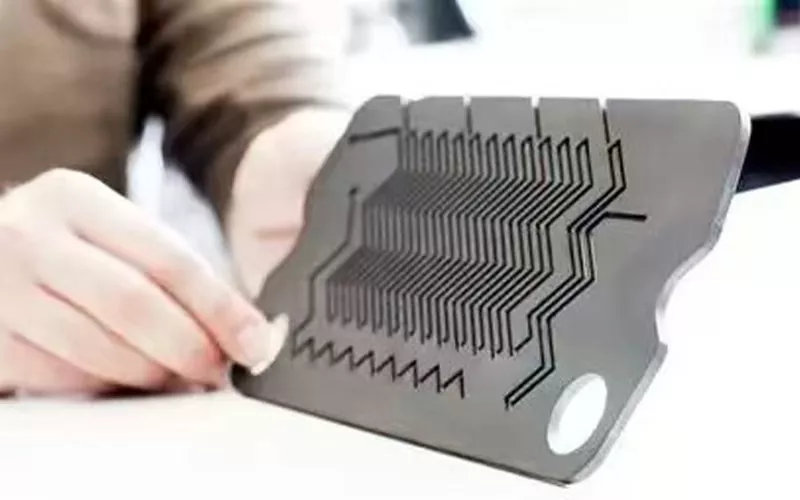
Silicon carbide microreactor plates can be used in petroleum, chemical, pesticide, and explosive industries, mainly for reactions involving sulfonation, nitration, fluorination, oxidation, amidation, diazotization, catalytic hydrogenation, and other highly exothermic and flammable/explosive reactions.
Domande frequenti
What is a silicon carbide microreactor plate?
A silicon carbide microreactor plate is a high-performance ceramic plate featuring precise microchannels, designed for efficient heat transfer in continuous flow chemical reactions.
Why is silicon carbide used in microreactor plates?
Silicon carbide is used because this material possesses excellent thermal conductivity, chemical resistance, high mechanical strength, and thermal shock resistance, and offers long-term stability in harsh operating environments.
What are the advantages of silicon carbide microreactor plates compared to metal plates?
Compared to metal microreactor plates, silicon carbide offers better corrosion resistance, no metal ion contamination, a wider operating temperature range, a longer service life, and it does not rust.