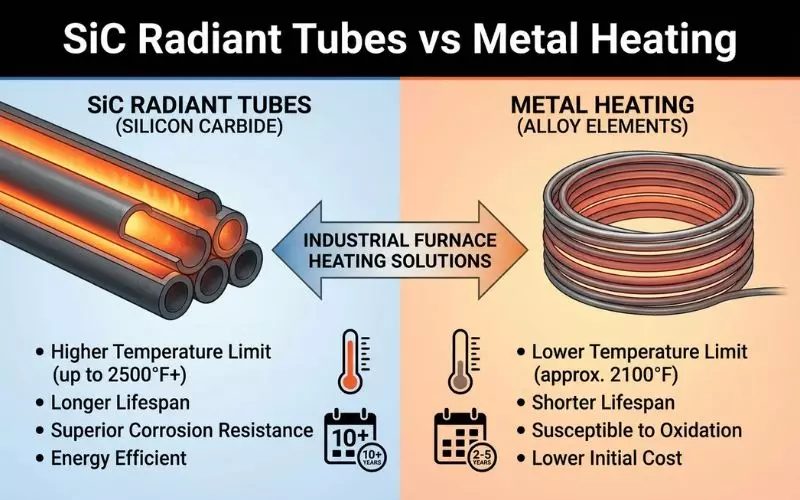
Silicon carbide radiant tubes have a lifespan of 8-10 years compared to metal (2-3 years), reducing energy costs by 20-30%. This guide covers performance comparisons for silicon carbide used in industrial furnaces and heat treatment applications, total cost of ownership analysis, supplier selection criteria, and maintenance management methods.
What Is a Silicon Carbide Radiant Tube?
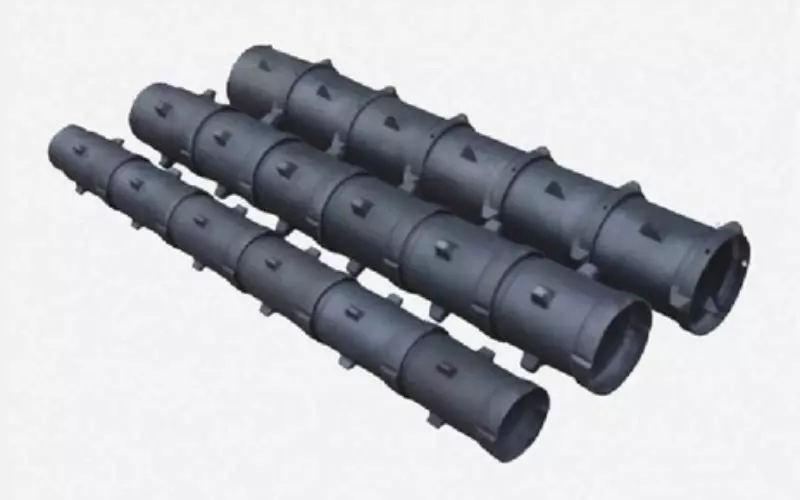
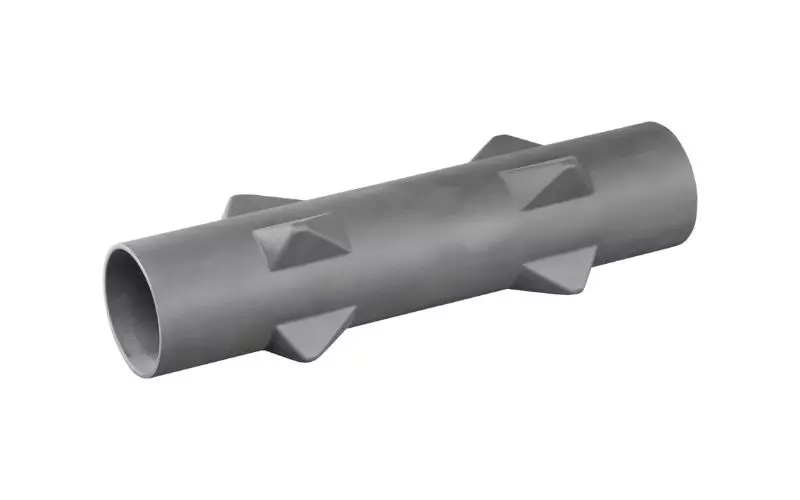
Silicon carbide radiant tube is a ceramic heating element for high temperature furnaces. Silicon carbide structure strongly binds silicon atoms and carbon atoms to withstand extreme heat without oxidation.
Silicon carbide bonding maintains stability even beyond 1200°C. Silicon carbide is used in furnaces where metal elements fail.
その silicon carbide formula (SiC) achieves three to four times the life of conventional heating tubes. Silicon carbide endures oxidation and spreads heat evenly.
How Does Silicon Carbide Compare to Traditional Heating Tubes?
Here’s how silicon carbide types compare to metal heating elements:
|
財産 |
炭化ケイ素 |
Metal Alloys (Kanthal, etc) |
|
最大動作温度 |
1450℃ |
1250-1350°C |
|
Typical Lifespan |
8-10 years |
2-3 years |
|
Thermal Efficiency |
High (radiant heat) |
Lower (convection + radiation) |
|
Oxidation Resistance |
素晴らしい |
Poor (forms oxide scale) |
|
エネルギー消費 |
20-30% less |
Baseline |
|
Relative Cost |
Higher (3-4x initial) |
Lower (baseline) |
Note: Cost depends on size, configuration and supplier. Please contact the manufacturer for specific prices.
The number indicates the performance difference, but the total cost of ownership is not reflected. Metal pipes need to be replaced every 24-36 months, and downtime also occurs.
In facilities switched to silicon carbide radiation tubes, operating periods of 8-10 years and low energy costs have been reported. The payback period runs 3-4 years, and the return on investment is clear.
Why Choose Silicon Carbide Radiant Tubes?
Temperature Performance That Lasts
Silicon carbide radiant tubes maintain integrity even in continuous use at 1400 °C. Metal alloys are oxidized and degraded as the oxidation scale is generated and the heat transfer efficiency decreases. Silicon carbide bonding maintains structural integrity even under continuous thermal stress.
Energy Efficiency You Can Measure
The metal heating components waste 25-35 percent of the energy due to air and metal conducting the heat. The silicon carbide formula enables efficient radiant heat transfer directly to your workload.
According to furnace operators, 20 to 30 percent of energy was saved when they replaced metal with silicon carbide tubes. Reduced usage of energy reduces monthly expenditures.
Lifespan That Changes Your Economics
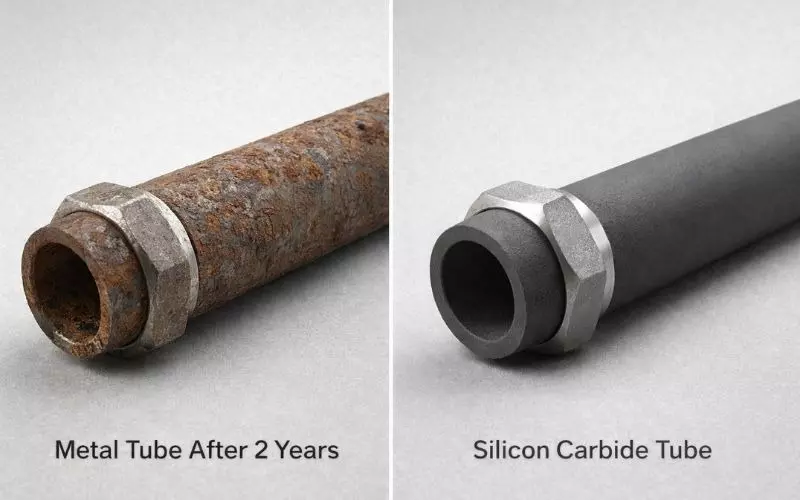
Metal heating tubes break down due to oxidation and heat fatigue. Exchange every 2-3 years means continuous cost.
Silicon carbide bonding resists oxidation. Silicon carbide heated in oxygen atmospheres maintains stability unlike metal alloys. You’ll run the same tubes for 8-10 years.
Uniform Heating Distribution
Temperature fluctuations in the heating zone affect product quality. High temperature spots cause defects and low temperature zones mean incomplete processing.
The consistent emissivity of the silicon carbide structure maintains a uniform radiation heat distribution. Heat treatment engineers achieve more stringent temperature control with silicon carbide compared to aging of metal elements that produce uneven oxide coatings.
What Are the Real Advantages and Disadvantages?
Metal Heating Tubes: Cheap Now, Expensive Later
Advantages: Metal tubes have low purchase costs. Available from many suppliers. You can find replacements easily when damaged.
Disadvantage: The problem is corrosion by oxidation. Oxide deposition inhibits heat transfer. It needs to be replaced every 2-3 years and always consumes excess energy during operation.
Real talk from maintenance managers: Don’t just look at the price. When you add up replacements, energy waste, and downtime over 10 years, metal tubes are never cheap.
Silicon Carbide Radiant Tubes: Pay More, Save More
Advantages: Silicon carbide radiant tubes can operate for 8 to 10 years continuously. The silicon carbide formula resists oxidation completely. 20-30% energy savings from metal pipes. Strong silicon carbide bonding prevents degradation due to aging.
Disadvantage: Initial cost is three to four times higher. When it falls, it cracks (made of ceramic). Few suppliers know the right handling.
Important: silicon carbide radiant tubes are rational for continuous high temperature work. Look not only at today’s price, but also at the total cost in 5-10 years. Calculate the return on investment over the entire lifecycle as well as the purchase price of equipment.
Where Do Silicon Carbide Radiant Tubes Perform Best?
Silicon carbide used in industrial heating applications delivers superior performance across multiple sectors.
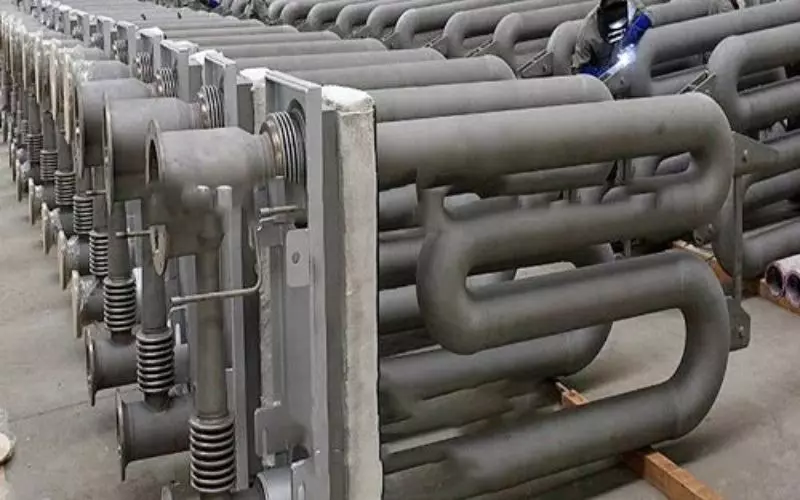
産業 Heat Treatment Furnaces
Temperature control determines metallurgical results. Even fluctuations of only 10 °C affect the uniformity of hardness.
Silicon carbide radiant tubes maintain a stable heating zone. In steel processing, consistent quality is achieved by strict temperature control.
Main uses: annealing, tempering, baking, carburizing
Ceramic and Glass Manufacturing
For ceramic firing and glass molding, sustainable high temperature without contamination is required. Metal elements release oxide particles and cause defects.
Clean silicon carbide types prevent contamination and produce high quality products per batch.
Main applications: ceramic kiln, glass reinforcement, enamel firing furnace
Aluminum and Metal Processing
The heat treatment of aluminum requires precise control under the oxidation atmosphere. Metal heating pipes deteriorate rapidly.
Silicon carbide is used in aluminum heat treatment furnaces and aging furnaces where atmospheric conditions are severe to metal elements.
Optimum application: aluminum heat treatment, zinc plating, metal quenching
Powder Coating and Curing Ovens
Stable curing temperature ensures proper coating adhesion. Heating unevenness causes defects.
Silicon carbide radiant tubes achieve uniform heating, providing reliable results and low energy costs.
Optimum application: powder coating hardening, paint burning, composite hardening
How Do You Select the Right Supplier?
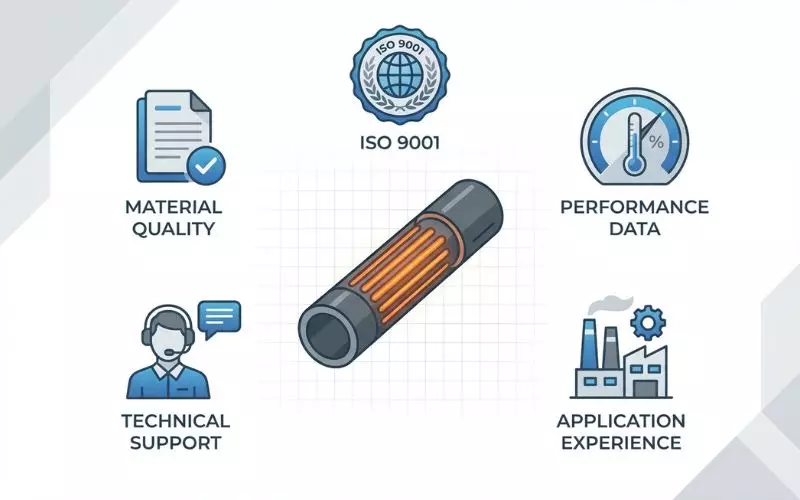
Don’t just compare prices. Here’s what actually matters:
Material Quality Documentation
Contact the supplier for specifications of silicon carbide structure. Quality silicon carbide types require strict tolerances and high purity. Important question: “What is your material certification process” Excellent suppliers provide complete data density, porosity and purity levels. If they can’t provide documentation, performance varies.
Performance Specifications
Get real value: maximum operating temperature, thermal efficiency rating, expected service life, surface load capacity (W/cm2). Suppliers that cannot provide performance data under their own conditions aren’t worth the risk.
Application Experience
Check your industry case studies, customer references, laboratory results, and production data. Excellent suppliers solve specific furnace problems. Average vendors simply ship tubes.
Technical Support
Support custom designs, installation guidance, and troubleshooting. Choose a supplier with a proven track record in industrial heating equipment.
Quality Certification
Check ISO 9001 certification at least. The stable manufacturing process means that the pipe performance is uniform for each lot.
What Maintenance Extends Lifespan?
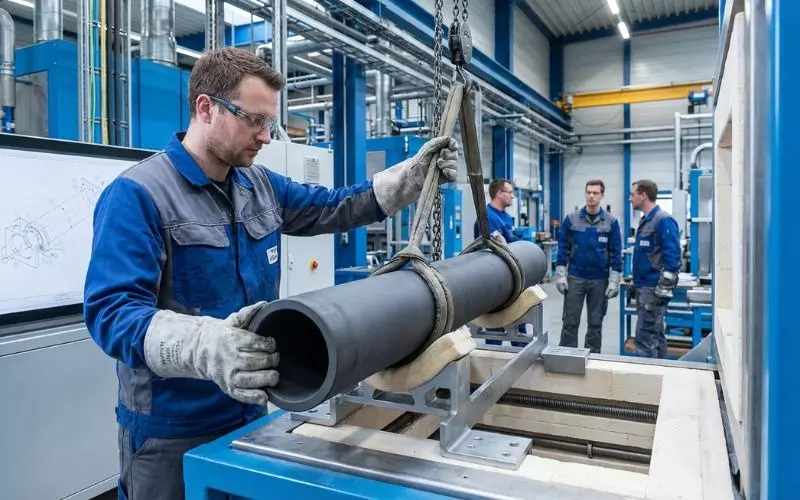
Handle with Care During Installation
Silicon carbide used in heat treatment excels at high temperatures, but cracks easily from drops or hits. Violent handling creates weak points and causes failure when igniting the furnace.
Safe installation method: Use support equipment with buffer material when moving. Instruct workers how to handle ceramic tubes correctly. Strictly observe the manufacturer’s specifications and no shortcuts. Never jam tubes into the mounting bracket. Because the exchange cost is expensive, preventive measures are effective.
Follow Operating Guidelines
If you exceed temperature limits or heat rapidly, it breaks early.
Proper operation: Do not exceed the maximum surface load. Use the recommended heating and cooling rates of the manufacturer. Maintain the combustion ratio to the appropriate extent. Monitor tube surface temperature during operation.
Inspect Regularly
Catch issues before they shut you down. Set up a regular inspection schedule.
Every six months, visually check for cracks. Check the wear condition of the mounting bracket. Check if there is an electrical connection.
Once a year, measure the dimensions of the tube and to spot any growth. Ensure that heating is uniform throughout the zone. Track energy usage over time.
If you find a crack, if the efficiency decreases, if you notice a hot spot, or if you find a distortion, replace it. Do it during planned downtime so you’re not dealing with emergency shutdowns.
よくある質問
Why does the silicon carbide formula cost more?
High production costs due to ultra-high purity materials and special manufacturing processes. However, silicon carbide tubes have a long life of 8-10 years, whereas the life of metal tube is 2-3 years, so SiC is cheaper in the long term considering the energy saving effect.
How much energy can silicon carbide tubes actually save?
The silicon carbide formula delivers 20-30% reduction in energy consumption compared to metal heating elements. Accurate savings vary depending on application and operating conditions.
Can silicon carbide structure handle thermal cycling?
Yes. Silicon carbide radiant tube is resistant to thermal shock and supports repeated heating and cooling cycles without damage. Designed for industrial operation with frequent temperature changes.
What is the heat resistance temperature of the SiC radiant tube?
Maximum continuous operating temperature is about 1450 °C. Best performance in the range of 1000 to 1400 °C, where metal heating elements are weak to oxidation.
How should I decide when to exchange?
Be aware of visually visible cracks, reduced heating efficiency, and uneven temperature distribution. Many facilities do not wait for breakdowns, but replace them at 80% of their expected service life during scheduled maintenance.
Does it work in an oxidative atmosphere?
Yes. Unlike metal tubes that form oxidation scales, silicon carbide heated in an oxygen atmosphere maintains performance. This is an important advantage in many industrial heating applications.
Which industries benefit most from silicon carbide tubes?
Silicon carbide is used in heat treatment, ceramic and glass manufacturing, aluminum processing, and powder coating operations see the best ROI. Any application with continuous high-temperature operation above 1200°C benefits from the switch.
結論
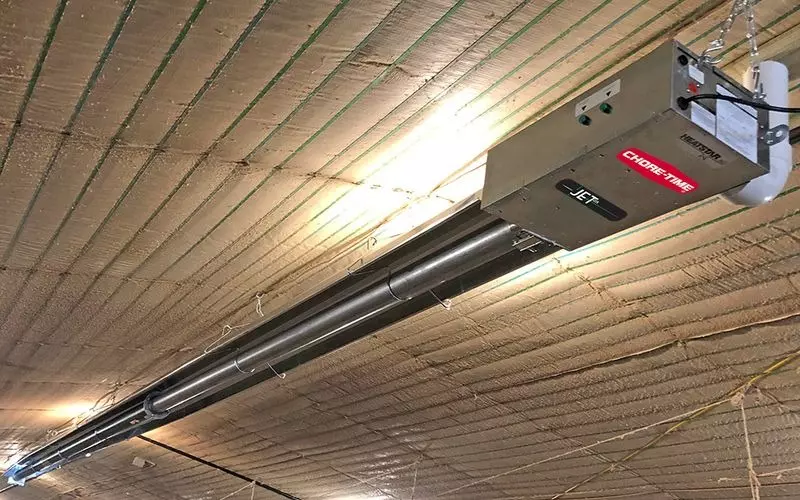
Silicon carbide used in high-temperature applications exceeding 1200°C delivers long life and achieve cost savings over the long term. If you need reliable performance and energy savings, choose silicon carbide.
Ready to discuss your furnace? 接触 our engineering team for specifications and custom configurations.