Graphite susceptors fail in 8-12 months and contaminate your wafers badly. Silicon carbide substrates operate for 3-5 years with minimal particle generation. This practical guide shows material comparison, actual cost analysis and selection criteria for CVD, PVD and plasma etch systems. You’ll see when paying more for SiC actually saves money.
What Is a Silicon Carbide Substrate?
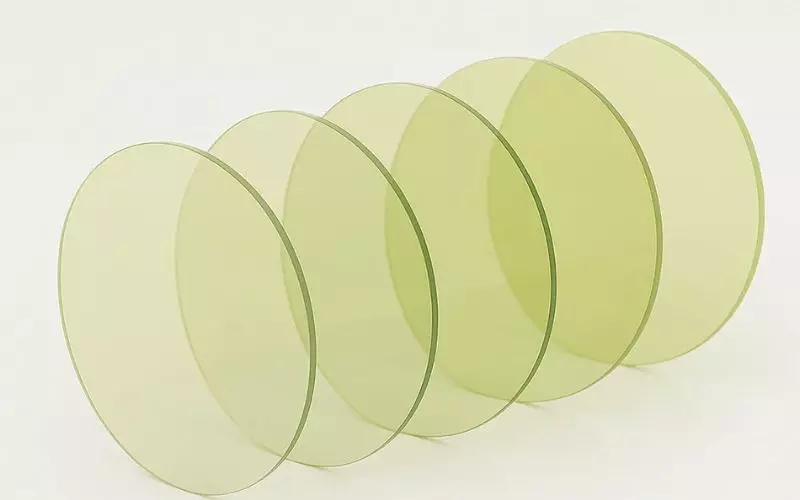
Silicon carbide substrates (also known as SiC susceptors or wafer holders) are used to treat your semiconductor wafers in high temperature.
Imagine it is an 先进陶瓷材料 combining silicon and carbon atoms in an incredibly strong crystal lattice. This silicon carbide bonding creates properties no other material can match.
To achieve the following extreme conditions concurrently, your SiC substrates must be resistant to the following three extreme conditions:
-
No softening at temperatures above 1600degC.
-
Non eroding aggressive plasma chemistries.
-
Exquisite thermal uniformity of 300mm wafers.
Silicon carbide satisfies all 3 requirements. Therefore, equipment manufacturers specify SiC for 化学气相沉积(CVD), Physical Vapor Deposition (PVD), inductively Coupled Plasma (ICP) etching equipment, and Rapid Thermal Annealing (RTA) systems.
You’ll find silicon carbide substrates wherever contamination control and temperature stability determine your yield.
How Does Silicon Carbide Compare to Other Materials?
Here’s what separates SiC substrates from graphite and aluminum nitride:
|
财产 |
碳化硅 |
氮化铝 |
石墨 |
|
热导率(W/mK) |
120-200 |
170-220 |
100-140 |
|
最高工作温度 |
>1600degC |
~1400degC |
>2000degC (inert only) |
|
Plasma Resistance |
出色的 |
Very Good |
Poor |
|
纯度等级 |
高的 |
非常高 |
低的 |
|
Typical Lifespan |
3-5+ years |
3-4 years |
6-18 months |
|
Particle Risk |
非常低 |
非常低 |
高的 |
|
Relative Cost |
Medium-High (3-5x graphite) |
Highest (5-10x graphite) |
Lowest (baseline) |
Note: Cost varies greatly depending on size, specification and supplier. Please contact the manufacturer for specific prices.
The numbers tell part of the story. What they do not show is the total cost of ownership.
Industry data show that a typical graphite replacement costs hundreds of dollars every 8-12 months, plus 2-3 days of downtime for chamber cleaning every time. After switching to silicon carbide, facilities report replacement intervals of 4+ years.
The calculation is simple: By reducing replacement frequency and eliminating contamination-related rework, SiC typically pays for itself within 18-24 months
Why Choose Silicon Carbide for Your Semiconductor Process?
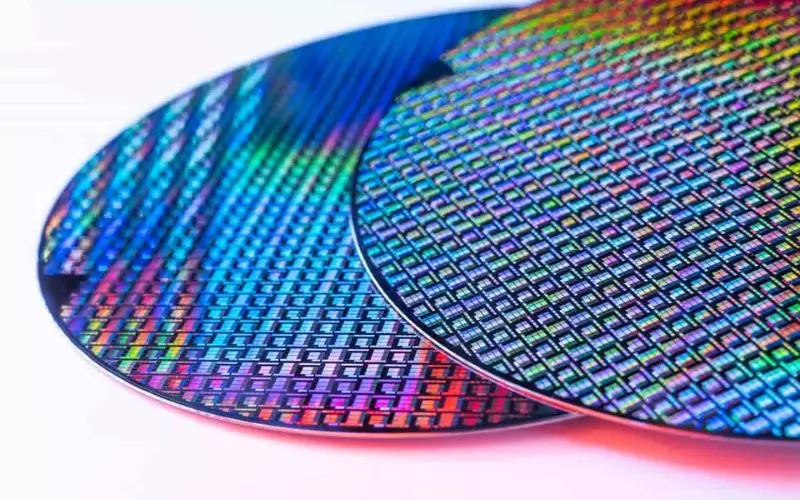
Temperature Performance You Can Trust
Silicon carbide substrates maintain mechanical strength even in continuous operation at 1600 °C. Graphite softens and deforms. Most ceramics creep and crack.
Your SiC substrates maintain dimensional stability through thousands of thermal cycles. This stabilizes wafer positioning and provides repeatable process results for each batch.
Contamination Control That Protects Your Yield
The porous structure of graphite acts like a particle sponge. It absorbs process gas and releases contaminants during subsequent operation.
The dense, non-porous structure of silicon carbide prevents this. The material does not outgas and does not absorb chemicals. Maintains chamber cleanliness between maintenance cycles.
Process engineers in charge of fluorine plasma etching report that particle defects have decreased significantly after switching from coated graphite to solid SiC substrates.
Chemical Resistance Under Extreme Conditions
Plasma chemistry destroys most materials. Fluorine and chlorine radicals attack atomic bonds and tear the material apart.
Silicon carbide bonding resists this chemical attack. The strength of the Si-C bond keeps your SiC substrate intact even when graphite is eroded.
You’ll run the same silicon carbide part for years in processes that consume graphite in months.
Thermal Conductivity for Uniform Processing
Temperature variation across your wafer directly impacts device performance. A 3°C hot spot creates thickness gradients of CVD membranes and dopant concentration fluctuations during diffusion.
Silicon carbide’s 热导率 (120-200 W/mK) spreads heat evenly. You will maintain ± 1°C uniformity across 300mm wafers.
This uniformity is directly linked to yield improvement, especially in epitaxial growth and high dielectric insulator film.
What Are the Real Advantages and Disadvantages?
Graphite & Coated Graphite: Hidden Costs Add Up
优点:
-
Minimum Initial Cost
-
Ease of processing to custom shapes
-
Handles 2000°C+ in inert atmospheres
Disadvantages:
-
Porous structure absorbs and releases contaminants
-
Erodes rapidly under plasma (especially fluorine chemistries)
-
Coatings chip and delaminate after thermal cycling
-
Replacement is required every 6-18 months
-
2-3 days downtime for chamber cleaning after replacement
Example: Equipment engineers calculate not only the purchase price but also the total cost of ownership. Graphite is a costly option considering the exchange frequency, yield loss due to pollution, and downtime costs.
Silicon Carbide: Long-Term Value
优点:
-
3-5 years of life in continuous production
-
Dense structure eliminates particle generation
-
优异的抗热震性
-
Compatible with all process chemicals
-
Maintains dimensional stability over thousands of cycles
Drawbacks:
-
High initial cost (3-5 times the graphite)
-
Diamond tools are required for processing after firing
-
Can crack under mechanical impact
Practical Knowledge: Silicon carbide provides the optimal balance between performance and total cost, except when the application requires ultra-purity and is budget-unlimited (in the case of AlN). The important thing is to look at the operating costs for three to five years instead of the displayed prices.
Aluminum Nitride: Premium Performance at Premium Price
优点:
-
Maximum thermal conductivity (uniformity is the best)
-
Super purity (minimum level pollution)
-
Excellent plasma resistance
Disadvantages:
-
Maximum cost (5-10 times graphite, 2-3 times SiC)
-
More brittle than SiC
-
Supplier options limited
When it makes sense: Manufacture of ultra-high value-added devices that result in loss of thousands of dollars per wafer even in small pollution. In most semiconductor manufacturing, performance improvements to SiC do not justify significant cost increases.
Where Do Silicon Carbide Substrates Perform Best?
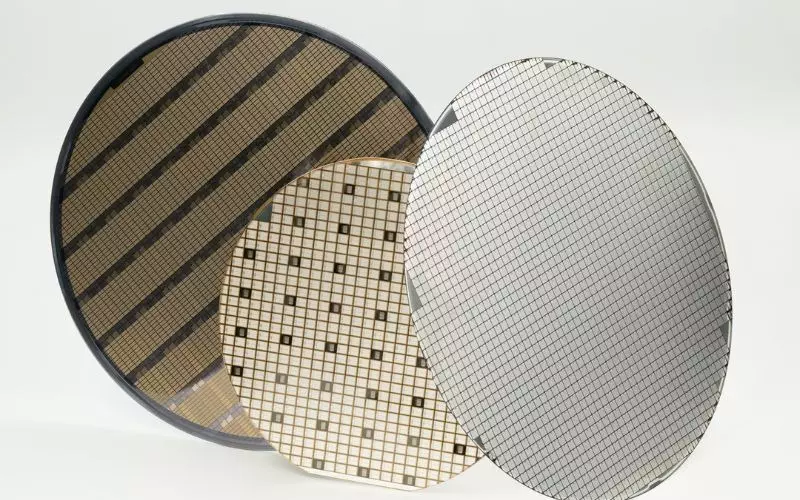
Chemical Vapor Deposition (CVD) & Epitaxy
Why SiC is better: Temperature uniformity determines thin film quality. A thickness gradient occurs even if it fluctuates only 2 °C, making it impossible to meet device specifications.
Silicon carbide maintains ±1°C uniformity across 300mm wafers. Epitaxial silicon, SiC and GaN thin films grow uniformly from center to end.
Example: In MOCVD GaN growth at 1200 °C, the SiC susceptor enables the manufacture of LED wafers with excellent thickness uniformity. In graphite, it is difficult to achieve comparable performance in semiconductor device fabrication.
Optimal Applications: Silicon Epitaxy, SiC Epitaxy, GaN Growth, MOCVD Process
Plasma Etching (ICP, RIE, Reactive Ion Etch)
Why SiC wins: Fluorine and chlorine plasma attack materials at the atomic level. Graphite is rapidly eroded to produce carbon particles that contaminate wafers.
Silicon carbide resists this chemical erosion due to its strong covalent bonding. This material maintains surface integrity even after several years of plasma exposure.
Example: In the 24-hour fluorine oxide film etching process, the graphite susceptor had only six to nine months until it needed to be replaced due to particle problems. Silicon carbide substrates under the same conditions operated for 3-4 years with minimal wear.
Optimum application: oxide film etching, polysilicon etching, metal etching, high density plasma process
Physical Vapor Deposition (PVD) & Sputtering
Why SiC is helpful: PVD requires a non-polluting surface. The dense, non-porous structure of silicon carbide prevents gas emission during high-temperature sputtering.
Your metal films stay pure. The barrier layer is formed uniformly. Contact metallization meets the specifications for each batch.
Optimum application: Metal deposition, barrier layer, contact metallization
Rapid Thermal Processing (RTA)
Why SiC is superior: RTA heats and cools between 50 and 100 °C per second. Most materials crack under this thermal shock.
Silicon carbide handles rapid temperature changes without damage.Its low thermal expansion coefficient prevents stress accumulation during extreme heat cycles.
Optimum application: dopant activation, rapid oxide formation, annealing processes
How Do You Select the Right Silicon Carbide Supplier?
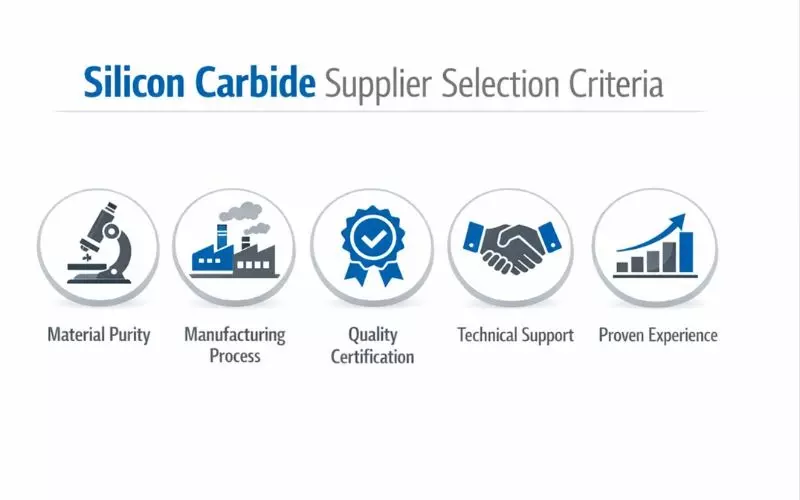
Avoid simply choosing the cheapest option by comparing the price of silicon carbide. What is really important when sourcing from silicon carbide wafer manufacturers is the following:
Manufacturing Process Control
Enquire of your prospective suppliers of SiC wafers about their production methods. Quality SiC requires a firm control on the temperature, atmosphere, and purity of the raw materials used in sintering..
Major question: “What is your variation in density between a batch?
Good suppliers keep it under 2%. Any more than that, you will have erratic results.
Material Purity Documentation
Get detailed specs on:
-
Impurities in metals (of paramount importance in maintaining the contamination level)
-
Porosity measurements
-
Surface roughness (Ra values)
Red flag: When suppliers are not able to provide you with all the data of the material, it is time to check a different supplier.
Proven Application Experience
Don’t be anyone’s test case. Ask for:
-
Similar semiconductor uses Case studies.
-
Contactable customer cases.
-
The data about production (not only laboratory results)
What makes a good supplier a great supplier: not just a supplier of parts, but also a solver of problems and optimization of your own application.
Technical Support Capability
You have special needs in your processes. Ensure that the supplier can:
-
Custom Shape Design
-
Offering Application Engineering Support.
-
Diagnostic Troubleshooting Performance Problems.
Silicon carbide semiconductor companies with good technical staffs are partners and not just vendors. Search the suppliers specialized in proven semiconductor ceramic parts.
Quality System Certification
Ensure that they are at least certified on ISO 9001. Other certifications might be necessary in the case of semiconductor applications, e.g. IATF 16949 and industry-specific standards.
The quality system provides consistency across lots of production.
What Maintenance Extends SiC Substrate Lifespan?
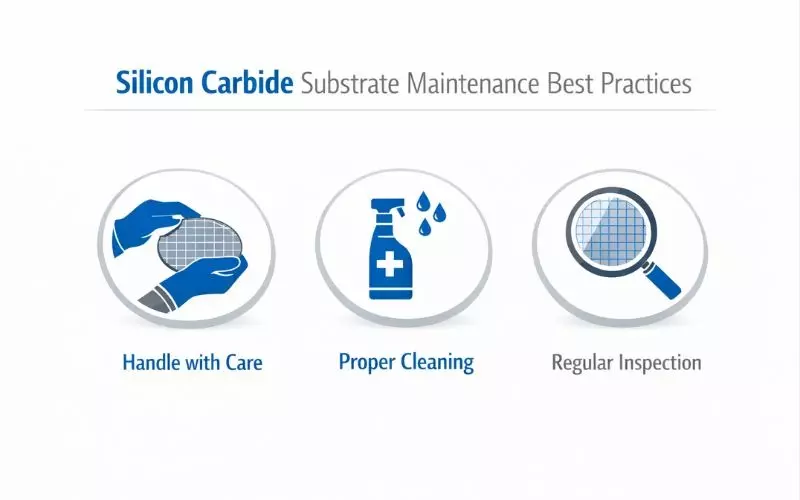
Handle with Care
Silicon carbide is very hard, but it can crack because it is a ceramic material. When the SiC substrate is dropped, cracks occur and the crack spreads during heating.
Safe handling methods:
-
Use a cushioned holder to move the board
-
Teach your team how to install correctly
-
Put in the protection box when storing
Please be careful when installing or maintaining the board because the replacement cost is expensive.
Follow proper cleaning procedures
The dense structure of silicon carbide facilitates cleaning. However, using inappropriate chemicals damages the surface.
Recommended steps:
-
Use approved cleaning agents (diluted HF, piranha solution, RCA cleaning solution, etc)
-
Strictly observe the instructions of equipment manufacturers
-
Enough rinse with deionized water
-
Completely dry and then install
Absolutely to avoid:
-
Use of polishing pads
-
Mixing of different cleaning agents
-
Skip the rinse step (leaves residue)
Implement Regular Inspection
Detect problems early before damaging yield. Develop and strictly observe the inspection schedule:
Monthly checks:
-
Check surface changes
-
Check for minor cracks and chips
-
Observation of wear conditions at mounting sites
Every 3 months:
-
Measurement of important dimensions (signs of thermal stress if warp occurs)
-
Number of particles in the chamber count
-
Monitoring yield figures associated with component aging
Replace when you see:
-
Increased particle defects
-
Visible erosion and surface roughness changes
-
Cracks and chips (these will continue to deteriorate)
-
If yield drops despite chamber cleaning
Do not wait for a fatal breakdown. Replace SiC substrates at 80% of its lifetime forecast value during periodic maintenance.
常见问题解答
Why is temperature uniformity important in semiconductor yield?
Temperature fluctuations cause thickness gradients in CVD and dopant concentration problems in the diffusion process, causing device failure. Silicon carbide substrates maintain the strict control required for stable yield.
How to determine when to replace SiC substrates?
Please pay attention to the increase of particle defects, yield loss, visible erosion and dimensional changes, and plan replacement during periodic maintenance.
Is SiC coating to graphite a valid solution?
No, it is a temporary measure. Coatings chip and delaminate by thermal stress, exposing the graphite of the lower layer. Solid silicon carbide substrates have long-term reliable performance.
What causes particle contamination from the substrate?
Material erosion in the plasma process. Graphite degrades easily and releases carbon particles, but the chemical resistance of silicon carbide prevents this contamination.
Can SiC withstand sudden temperature changes?
Yes. Silicon carbide has excellent thermal shock resistance and endures RTA temperature rise of 50-100 °C per second without cracking for thousands of cycles.
Why is silicon carbide more expensive than graphite?
High production cost due to ultra-high purity materials and high temperature processing. However, multi-year service life versus 6-18 months for graphite makes SiC cheaper long-term
How do I evaluate different silicon carbide suppliers?
Pay attention to data of material quality, control of processes, experience of application, and technical assistance, rather than only the price of silicon carbide. Assess overall value and ability to partner with suppliers.
结论
Silicon carbide substrates offer excellent performance in semiconductor manufacturing exceeding 1400°C, greatly reducing the total cost. Choose SiC when contamination control, temperature uniformity, and long-term reliability matter most to your process.
Ready to discuss your application? Contact our engineering team for SiC substrate specifications, customization options, and application guidance.