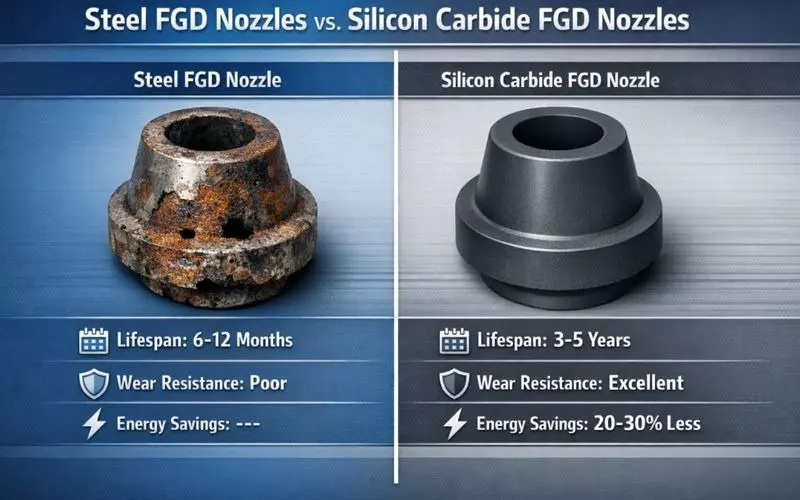
Steel desulfurization nozzles fail in 6-12 months due to wear and clogging. Silicon carbide nozzles last 3-5 years with excellent corrosion resistance. This guide covers performance comparison, total cost of ownership, supplier selection, and maintenance of FGD systems at power plants and steelworks.
What Are Silicon Carbide Desulfurization Nozzles?
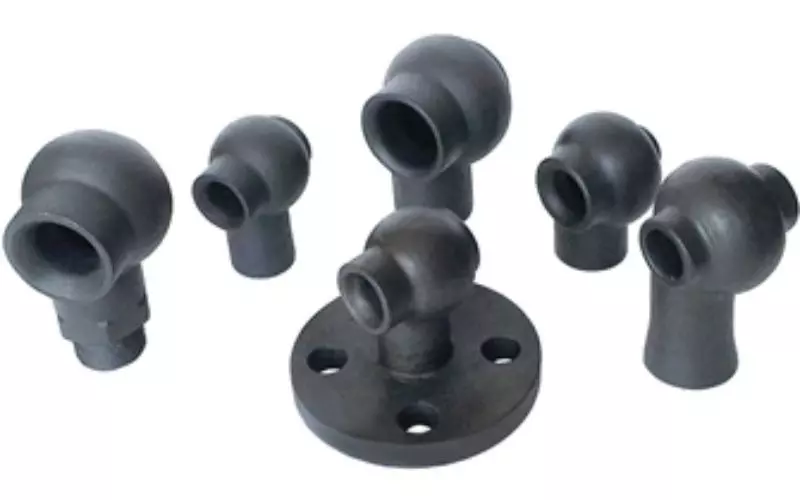
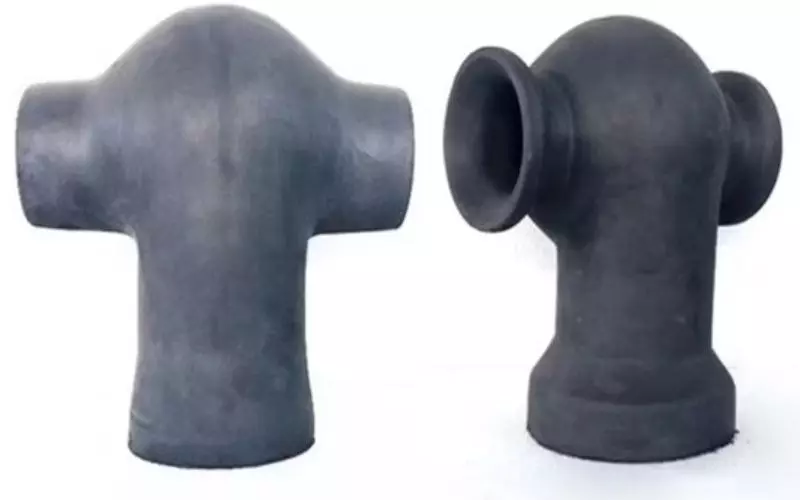
Silicon carbide nozzles spray limestone slurry in the FGD tower to remove sulfur dioxide from exhaust gas. In the design of silicon carbide desulfurization nozzles, advanced ceramics are used instead of steel.
The FGD system brings harsh environments to the nozzle. Limestone slurry acts like liquid sandpaper and acidic gas corrodes metal. Steel nozzles wear out in months. Reaction bonded cacbua silic handles this far better.
Desulfurization silicon carbide nozzle types include reaction bonded and sintered. Both have better wear resistance and acid resistance than steel.
How Does Silicon Carbide Compare to Steel Nozzles?
Here’s how silicon carbide nozzle performance stacks up against traditional materials:
|
Tài sản |
Cacbua silic |
Thép không gỉ |
Gốm sứ |
|
Typical Lifespan |
3-5 years |
6-12 months |
12-18 months |
|
Khả năng chống mài mòn |
Xuất sắc |
Poor |
Vừa phải |
|
Chống ăn mòn |
Xuất sắc |
Vừa phải |
Tốt |
|
Clogging Frequency |
Very Low |
Cao |
Vừa phải |
|
Spray Consistency |
Stays stable |
Degrades fast |
Slowly declines |
|
Relative Cost |
Higher (3-4x) |
Lower (baseline) |
Moderate (2x) |
Note: Actual cost depends on size and supplier. Please contact the manufacturer to calculate specific prices and return on investment.
The numbers are only part of the story. Steel nozzles need to be replaced three to four times a year. Silicon carbide nozzles are replaced once every three to five years.
A power plant that operates for 8,000 hours a year provides substantial savings. One facility calculates annual savings of $45,000 for parts and downtime. Initial investment is high, but typical payback period is only 18 months.
Why Use Silicon Carbide in FGD Systems?
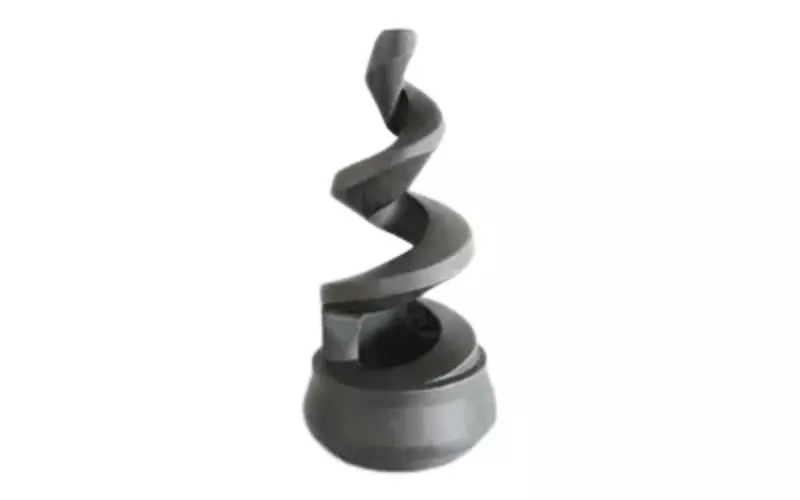
Long-lasting wear resistance
Limestone slurry moves fast in the nozzle. Steel wears rapidly. Spray holes get bigger, patterns go crooked, and the desulfurization efficiency is reduced.
The hardness of silicon carbide nozzles is Mohs hardness 9 (hardness comparable to diamond). This material resists particles that destroy steel in months.Even silicon carbide dust due to slight wear is much less than metal deterioration. Spray patterns stay consistent for several years, not weeks.
No corrosion
When sulfur dioxide and water react, acid is generated. The pH inside the scrubber drops from 1 to 2, eroding the steel from the inside.
Silicon carbide desulfurization nozzle material does not react with acid at all. Ceramic bonds are maintained even when exposed to corrosive slurry for many years, and you won’t see the pitting and holes that kill metal nozzles.
Solving clogging problems
Coarse surfaces accumulate sediment rapidly. Steel nozzles form sediments to block the spray holes.
Smooth silicon carbide seal prevents particle adhesion. Slurry keeps flowing without clogging. One steelworks reduced cleaning frequency from weekly to quarterly, reducing maintenance time to eliminate nozzle clogging by 75%.
Reduce downtime
A part of the system stops every time the nozzle changes. The true cost is not the $500 nozzle cost. $15,000 worth of production losses that workers lose while replacing parts.
The long life of silicon carbide nozzles makes maintenance time predictable. You can schedule a replacement, rather than a rushed response at the time of an emergency. After switching from steel, the facility reported a 70% reduction in emergency stoppages.
What Are the Pros and Cons?
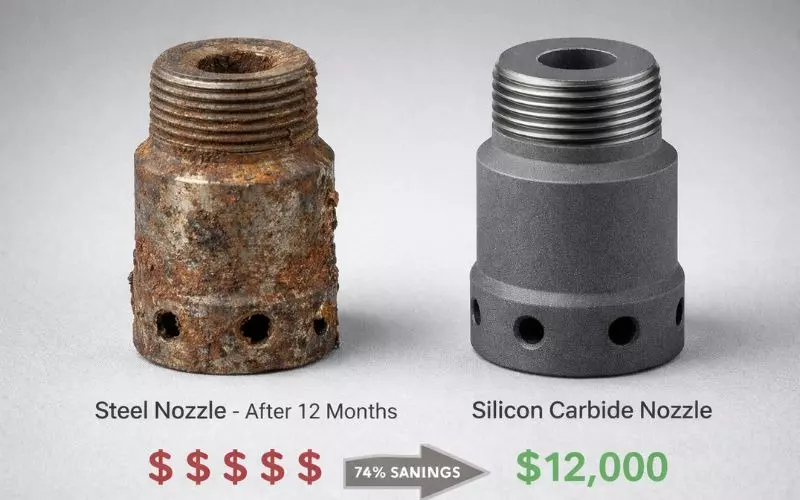
Steel/Ceramic Nozzles: Cheap Now, Expensive Later
Benefits:
-
Steel nozzles have the cheapest initial cost
-
All suppliers hold stock
-
Next Day Delivery Available
-
No special handling required
Disadvantages:
-
Limestone slurry wears steel rapidly
-
Acid corrosion attack from inside
-
Replacement is required every 6-12 months
-
Spraying pattern deteriorates at interchange intervals
-
Sulfur removal efficiency decreases over time
Example: One power plant spends $12,000 a year on steel nozzles and $35,000 more on replacement and downtime. The nozzle alone brought the total annual cost of ownership to $47,000.
Silicon Carbide Nozzles: Higher Price, Lower Long-Term Cost
Thuận lợi:
-
Silicon carbide nozzles run for 3-5 years without problems
-
Zero corrosion problem
-
Spraying pattern stabilized
-
Sulfur removal efficiency does not decrease
-
Lifecycle costs reduced by 60-70% compared to steel
Drawbacks:
-
Initial cost is three to four times higher
-
Ceramic damaged by falling or excessive tightening
-
Prolonged lead time
-
Pre-planning is required instead of last-minute orders
The investment recovery period is calculated in 5 years instead of 5 months. Includes replacement costs ($150/hour). Additional $8,000 per production loss during outage. SiC pays for itself in 18-24 months. After that, the cost reduction effect occurs every month.
Where Do These Nozzles Work Best?

Coal-fired power plant
FGD systems run 24 hours a day at large power plants. High sulfur coal produces harsh conditions. The downtime results in a loss of several thousand dollars per hour.
Silicon carbide mechanical seals and nozzles do not fail while enduring continuous limestone spray. Stable performance suppresses emissions. You can schedule maintenance when planning is stopped instead of an emergency stop.
Optimal Application Areas:
-
Wet scrubber
-
Limestone Slurry System
-
High Sulfur Coal Treatment
Steel Mill Emission Control
Sinter plants and coke furnace produce sulfur dioxide mixed with dust. This mixture rapidly damages the normal nozzle. Steel mills cannot tolerate production delays due to nozzle exchange.
Silicon carbide mechanical seals and nozzle units for desulfurization endure both wear and corrosion simultaneously. It continues to operate in environments where steel parts are destroyed in weeks. In steel mills, maintenance is reported to be reduced by 80% compared to conventional materials.
Main Application Areas:
-
Scrubber for sintering plant
-
Coke furnace gas cleaning
-
Integrated Steel Manufacturing Facility
Industrial Boiler Systems
Reliable emissions control is essential for chemical plants, waste-to-energy facilities and heavy oil combustion equipment. These operations have low profit margins and directly hit revenue every time there is a halt.
The reliability of silicon carbide mechanical seals and nozzles reduces maintenance requests and unexpected failures. The plant can plan annual inspection instead of monthly replacement, maintaining the predictability of the operating budget.
Main Application Areas:
-
Chemical Processing Plant
-
Waste incineration facility
-
Heavy Oil Boiler System
FGD System Upgrades
Older scrubbers are difficult to meet modern emission standards. Silicon carbide seals and nozzles are upgraded to improve performance without total reconstruction. If fine particulation is improved, sulfur removal efficiency is also improved.
A nozzle-only upgrade also improves removal efficiency by 5-10%. This often makes it possible to meet new regulations without major system renovations.
Main Application Areas:
-
Renovation Project
-
Regulatory Compliance Upgrade
-
Improvement of aging system
How Do You Pick the Right Supplier?
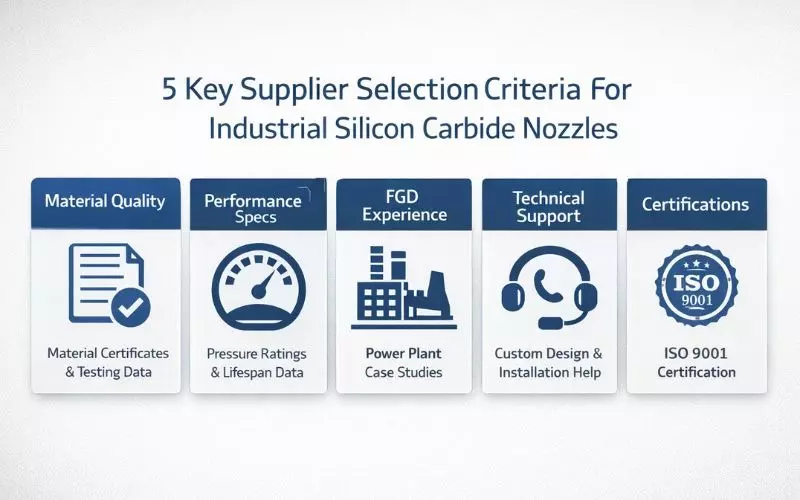
Do not choose just by price. What really matters is this:
Verifiable material quality
Contact your supplier for structural specifications and material testing processes for silicon carbide. High quality silicon carbide nozzles require uniform density and purity. Get a certificate before ordering. If there is no test data, the quality per lot is unstable and causes early failure.
System Performance Data
Request specific specifications:
-
Maximum injection pressure rating
-
Slurry Concentration Limit
-
Expected lifetime under conditions of use
-
Surface load capacity
The specification of reaction bonded silicon carbide must match perfectly with the customer’s flue desulfurization (FGD) parameters. Ensure that silicon carbide seals are compatible with your specific system pressure and temperature requirements. Suppliers with no power plant experience cannot understand your needs.
Actual FGD performance
-
See Case Studies in Industry
-
Request Direct Contact Customer Referral
-
Confirmation of supply to other power plants and steel plants
Excellent suppliers help you select nozzles and troubleshoot them. The average supplier simply ships the box.
Technical Support System
Can custom nozzle design, installation guidance, trouble response Silicon carbide mechanical seals and nozzles require installation adjustments - choose a problem solver rather than order acceptance.
Acquisition of appropriate certification
Minimum ISO 9001 certification confirmed. Consistent manufacturing process ensures stable nozzle performance per lot.
How Can You Make Nozzles Last Longer?
Handle Installation Carefully
Silicon carbide mechanical seals and nozzles are damaged by falling and cross-threading during installation. Violent handling creates weaknesses and causes failure at system startup.
Installation Notes:
-
Use padded tools when moving the nozzle
-
Follow torque specs exactly - Do not tighten forcibly
-
Check gasket position before bolting
-
Never force anything
The replacement cost of a single nozzle is $800-1,500. Careful handling is effective immediately.
Follow Operating Guidelines
Vận hành ngoài phạm vi thông số thiết kế sẽ làm giảm đáng kể tuổi thọ vòi phun. Lượng chất rắn dư thừa trong bùn sẽ đẩy nhanh quá trình mài mòn. Áp suất quá cao gây ứng suất lên vật liệu gốm.
Thực tiễn tốt nhất:
-
Duy trì nồng độ bùn theo khuyến nghị (hàm lượng chất rắn 10-15%)
-
Giữ áp suất phun trong phạm vi thiết kế của nhà sản xuất.
-
Theo dõi sự thay đổi nhanh chóng của áp suất trong các thiết bị đo.
-
Không nên vận hành hệ thống khi không có tài nguyên (vì lý do...) sốc nhiệt)
Kiểm tra định kỳ
Hãy phát hiện vấn đề trước khi nó gây ra sự cố dừng xe đột ngột. Lập lịch kiểm tra định kỳ.
Kiểm tra định kỳ hàng tháng:
-
Kiểm tra kiểu phun trong quá trình vận hành
-
Kiểm tra xem có hiện tượng mòn và tắc nghẽn không (dấu hiệu của sự hao mòn và tắc nghẽn)
-
Kiểm tra các chỗ rò rỉ xung quanh gioăng.
Bảo trì định kỳ hàng quý:
-
Tháo vòi lấy mẫu và đo kích thước lỗ.
-
So sánh các giá trị đo được với dữ liệu tham khảo.
-
Kiểm tra xem có vết nứt hoặc sứt mẻ nào không.
-
Kiểm tra các vòng đệm silicon carbide xem có bị mòn hoặc hư hỏng không.
Nhiệm vụ hàng năm:
-
Thay thế tất cả các gioăng, ngay cả khi chúng trông vẫn còn tốt.
-
Theo dõi sự lắng đọng bụi silicon carbide trong khu vực phun
-
Phân tích xu hướng ghi nhật ký áp suất
Vệ sinh đúng cách
Cặn vôi và bụi cacbua silic tích tụ theo thời gian. Hãy sử dụng các chất tẩy rửa hóa học được phê duyệt thay vì bàn chải sắt hoặc dụng cụ cạo kim loại. Ngâm có hiệu quả hơn cạo. Ngoài ra còn có một nhà máy đạt hiệu quả tuyệt vời trong việc làm sạch bằng sóng siêu âm.
Không nên dùng máy rửa áp lực cao để xịt trực tiếp vào vòi phun. Lực tác động có thể gây nứt vỡ vật liệu gốm sứ.
Biết khi nào cần thay thế
Đừng chờ đến khi xảy ra sự cố nghiêm trọng. Hãy thay thế vòi phun nếu bạn thấy các triệu chứng sau:
-
Biến dạng mẫu phun (lớp phủ không đều trong tháp)
-
Chất lượng phun sương giảm (tạo thành các giọt lớn)
-
Khi độ mài mòn đường kính lỗ vòi phun vượt quá 10% đường kính ban đầu
-
Khi xuất hiện các vết nứt hoặc sứt mẻ rõ ràng trên bộ phận gốm sứ.
-
Thay đổi áp suất đột ngột trong đầu phun
Hãy lên kế hoạch thay thế trong thời gian tạm ngừng hoạt động theo kế hoạch, chứ không phải trong thời gian ngừng hoạt động khẩn cấp. Chi phí thay thế vòi phun khẩn cấp cao gấp ba đến bốn lần so với chi phí bảo trì theo kế hoạch.
Câu hỏi thường gặp
Tại sao vòi phun silicon carbide lại đắt hơn vòi phun thép?
Việc sản xuất silicon carbide bằng phương pháp liên kết phản ứng đòi hỏi vật liệu có độ tinh khiết cực cao và quy trình xử lý đặc biệt, nhưng vì tuổi thọ của SiC từ 3-5 năm so với 6-12 tháng của thép, nên SiC rẻ hơn khi xét đến tần suất thay thế và chi phí thời gian ngừng hoạt động.
Tuổi thọ của vòi phun SiC trong hệ thống khử lưu huỳnh khí thải (FGD) là bao lâu?
Các hệ thống xử lý bùn đá vôi điển hình có tuổi thọ từ 3-5 năm. Có những báo cáo cho thấy tuổi thọ có thể lên đến hơn 6 năm tùy thuộc vào nhà máy điện, và từ 2-3 năm tùy thuộc vào lượng bụi tại nhà máy thép.
Vòi phun silicon carbide có tương thích với hỗn hợp bùn có hàm lượng chất rắn cao không?
Đúng vậy, thiết kế vòi phun khử lưu huỳnh bằng silicon carbide có thể đáp ứng nồng độ chất rắn lên đến 20%. Tuy nhiên, hầu hết các hệ thống FGD hoạt động với nồng độ chất rắn từ 10% đến 15% để đạt được sự cân bằng tối ưu.
Thời gian hoàn vốn khi chuyển sang sử dụng SiC là bao lâu?
Nếu tính toán bằng cách cộng chi phí nhân công và tổn thất do thời gian ngừng hoạt động với tổng chi phí vòi phun thép nhân với tần suất thay thế, hầu hết các nhà máy sẽ hòa vốn trong vòng 18-24 tháng. Đối với các nhà máy có thời gian ngừng hoạt động cao, thời gian hoàn vốn sẽ dưới 12 tháng.
Tôi nên xác định thời điểm thay vòi phun như thế nào?
Nếu kiểu phun bị xáo trộn, độ mài mòn của lỗ phun vượt quá 10%, hoặc vết nứt được xác nhận bằng mắt thường. Tại nhiều nhà máy, 80-90% trong tổng tuổi thọ dự kiến được thay thế trong quá trình bảo trì định kỳ.
Vòi phun SiC có hoạt động được trong hệ thống khử lưu huỳnh khí thải (FGD) không?
Đúng vậy, khả năng chống ăn mòn của vòi phun silicon carbide trong môi trường nước mặn là có và nó không phản ứng với clorua, không giống như thép không gỉ, vốn dễ bị ăn mòn do ứng suất clorua.
Những nhà máy điện nào được sử dụng thành công?
Công suất lớn hơn 500MW nhà máy điện đốt than Tại Hoa Kỳ và châu Âu, công nghệ vòi phun khử lưu huỳnh bằng silicon carbide được áp dụng rộng rãi và được sử dụng trong các nhà máy thép ở Trung Quốc, Nhật Bản và Đức.
Phần kết luận
Vòi phun silicon carbide có tuổi thọ từ 3-5 năm, cao hơn nhiều so với vòi phun thép chỉ từ 6-12 tháng, giúp giảm chi phí và thời gian ngừng hoạt động khi phải thay thế hệ thống khử lưu huỳnh khí thải (FGD). Nếu chi phí vận hành và độ tin cậy của hệ thống là yếu tố quan trọng hàng đầu tại các nhà máy điện và nhà máy thép, hãy chọn SiC.
Vui lòng tham khảo về ứng dụng FGD. Để biết thông tin về thông số kỹ thuật vòi phun và phân tích hiệu suất, vui lòng liên hệ... liên hệ đội ngũ kỹ thuật của chúng tôi.