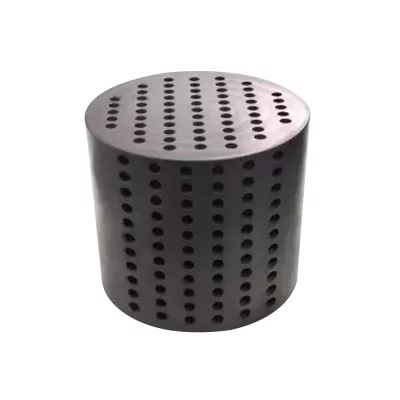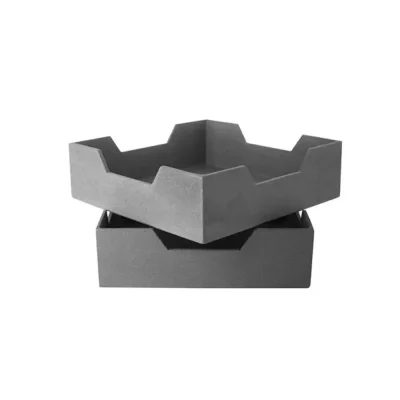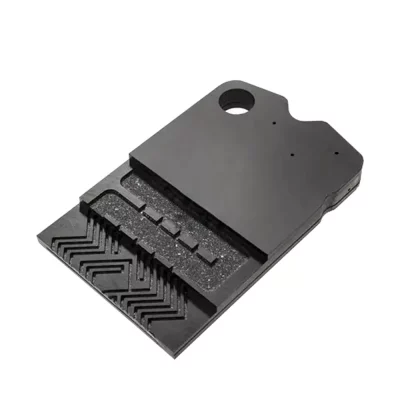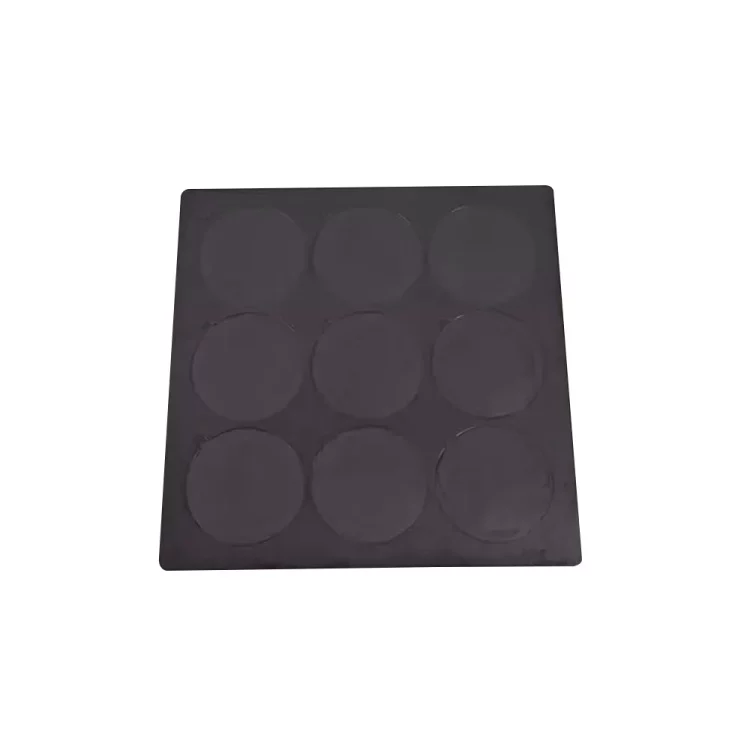
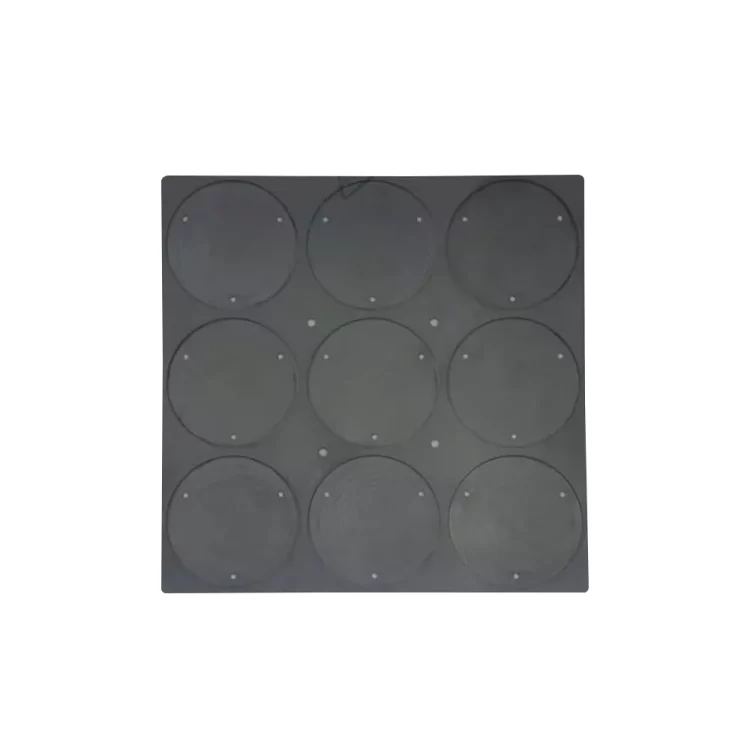
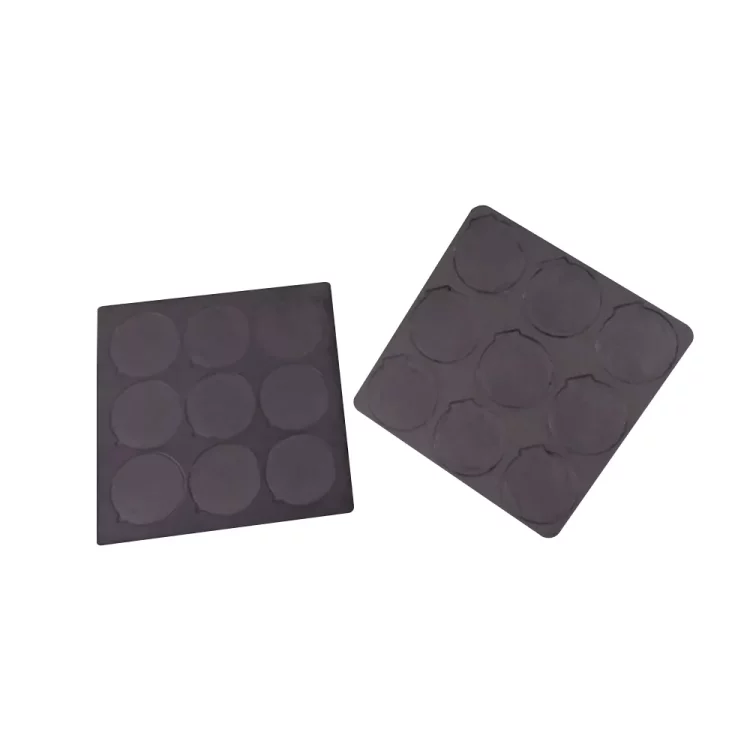
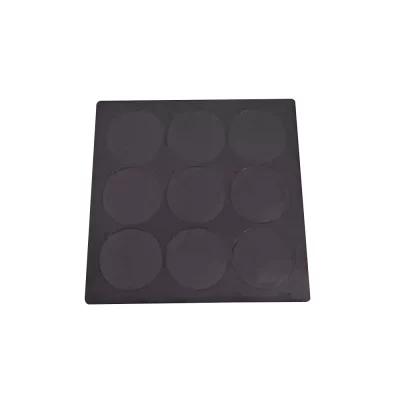
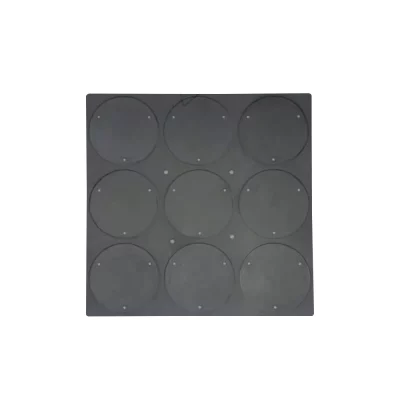

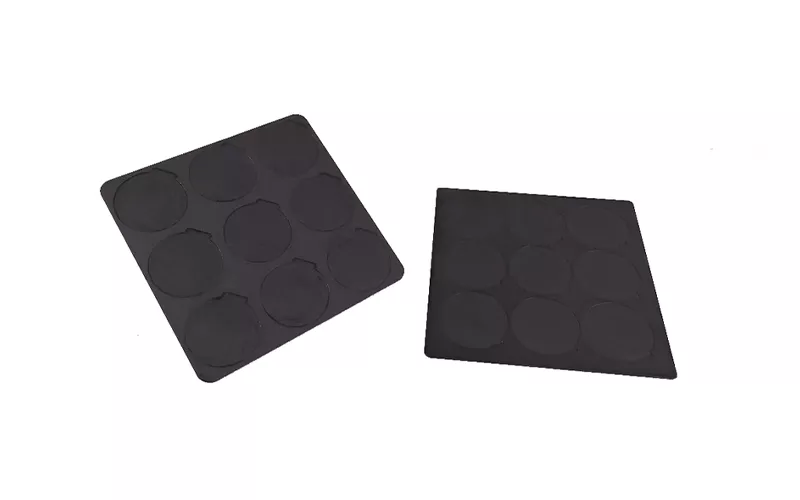
GORGEOUS CERAMICS (GGS Ceramic)'s silicon carbide RTA carriers are meticulously crafted using ultra-high SiC content (≥99%), combined with isostatic pressing and high-temperature sintering processes (high-density CVD-SiC coating technology).
Our professional team can provide high-precision customization based on customer-provided design drawings or cavity structures, addressing aspects such as outer diameter, plate thickness, number/depth of cavities, and the position and shape of positioning holes and material pick-up slots to meet diverse application needs.
Delivery Cycle
We understand the stringent requirements of semiconductor customers regarding production line scheduling and provide you with standardized and efficient response services:
- We will complete a feasibility assessment and quotation within 24-48 hours of receiving design drawings.
- For urgent customers, we offer a fast track for expedited orders, completing complex precision machining and customized production in 4-6 weeks.
Conditionnement
We employ semiconductor-grade standard packaging and safe transportation to ensure zero damage and zero contamination of the carrier board during transport. GORGEOUS CERAMICS (GGS Ceramic) strictly adheres to clean packaging standards.
After undergoing ultrasonic cleaning and drying in an ISO Class 7 cleanroom according to international standard ISO 14644-1:2015 7, the product will be packaged in double-layer vacuum PE clean bags to prevent dust and moisture intrusion.
The interior of the packaging uses custom-made high-density shock-absorbing foam to fully wrap the product, absorbing the impact during transportation and providing comprehensive shockproof, pressure-resistant, and shape-holding protection.
Advantages of Silicon Carbide RTA Carriers
Stable support for ultra-high temperature rapid annealing
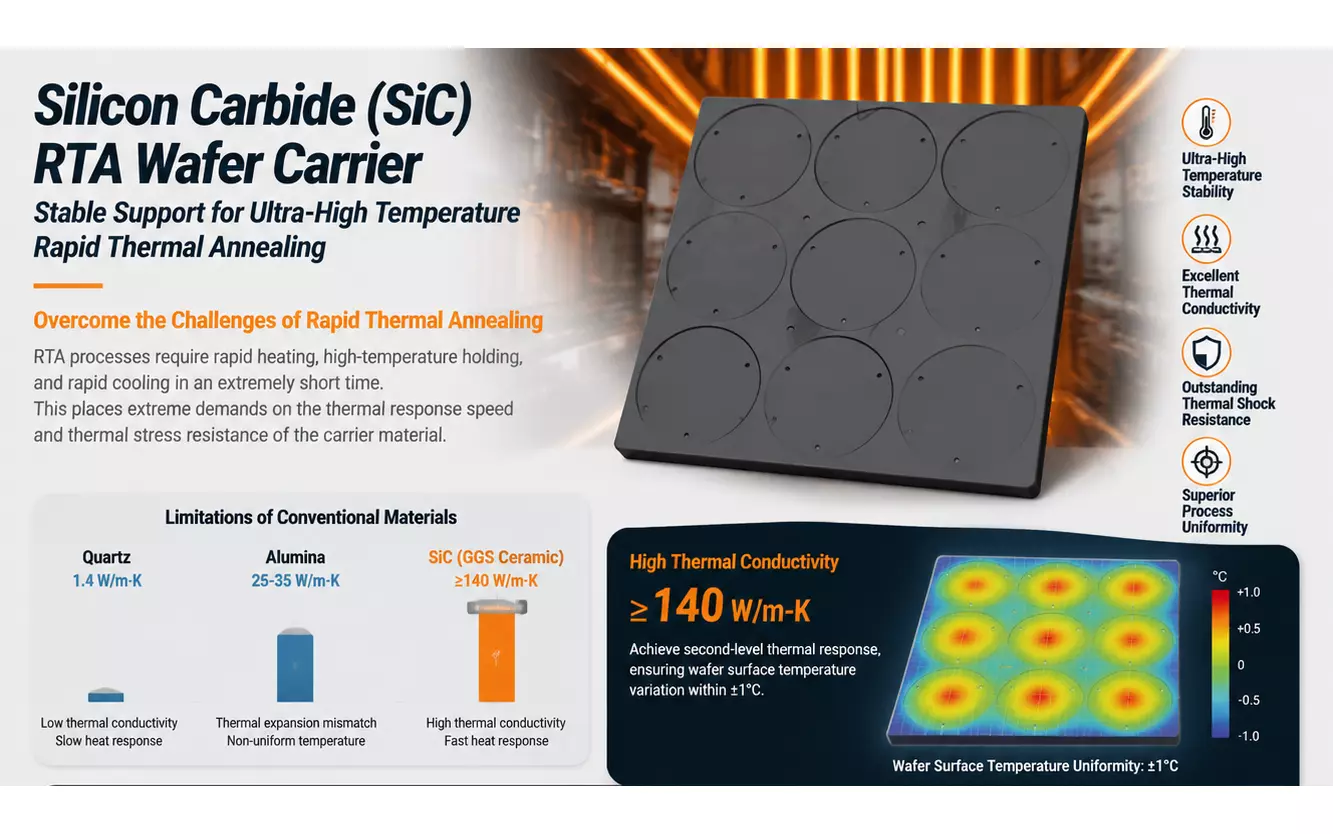
A common challenge in RTA (Regenerative Thermal Acquisition) processes is the need to complete rapid heating, high-temperature holding, and rapid cooling within an extremely short timeframe. This places significant demands on the thermal response speed and thermal stress resistance of the carrier material. Materials such as quartz (1.4 W/m·K) and alumina (25-35 W/m·K) have low thermal conductivity and slow thermal response. Furthermore, their coefficients of thermal expansion are mismatched with those of silicon and semiconductor substrates, easily causing temperature differences on the wafer surface. This ultimately leads to wafer thermal stress deformation, increased defect density, and severely reduced yield.
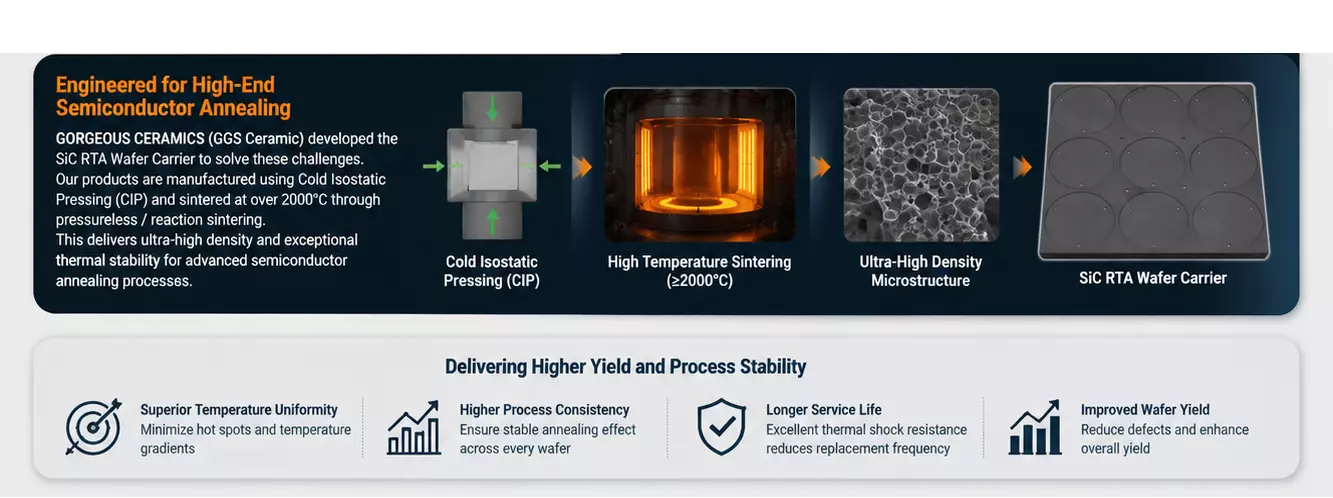
GORGEOUS CERAMICS (GGS Ceramic) has developed a silicon carbide (SiC) RTA carrier to address the aforementioned pain points. Our products are manufactured using cold isostatic pressing (CIP) and high-temperature pressureless/reactive sintering processes above 2000℃, resulting in ultra-high density and thermal stability. They are specifically designed for customers' high-end semiconductor annealing processes.
With a thermal conductivity ≥140W/m·K, we achieve second-level thermal response, ensuring that the temperature difference across the entire wafer surface is controlled within a small range of ±1℃, significantly improving annealing uniformity.
|
performance |
silicon carbide ceramic parameters |
|
conductivité thermique |
140-180 W/m·K |
|
Résistance aux hautes températures |
1400-1600℃ |
|
coefficient of thermal expansion |
4.0-4.2×10⁻⁶/K |
Ensure uniform temperature control within the wafer surface
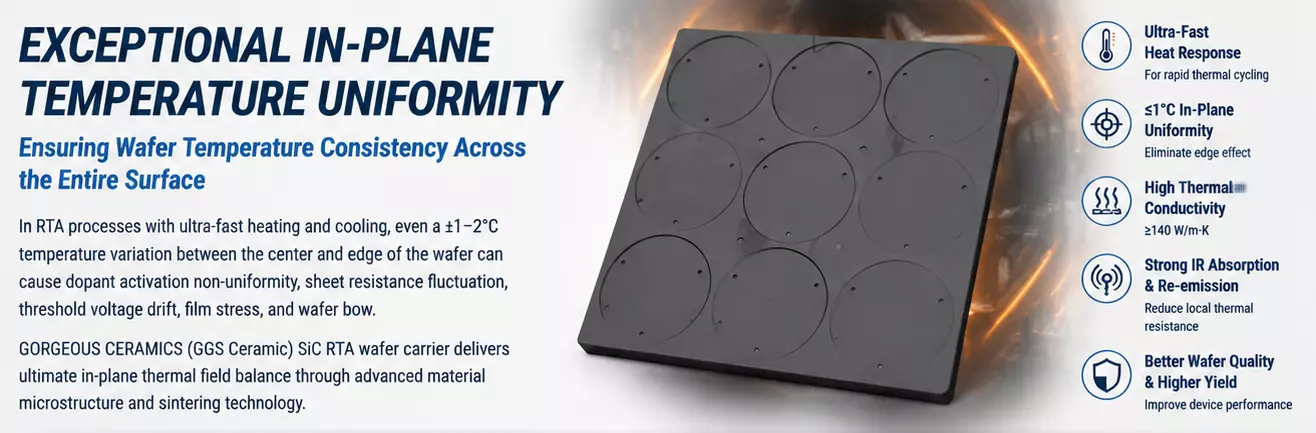
During the rapid heating and cooling processes of RTA (Reverse Temperature Alter) technology, the temperature consistency between the wafer center and edge is crucial. In micron- and nanon-scale semiconductor processes, even a minute temperature difference of ±1-2°C can cause uneven doping activation rates, leading to fluctuations in wafer resistance and threshold voltage drift. Furthermore, uneven annealing and the resulting thin film stress can cause a series of serious problems, such as wafer warping.
GORGEOUS CERAMICS (GGS Ceramic)’s silicon carbide RTA carriers provide the ultimate in-plane thermal field balance for wafers by optimizing the material’s microstructure and sintering process.
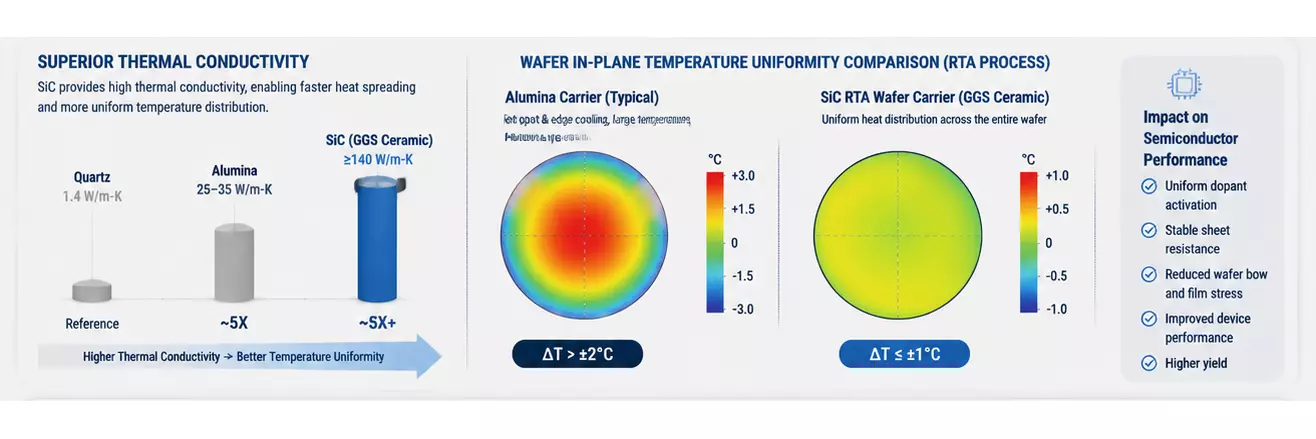
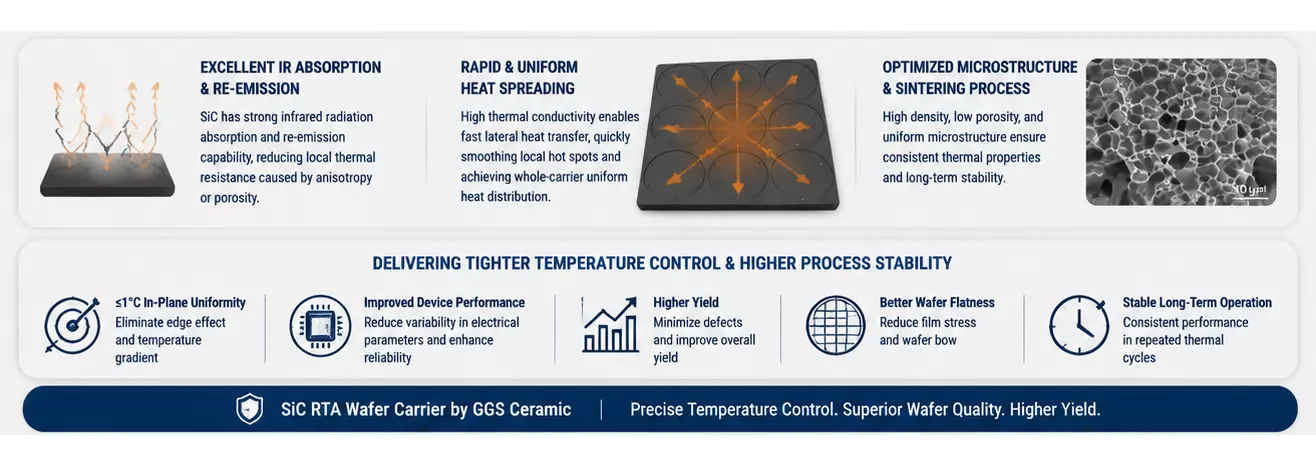
- Our silicon carbide exhibits extremely high thermal conductivity (140 W/m·K, more than 5 times that of alumina), rapidly smoothing out localized hot spots and achieving high-speed, uniform heat diffusion across the entire wafer.
- Our silicon carbide RTA carriers possess excellent infrared radiation absorption and re-emission capabilities, significantly reducing localized thermal resistance differences caused by anisotropy or porosity.
- With ultimate in-plane temperature control, our silicon carbide RTA carriers assist annealing equipment in strictly controlling the temperature difference within the wafer plane to within ≤1℃, effectively eliminating "edge effects" and further enhancing the overall wafer performance.
Differences in thermal conductivity among various materials:
|
Matériel |
conductivité thermique |
|
quartz |
1.4 W/m·K |
|
céramiques d'alumine |
25-35 W/m·K |
|
céramique en carbure de silicium |
140-180 W/m·K |
Superior thermal shock resistance, adaptable to rapid temperature cycling
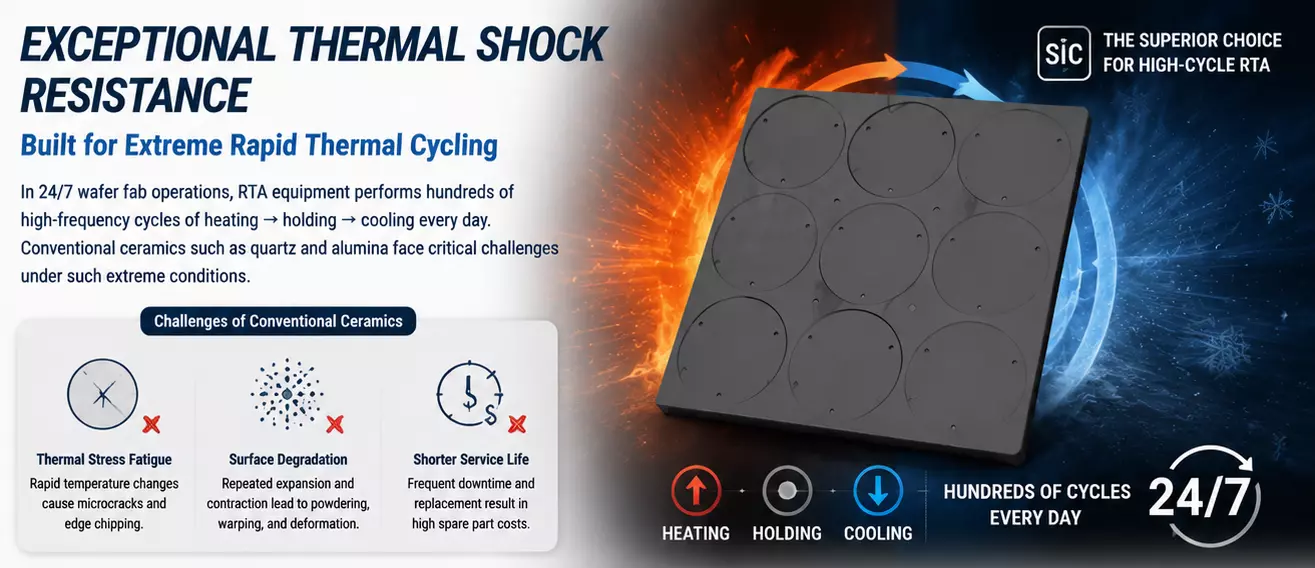
In many 24-hour continuous wafer fabs, RTA equipment undergoes hundreds of high-frequency cycles of heating, holding, and cooling every day. If ordinary ceramics (such as quartz and alumina) are used, they face extremely high challenges, such as resisting thermal stress fatigue. Rapid high and low temperature cycles can easily produce micro-cracks, and the edges are prone to thermal stress chipping. Repeated thermal expansion and contraction may cause powder shedding or warping deformation of the material surface. RTA trays have a shorter lifespan and require frequent downtime for replacement, which will result in expensive spare parts costs.
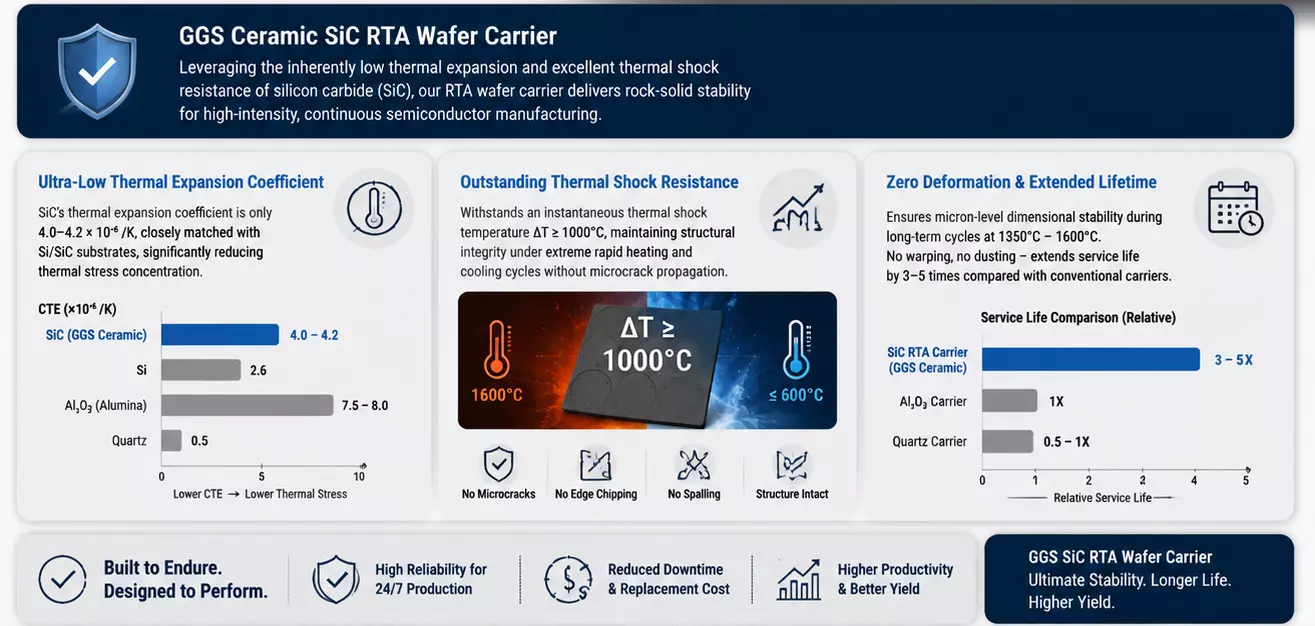
GORGEOUS CERAMICS (GGS Ceramic)'s silicon carbide RTA carriers, thanks to SiC's ultra-low coefficient of thermal expansion and high resistance to thermal shock, provide robust stability for the high-intensity continuous production of RTA equipment.
- Ultra-low coefficient of thermal expansion: Silicon carbide has a coefficient of thermal expansion of only 4.0-4.2×10⁻⁶/K, which is highly compatible with silicon/silicon carbide substrates, greatly reducing the concentration of thermal stress.
- Superior resistance to thermal shock: It can withstand instantaneous thermal shock with a temperature difference ΔT ≥ 1000℃, maintaining structural integrity even under rapid temperature cycling, with no risk of microcrack propagation.
- Guaranteed zero dimensional deformation and ultra-long lifespan: We can guarantee that the product maintains micron-level dimensional stability even under long-term cycling at high temperatures of 1350°C - 1600°C, without warping or dust generation, extending its lifespan by 3-5 years compared to ordinary carriers.
Applications of silicon carbide RTA carriers
The primary applications of silicon carbide RTA carriers are in semiconductor chip manufacturing and high-temperature rapid thermal annealing (RTA/RTP) processes for semiconductor optoelectronic devices.
Our silicon carbide RTA carriers can be customized to fit various RTA equipment on the market.
Examples include: Mattson Technology's Helios series (Helios C200, Helios XP, for annealing 200mm/300mm logic and memory chips), Mattson 2800/3000 series, etc.
ASM International/ASMI's Epsilon series, Levitor series.
ECM Group's AS-Master (200mm mass production grade), AS-One/AS-Micro/Jipelec JetFirst series, etc.
FAQ
1. What are the applications of silicon carbide RTA boards?
Silicon carbide RTA boards are primarily used in rapid thermal annealing (RTA) systems to support and heat semiconductor wafers during high-temperature processes such as doping activation, oxidation, and annealing.
The high thermal conductivity and thermal stability of silicon carbide (SiC) material ensure rapid and uniform heating as well as precise temperature control.
2. Why is silicon carbide (SiC) a more ideal substrate material than graphite or quartz in rapid thermal annealing (RTA) applications?
Compared to graphite and quartz, silicon carbide (SiC) offers superior thermal conductivity and temperature resistance, and is chemically stable.
Unlike graphite, silicon carbide does not produce particles in high-temperature applications and requires no coating; furthermore, its performance is superior to quartz, making it ideal for semiconductor processes.
3. Can you customize products for specific RTA systems?
Yes, GORGEOUS CERAMICS (GGS Ceramic) can customize the size, thickness, shape, and surface finish of products according to your requirements.
4. Which companies in China manufacture silicon carbide ceramics?
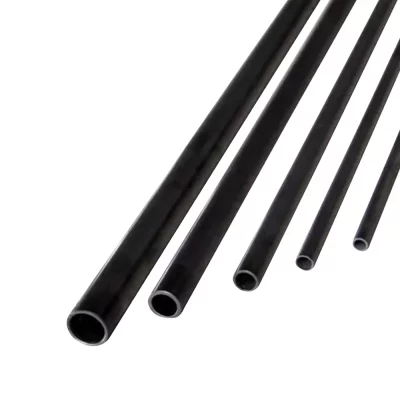
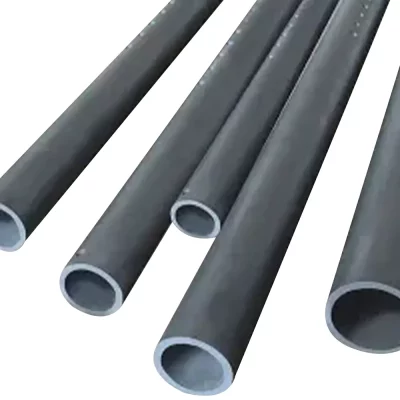
GORGEOUS CERAMICS (GGS Ceramic): A manufacturer specializing in customized and precision-machined advanced ceramics, offering a wide range of silicon carbide ceramic products, such as silicon carbide reactor tubes, protective tubes, sintered structural components, and various structural ceramic parts. OEM/ODM customization is also supported.
XC: Possesses extensive manufacturing experience in advanced and electronic ceramics, with products covering high-performance ceramic applications.
Shandong Tianyue Advanced Ceramics: Primarily focuses on silicon carbide single-crystal substrate materials and enjoys a high reputation in the SiC industry chain.
5. What are the commonly used RTA carrier materials and structural forms?
Currently, they are mainly divided into two categories:
1. SiC-coated graphite carriers: These use high-purity graphite as a substrate and deposit a layer of high-purity silicon carbide film (tens of micrometers) through CVD deposition. These products offer moderate cost, flexible processing, and uniform thermal conductivity.
2. Monolithic silicon carbide carriers: These are made entirely of SiC ceramic through reaction sintering. They offer higher durability and resistance to strong acid and alkali corrosion.