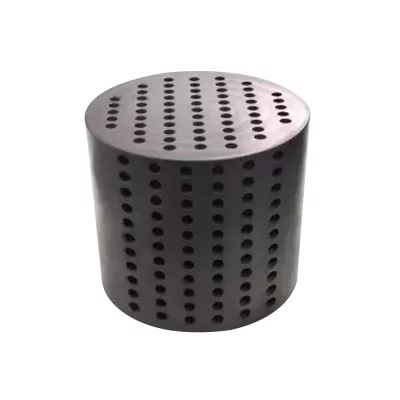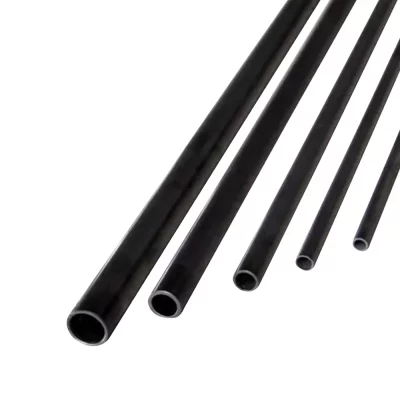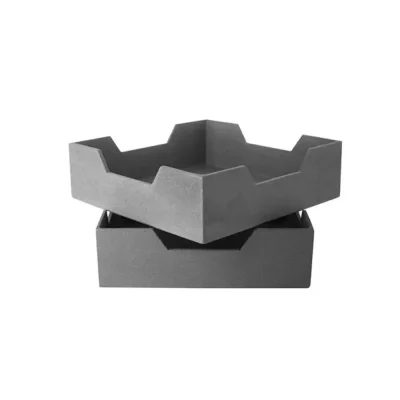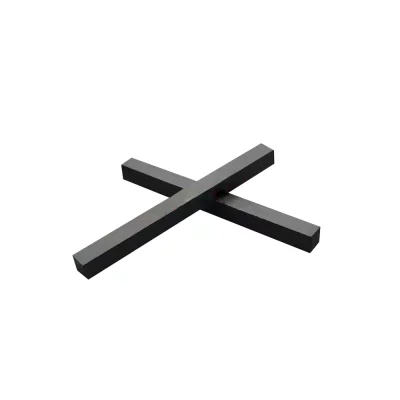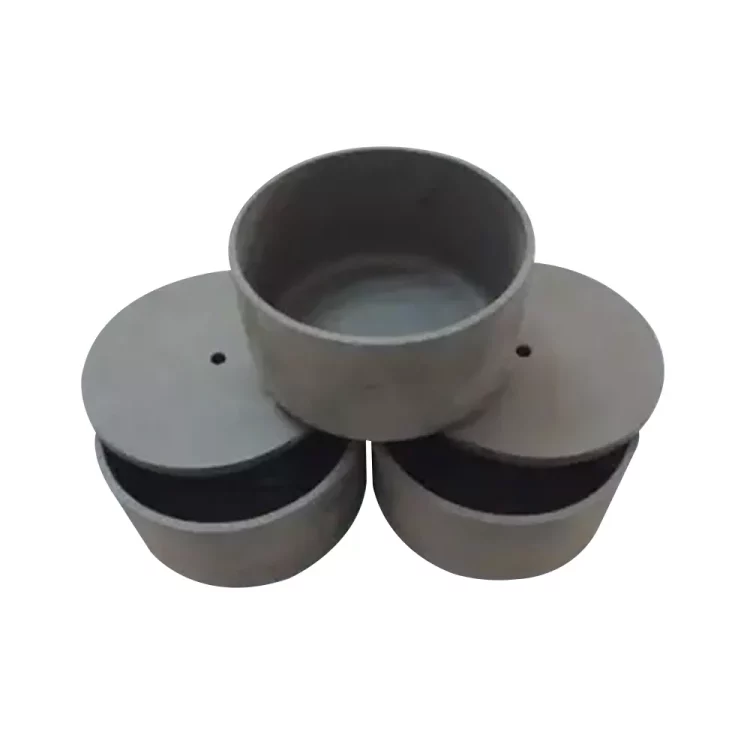
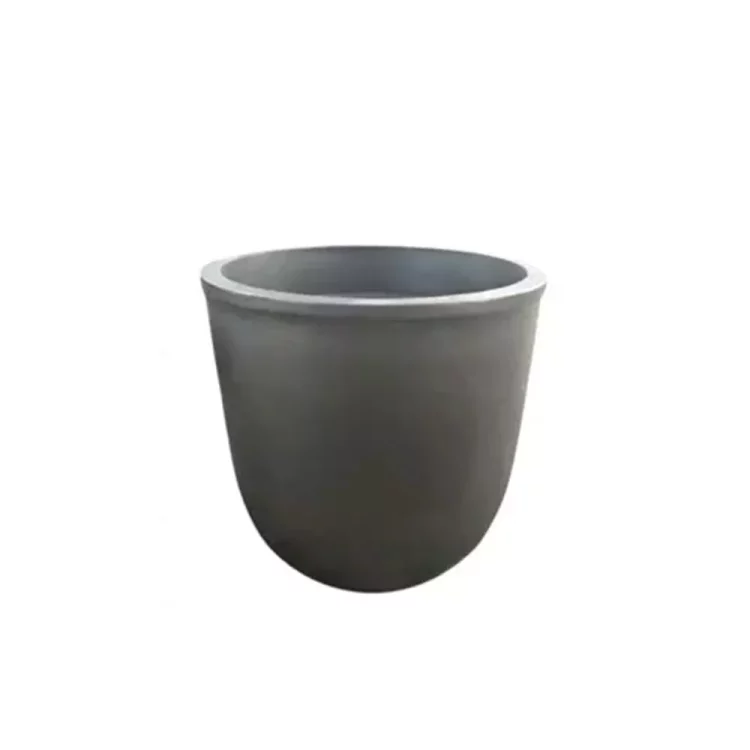
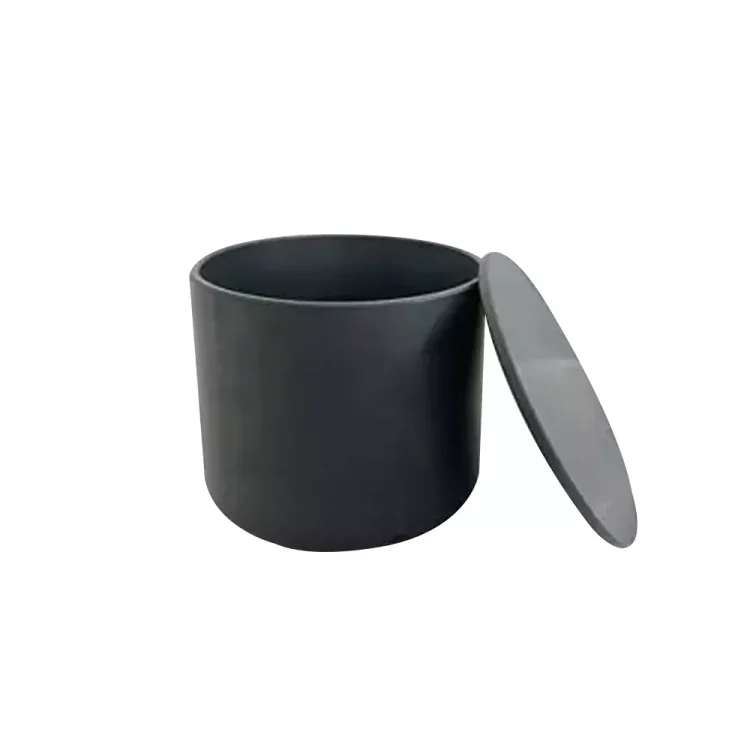
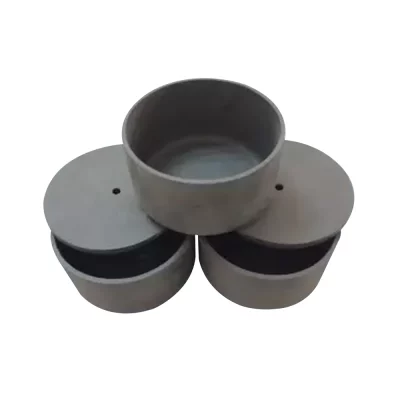
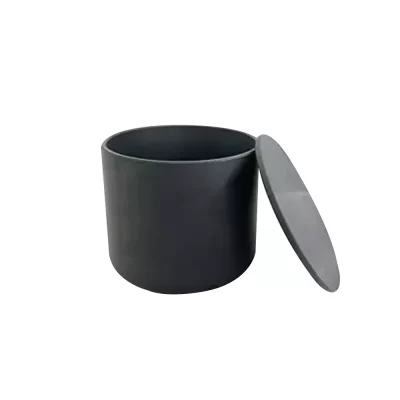
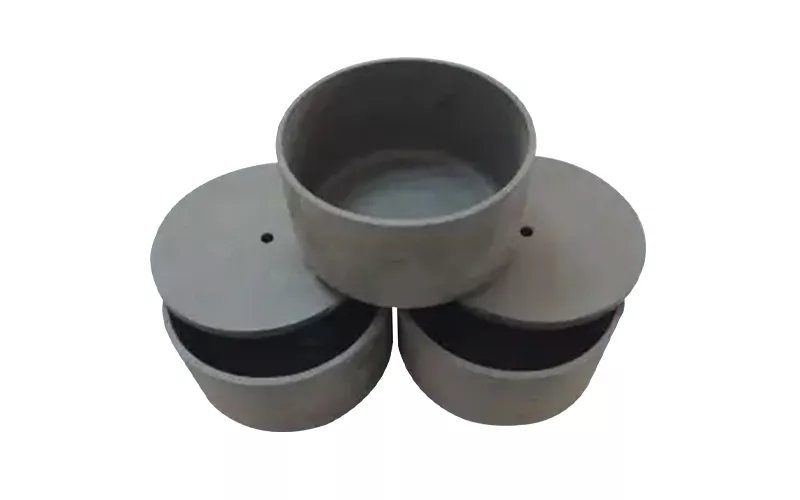
GORGEOUS CERAMICS (GGS) silicon carbide crucibles are formed by isostatic pressing and pressureless sintering, and sizes can be customized according to customer needs.
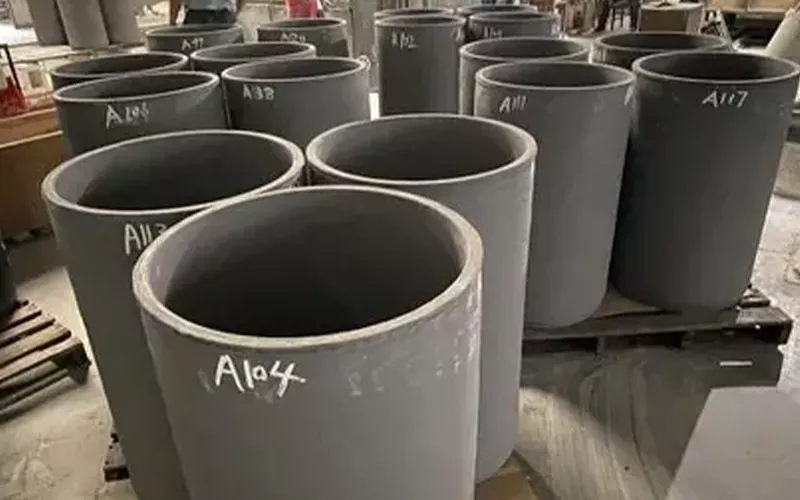
Advantages of Silicon Carbide Crucibles
Sub-micron fine-grained structure effectively reduces melt adhesion and erosion of the inner wall
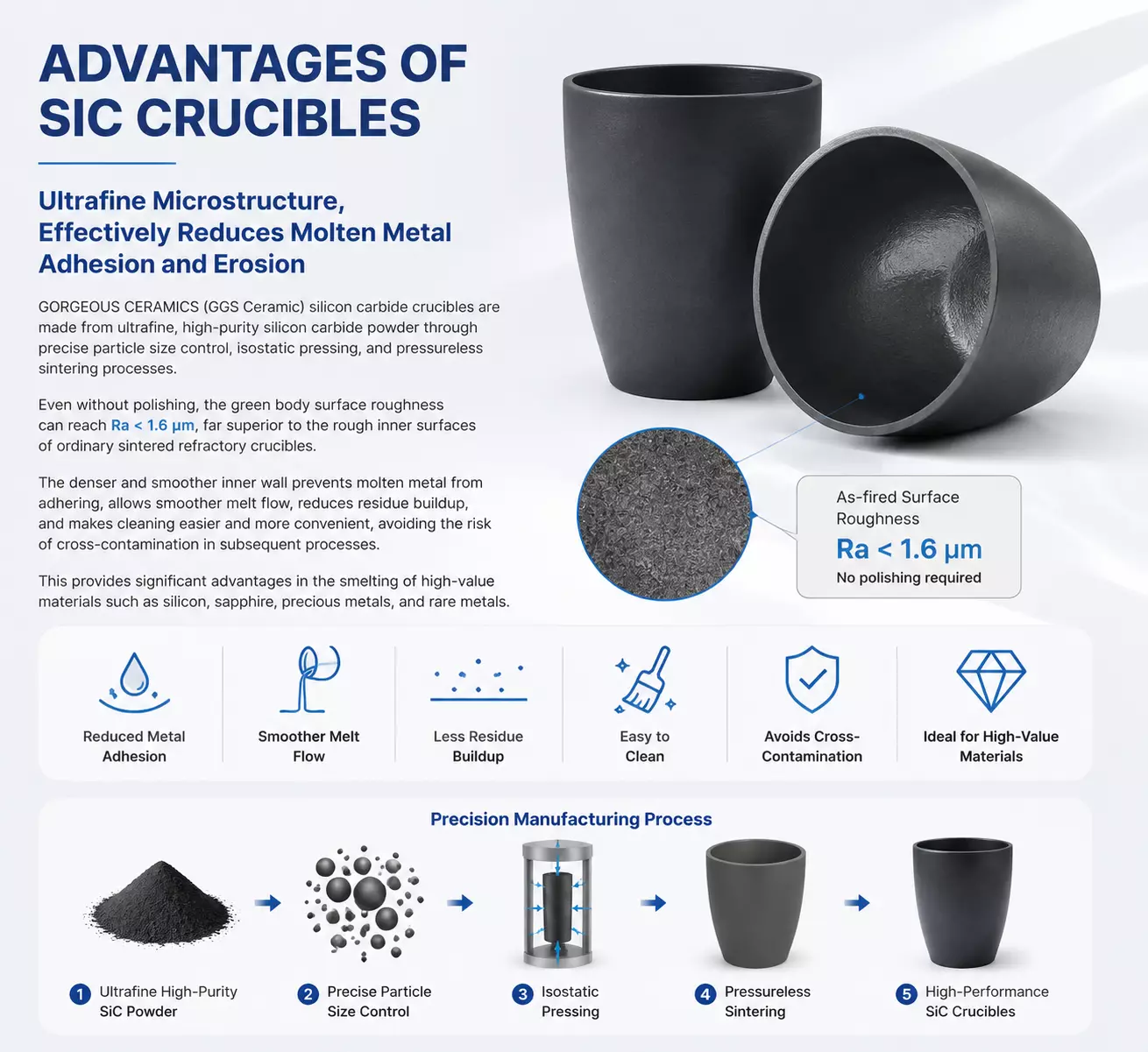
GORGEOUS CERAMICS (GGS Ceramic) manufactures its silicon carbide crucibles using high-purity, sub-micron silicon carbide powder, employing precise particle size control, isostatic pressing, and pressureless sintering processes.
Even without polishing, the surface roughness of the as-sintered product achieves Ra < 1.6 μm—far superior to the rough interior surfaces of standard sintered refractory crucibles. The denser, smoother inner walls minimize molten metal adhesion and facilitate smoother melt flow, thereby reducing residue buildup; this makes post-use cleaning quick and easy while mitigating the risk of cross-contamination in subsequent processes. These crucibles offer significant advantages for melting high-value materials, such as silicon feedstock, sapphire materials, precious metals, and rare metals.
SiC purity >99% ensures high-purity melting and minimizes the risk of contaminating your materials
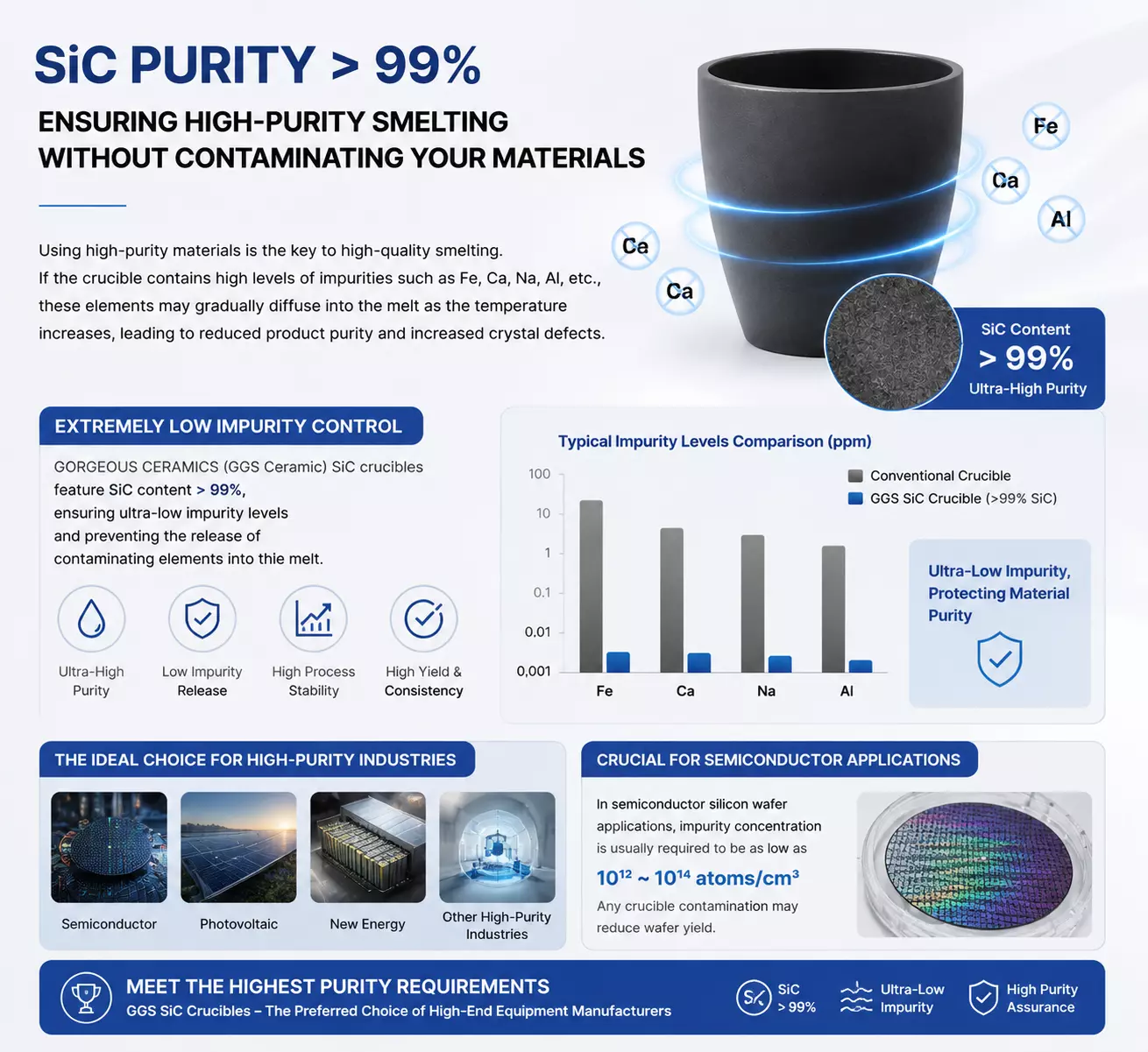
The use of high-purity materials for crucibles is crucial for ensuring high-quality melting processes. If a crucible contains significant impurities—such as Fe, Ca, Na, or Al—these elements can readily diffuse into the melt as temperatures rise, compromising product purity and increasing crystal defects.
GORGEOUS CERAMICS (GGS Ceramic) offers silicon carbide products with an SiC content exceeding 99%. This ensures exceptionally low impurity levels and prevents the release of contaminants into the melt, making them the preferred choice for high-purity industrial applications in sectors such as semiconductors, photovoltaics, and new energy. For instance, semiconductor silicon wafer applications typically require impurity concentrations in the range of 10¹² to 10¹⁴ atoms/cm³; any contamination from the crucible could reduce wafer yield. Our silicon carbide crucibles meet these stringent requirements, making them the top choice for high-end equipment manufacturers.
With a maximum temperature resistance of 1950°C, it meets your extreme high-temperature process requirements
Prolonged operation at ultra-high temperatures often leads to issues such as material softening, oxidation, cracking, and deformation, necessitating frequent replacements. GORGEOUS CERAMICS (GGS Ceramic) silicon carbide crucibles offer exceptional high-temperature performance, maintaining stable dimensions, strength, thermal conductivity, and chemical resistance during long-term high-temperature use. Our silicon carbide crucibles are suitable for continuous operation at 1,700°C in air, and can withstand extreme temperatures of up to 1,950°C in protective atmospheres such as nitrogen or argon.
Excellent thermal shock resistance, capable of withstanding repeated thermal cycling
Crucibles must withstand repeated thermal cycling; many develop cracks during rapid heating and cooling due to excessive thermal stress. Silicon carbide, however, possesses high thermal conductivity (140 W/m·K) and a low coefficient of thermal expansion (4×10⁻⁶/K—only half that of alumina). The combined effect of these properties allows for rapid equalization of temperature differences; the material boasts a critical thermal shock temperature difference (ΔT ≥ 400°C–500°C) and can withstand thousands of rapid thermal cycles.
Excellent corrosion resistance, capable of withstanding a wide range of complex smelting media
Many high-temperature processes require not only high-temperature resistance but also excellent corrosion resistance—specifically against acids and alkalis, molten salts, and metallic corrosion. Silicon carbide possesses exceptional chemical stability, maintaining superior corrosion resistance when exposed to most molten metals, inorganic salts, non-oxidizing media, and high-temperature atmospheres.
Silicon carbide crucibles from GORGEOUS CERAMICS (GGS Ceramic) are primarily used for melting alloys such as aluminum and copper, refining precious metals, and sintering materials like rare earths and ceramic powders.
High mechanical strength and dimensional stability ensure resistance to deformation during long-term use
Conventional crucibles are prone to softening, deformation, or even collapse under prolonged high-temperature loads, leading to melt leakage and potential product loss.
Silicon carbide possesses a high modulus of elasticity and excellent high-temperature mechanical strength, maintaining dimensional stability and load-bearing capacity even near its maximum operating temperature. In applications involving large crucibles or substantial melt loads, stable geometric dimensions facilitate automated loading/unloading and precise positioning, thereby enhancing operational safety.
常问问题
1. What are the main advantages of GORGEOUS CERAMICS (GGS Ceramic) silicon carbide crucibles?
Our silicon carbide crucibles offer excellent high-temperature resistance, thermal shock resistance, and corrosion resistance. Compared to graphite or clay-graphite crucibles, they provide more stable performance and a longer service life.
2. Which metals or materials can be melted in silicon carbide crucibles?
Aluminum and its alloys, copper and its alloys, zinc, and other non-ferrous metals.
3. What is the maximum operating temperature for GORGEOUS CERAMICS (GGS Ceramic) silicon carbide crucibles?
Our crucibles can withstand temperatures up to 1600°C (depending on the material grade and operating environment), making them suitable for melting most non-ferrous metals and for high-temperature reactions.
4. How is the thermal shock resistance of the silicon carbide crucibles?
Our silicon carbide crucibles possess excellent thermal shock resistance. When used correctly according to instructions, they do not crack during rapid heating and cooling cycles.
5. What advantages do silicon carbide crucibles have over graphite or clay crucibles?
Compared to graphite or clay crucibles, our silicon carbide crucibles offer superior oxidation resistance, greater high-temperature stability, a longer service life, and lower total long-term costs.
6. Who are some ceramic crucible manufacturers in China?
GORGEOUS CERAMICS (GGS Ceramic): A manufacturer specializing in the custom precision finishing of advanced ceramics; offers ceramic crucibles made from various materials such as alumina, zirconia, silicon carbide, and silicon nitride, with support for OEM/ODM customization.
Qingdao Dengxun: Primarily involved with quartz, ceramic, and graphite crucibles.
Tangshan Ceramic Group: Engaged in the production of various specialty and industrial ceramics.
Ningxia Kede: Focuses on the R&D and production of silicon carbide ceramics, structural ceramics, and high-temperature ceramic components.