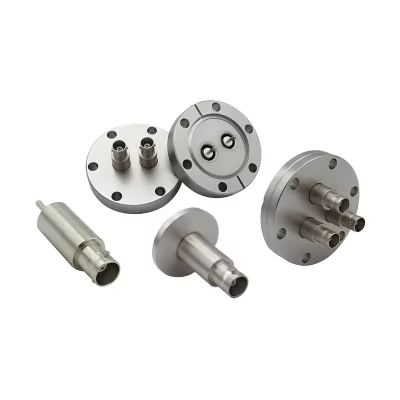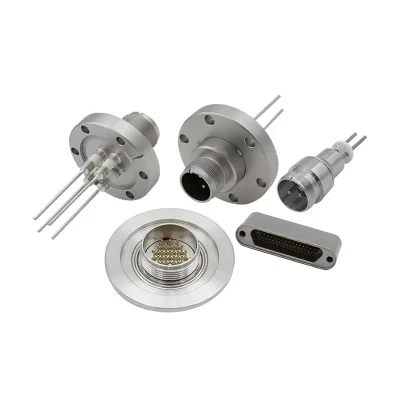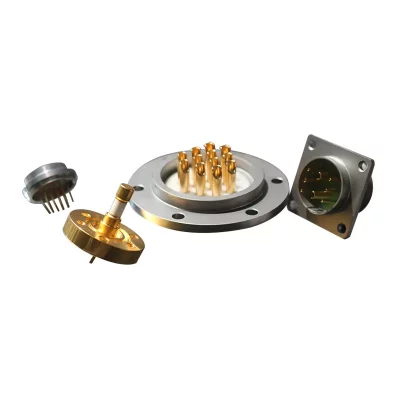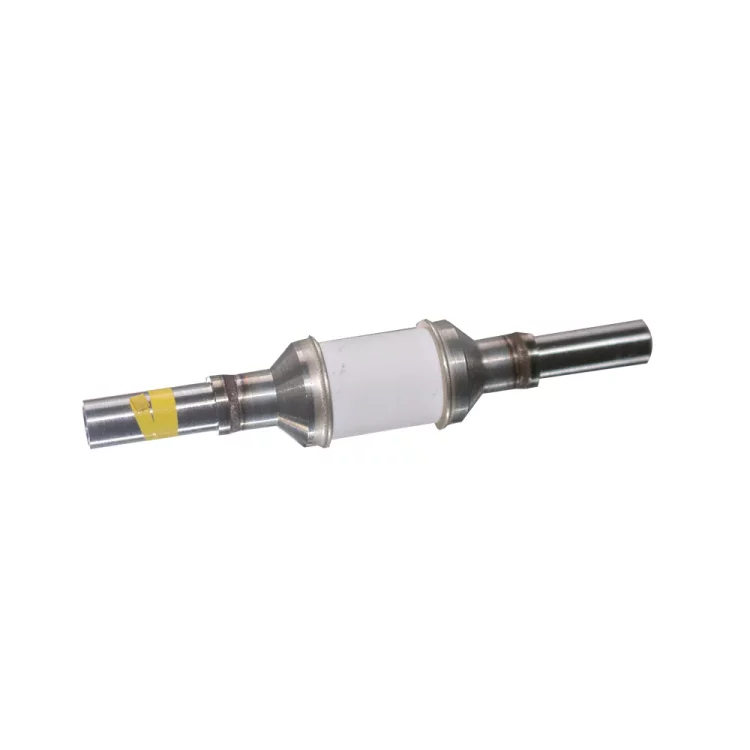
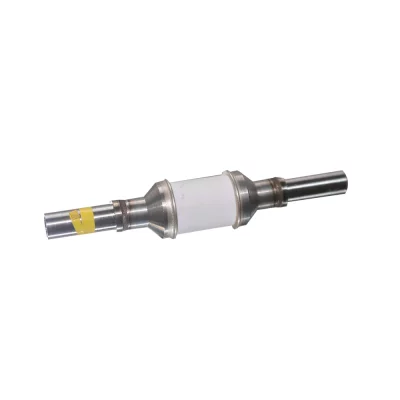
GORGEOUS CERAMICS (GGS Ceramic) utilizes advanced ceramic and metal sealing technology to custom-produce medical X-ray assemblies—including anodes, cathodes, complete X-ray tubes, and absorber assemblies.
We combine high-purity alumina (95/99%) with various metal components and achieve sealing through molybdenum-manganese metallization and brazing processes.
Product Advantages
1. Stable high-voltage insulation layer
X-ray tubes require long-term operation in high-voltage environments. The ceramic insulation used must not only withstand high voltage but also maintain dimensional stability and low dielectric loss.
GORGEOUS CERAMICS (GGS Ceramic) uses 95/99% alumina ceramic for its insulation, achieving a volume resistivity of 10¹⁴ Ω·cm and a dielectric strength of 8.3kV/mm. Furthermore, the ceramic surface is smooth (Ra≤0.2μm), flawless, and eliminates the risk of surface discharge.
We will recommend different voltage levels and match the purity of the insulating ceramic to your specific application, ensuring excellent insulation performance while maintaining high mechanical strength and cost-effectiveness.
Alumina Insulation Layer Parameter Table
|
范围 |
numerical values |
|
|
纯度 |
95% |
99% |
|
Volume resistivity at 20°C (Ω·cm) |
10¹⁴ |
10¹⁴ |
|
Dielectric strength (kV/mm) |
7 |
8.3 |
2. Excellent thermal conductivity
X-ray tubes continuously generate a large amount of heat during operation. If this heat cannot be released quickly, it may shorten the lifespan of the equipment. Our X-ray tubes adopt a ceramic-metal brazed structure, and the insulation layer has a thermal conductivity of up to 22.45 W/m·K, which can quickly conduct temperature, reduce local heat accumulation, and effectively extend the service life.
3.Mo/Mn metallization process
Because ceramic materials cannot be directly welded to metals, the quality of the metallization layer directly determines the reliability of the brazing seal of the entire X-ray tube.
GORGEOUS CERAMICS (GGS Ceramic) uses a mature Mo/Mn metallization process to form a uniform and dense metal layer on the ceramic surface, providing a stable bonding foundation for subsequent vacuum brazing.
GGS Ceramic process parameters
|
范围 |
numerical values |
|
Thickness of metallization layer |
15-25μm |
|
process |
Molybdenum/manganese metallization |
4.Multiple coating options available
Depending on your application requirements, GORGEOUS CERAMICS (GGS Ceramic) allows you to perform further treatments on the metallized surface, such as nickel plating, copper plating, and gold plating (thickness 8-10μm), to improve weldability, conductivity, and corrosion resistance, giving you stronger quality and better oxidation resistance.
Electroplating parameters
|
范围 |
numerical values |
|
Coating thickness |
8-10μm |
|
Optional coatings |
Ni / Cu / Au |
5.High coaxiality machining
The coaxiality of the internal components of an X-ray tube directly affects the electron beam path and assembly accuracy. GORGEOUS CERAMICS (GGS Ceramic)’ precision machining processes ensure excellent coaxiality (≤0.02 mm) and dimensional consistency (tolerance ±0.01 mm) between the ceramic insulation layer, metal sleeve, and conductor of the X-ray tube, improving your assembly accuracy and reducing potential installation errors.
Applications of X-ray tubes
Used in Medical CT Scanners
The primary application of high-power rotating anode X-ray tubes is in medical CT systems. High-purity alumina ceramic provides reliable high-voltage insulation, ensuring stable operation during continuous high-speed scanning.
Applications: Hospital CT scanners, industrial CT inspection systems, cone-beam CT, microfocus CT, etc.
For Digital X-ray Imaging
Digital radiography (DR) systems require frequent, high-speed exposures, demanding a stable vacuum environment and excellent heat resistance from the X-ray tube. Using highly reliable ceramic components reduces seal failure due to thermal cycling and extends equipment lifespan.
Applications: Hospital digital imaging systems, mobile DR devices, emergency imaging systems, veterinary DR, etc.
Used for mammography
X-ray tubes are highly reliable components that enable high-precision, low-dose imaging while meeting safety standards.
Interventional Radiology Systems (C-Arm / DSA)
Interventional equipment typically requires prolonged continuous exposure, during which the X-ray tube continuously generates a large amount of heat. The ceramic-metal sealing assembly possesses exceptional thermal cycling resistance and vacuum sealing capabilities, sufficient to meet the demands of continuous high-power operation.
常问问题
1. What is the lifespan of an X-ray tube?
X-ray tubes are consumable components and do not actually have a fixed lifespan. Their lifespan is affected by various factors, including operating voltage, power, heat dissipation, switching frequency, vacuum quality, and routine maintenance.
Under normal circumstances, GORGEOUS CERAMICS (GGS Ceramic) X-ray tubes can operate stably for 4,000–5,000 hours. With proper heat dissipation and maintenance, their lifespan can be extended.
2. Can the X-ray tube size and shape be customized?
Yes, GORGEOUS CERAMICS (GGS Ceramic) offers customization services. Please contact our application engineers to discuss your specific needs. With decades of experience, we will provide you with the most suitable customized solution.
3. Which are the leading ceramic brazing component suppliers in China?
GORGEOUS CERAMICS (GGS Ceramic) – Focuses on advanced ceramic precision machining, metallization, and ceramic-metal brazing, supporting one-stop customized services.
MEETCRA – Provides metallized ceramics and X-ray tube ceramic components, covering medical and industrial inspection applications.
Guoceramic – Focuses on ceramic brazing components for electronic packaging, vacuum electronic devices, and power devices.
4.95% and 99% alumina ceramics: How to choose?
Both 95% and 99% alumina ceramics can be used in X-ray tubes. Below is a comparison table of the two purities.
|
95% alumina |
99% alumina |
|
Low cost |
Slightly higher cost |
|
Good processability |
It has higher insulation performance, mechanical strength, and lower dielectric loss. |
|
Suitable for general industrial equipment |
More suitable for high-voltage and more demanding applications, 99% alumina ceramic is highly recommended for long-term operation in high-voltage, high-vacuum environments. |