Standard material-made bearings often fail in harsh chemical, advanced engineering, and fast-moving industries. Rather, silicon carbide bearings perform exceptionally well in these fields.
Let’s explore the applications of silicon carbide bearings and shafts in high-speed and high-wear industries.
Why Are Silicon Carbide Bearings and Shafts Suitable for High-Speed, Wear-Intensive Applications?
You will find that silicon carbide bearings and shafts are a promising option in high-speed and wear-intensive industries. They offer you potential for outstanding performance in chemical processing, aerospace, defense, automotive, energy, and industrial machinery manufacturing.
탄화규소 is a compound material of silicon and carbon. It is a high-performance material for bearing and shaft manufacturing due to its unique properties.
Here are the main reasons why you will find the SiC bearings and shafts in different modern industries:
1.Unconventional Hardness and Wear Resistance: Silicon carbide has a hardness of near 9.2-9.5 in the Mohs scale, which is second-highest after diamond. This extreme hardness results in high wear resistance. You can expect silicon carbide bearings and shafts last five times longer than steel bearings.
탄화규소 minimizes the surface wear due to its low friction coefficient. Its strong resistance to external substances improves its surface tolerance, providing you with the maximum uptime.
2.Low Density and Light Weight: Silicon carbide is a low-density material compared to metal, which makes your equipment light in weight. It has a density value of 3.16-3.22 g/cm3 with a 40.10 g/mol molecular mass. So you can use silicon carbide as a lighter material than most of the metals.
3.High-temperature resistance and Low Thermal Expansion Coefficient: The maximum operating temperature of silicon carbide is 1600 degrees Celsius, which is much higher than that of steel. SiC can tolerate high temperatures to assist you in semiconductor manufacturing, automotive, industrial equipment, and power electronics.
On the other hand, the thermal expansion coefficient of silicon carbide is 4.4 × 10^-6/℃ over the 25 to 1400 ℃ temperature range.
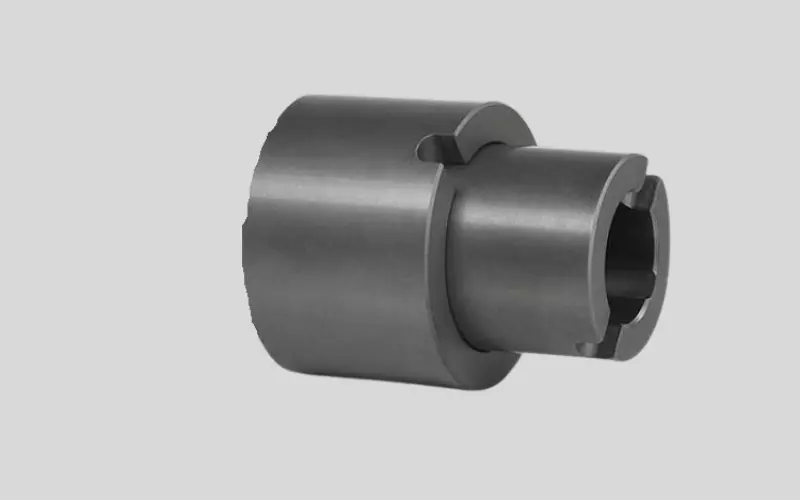
4.High Thermal Conductivity: Silicon carbide is more temperature conductive than other ceramic refractory materials. You get nearly 4 times higher conductivity from SiC than corundum.
Hence, it is an exceptional material you can use in high-power electronics, high-temperature industrial components, and the aerospace industry.
5.Corrosion Resistance: 탄화규소 is highly resistant to corrosion due to its chemical inertness and thermal shock resistance. It allows you to sustain operations as a mechanical seal, pump components, heat exchanger tubes, and valve trims.
Comparison Between Silicon Carbide and Traditional Bearings:
|
매개변수 |
SiC Bearings |
강철 베어링 |
Alumina Ceramic Bearings |
|
재료 |
Advanced engineering ceramic material |
Conventional alloyed metal |
산화물 세라믹 재료 |
|
경도 |
SiC is an extremely hard material, similar to diamond |
Steel is a moderately to highly hard material |
Alumina is a very hard material. |
|
내마모성 |
Silicon carbide bearings are wear-resistant and perform well in abrasive environments. |
Steel bearings are moderately resistant to wear. |
Alumina bearings have less wear resistance compared to the SiC, but are higher than others. |
|
내식성 |
The SiC bearings are corrosion proof at harsh chemicals, acids, or alkalis. |
Steels are prone to corrosion and require extra coatings for corrosion-proofness. |
Alumina is an excellent corrosion-proof material in most chemical environments. |
|
열팽창 |
Very low |
더 높은 |
낮은 |
|
Temperature Tolerance |
SiC bearings are excellently stable at extreme temperatures. |
Steel bearings have limited temperature tolerance. |
Alumina bearings are good at high temperatures but have lower thermal conductivity than SiC |
|
Frictions |
You can benefit from very low friction at high speed application and need limited lubrication. |
Steel bearings need lubrication to avoid friction. |
Alumina bearings have low friction but are not ideal for dry and high speed application. |
|
속도 |
SiC bearings are excellent for high-speed rotating systems |
These bearings also have good speed with proper lubrication |
These ceramic bearings are suitable for moderate speeds. |
|
Maintenance Requirements |
낮추다 |
더 높은 |
낮은 |
|
서비스 수명 |
These bearings have the longest service life |
Comparatively shortest service life |
Medium in harsh environments |
|
Upfront Cost |
높은 |
낮은 |
중간 |
What Are The Applications of Silicon Carbide Bearings and Shafts?
You will find silicon carbide bearings and shafts in semiconductor manufacturing, industrial furnaces, aerospace components, and high-performance power electronics(EVs, inverters). They can survive even in salty seawater and are used widely in naval engineering.
1.Chemical Processing Industry: You will find wide applications of SiC components in the chemical processing industry. They can survive in tough acids and alkalis. Some key applications of silicon carbide bearings and shafts are in agitators, mixers, pumps, and reactors.
Pharmaceutical and chemical production machinery also relies on the SiC bearings and shafts.
2.Pump and Motor components: 탄화규소 is a popular material for pumps and motor components, especially for bearings and shafts. This bearing can operate without external or additional lubrication, which is essential when you are handling corrosive and abrasive lubricants.
You will find silicon carbide bearings and bushes in:
-
magnetic drive pumps,
-
submersible pumps,
-
centrifugal pumps,
-
automotive water pumps,
-
and high viscosity pumps.
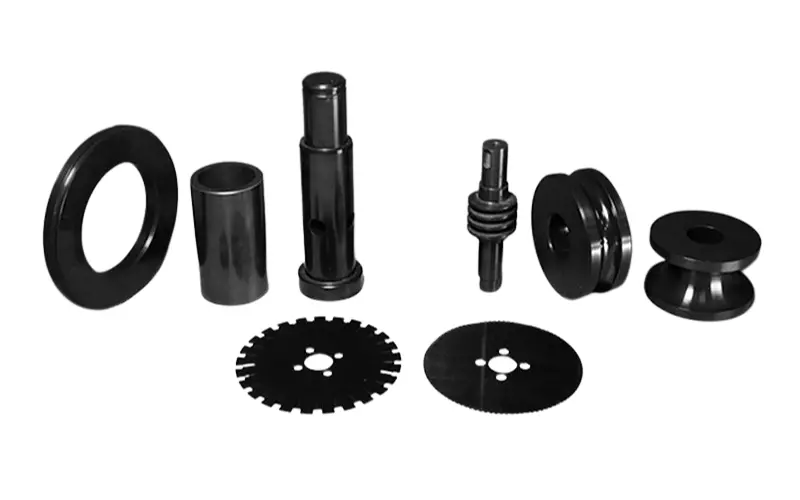
3.High Temperature Industrial Applications: Silicon carbide is thermally stable. The mechanical properties of the bearings remain unchanged in extremely high temperatures.
Hence, you can choose SiC bearings for extreme hot applications such as furnaces, kilns, aerospace, chemical processing, and pump components.
4.Semiconductor and Electronic Industry: You will find SiC-made bearings and shafts in vacuum chamber motion systems and chemical mechanical polishing (CMP) equipment.
Specialized Equipment and Machinery Manufacturing: Various specialized equipment manufacturing depends on the use of SiC carbide bearings and shafts. You will see their applications in different marine, oil, and gas fields machineries.
자주 묻는 질문:
Is silicon carbide stronger than steel?
Silicon carbide is stronger than conventional steel. It has a Mohs hardness scale value of 9.5, which is the second-highest after diamond.
What factories primarily engage in the processing and production of silicon carbide ceramic shafts and bearings?
-
Sanhuan Ceramics
-
Sinoma Advanced Nitrides Ceramics Co., Ltd.
Which factory in China can provide high-quality, cost-effective processing of silicon carbide ceramic shafts and bearings?
-
Sinoma Advanced Nitrides Ceramics Co., Ltd.
Which company in China is more reliable in processing silicon carbide ceramic shafts and bearings?
-
Jiangsu Sanz New Materials Technology Co., Ltd.
What are the different types of silicon carbide bearings used in industry?
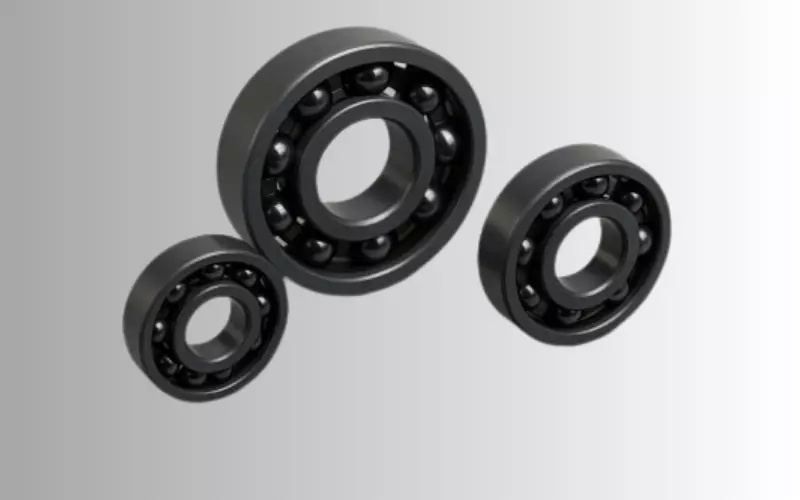
There are three common types of silicon carbide bearings usually used in different industries, such as:
-
Silicon carbide ball bearings
-
Silicon carbide thrust bearings
-
Silicon carbide sliding bearings
What are high-speed bearings?
High-speed bearings are designed specifically for high-speed operation. High-speed machinery such as turbo compressors, machining spindles, turbo blowers, and turbines generate excessive heat and wear. They are better equipped to handle these challenges.
Which type of bearing is used for high speed applications?
Super-precision ball bearings are typically used in high-speed applications due to their ability to handle radial and axial loads.
What industry uses the most bearings?
The automotive industry uses the most bearings.
Why are shafts used?
Shafts are basic mechanical parts used to carry power, torque, and motion between two parts. Thus, the shafts ensure the smooth running of a system.
결론:
Silicon carbide components are a reliable choice for you in high-speed and high-wear environments. They provide exceptional hardness, thermal stability, and corrosion resistance from aerospace to the chemical processing industry.
You can upgrade your system using 탄화규소 bearings and shafts in challenging operations.