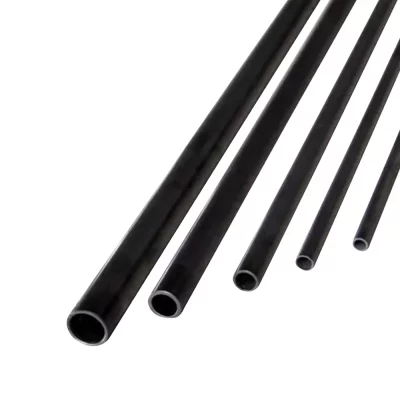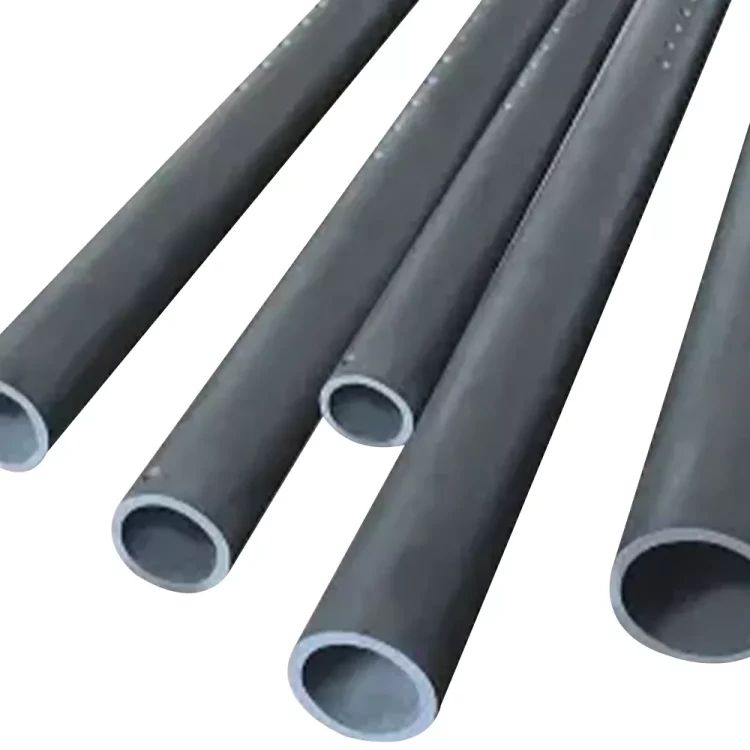
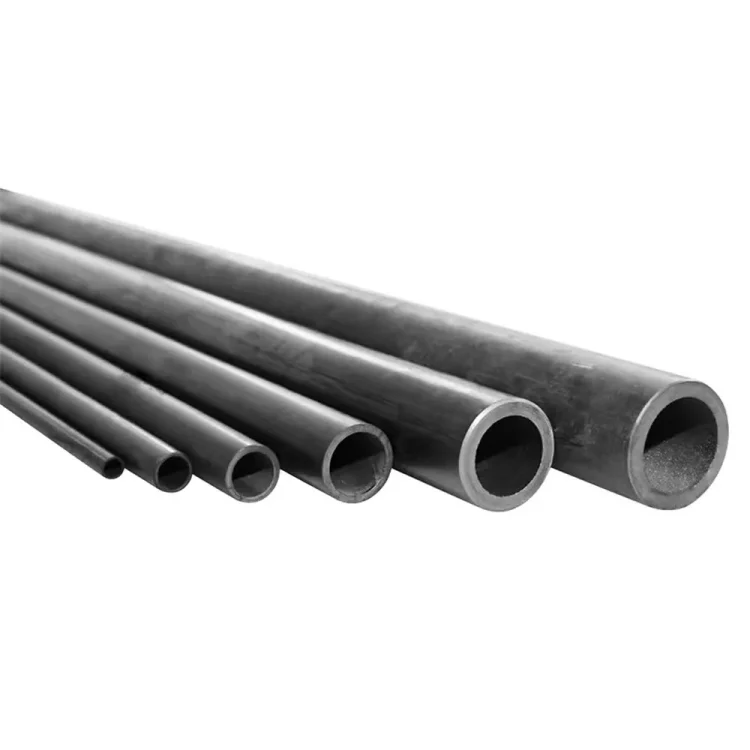
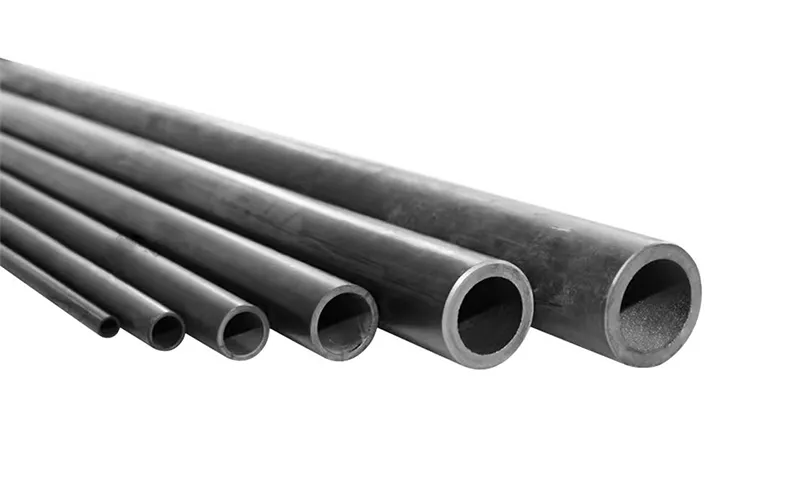
GORGEOUS CERAMICS (GGS) silicon carbide reaction tubes are made from spray-granulated silicon carbide powder, extruded, and sintered at high temperatures.
We can perform precision machining on the outer diameter and end faces according to your drawings.
Performance Advantages of Silicon Carbide Reaction Tubes
High thermal conductivity exceeding 140 W/m·K, enabling rapid heat spreading and precise temperature control
In processes such as semiconductor manufacturing, epitaxial growth, LPCVD/CVD deposition, diffusion annealing, crystal growth, and high-temperature chemical reactions, reaction tubes must withstand temperatures exceeding 1,000°C over extended periods. Furthermore, maintaining temperature uniformity across the entire reaction zone is critical, as it often determines the product yield.
Although quartz reaction tubes offer excellent corrosion resistance, their thermal conductivity is merely 1.4 W/m·K; even common alumina tubes have a thermal conductivity of only 35 W/m·K. During sustained high-temperature heating, the use of materials like quartz or alumina can lead to issues—such as localized heat accumulation in the tube walls and increased axial and radial temperature gradients—due to their limited thermal conductivity, thereby compromising the quality of the final product.
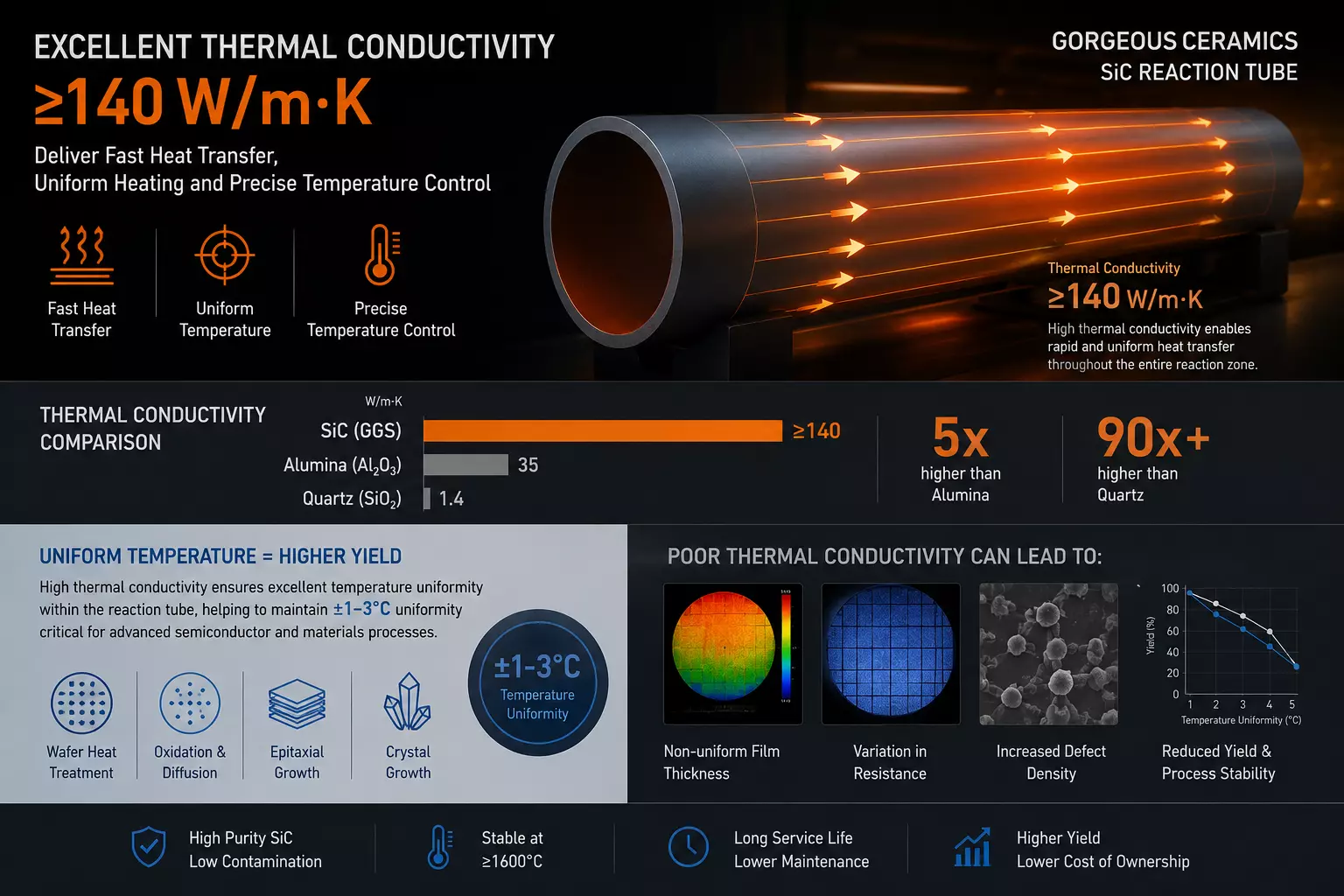
Table of thermal conductivities for various materials:
|
Bahan |
Konduktivitas termal |
|
Quartz glass |
1.4W/m·K |
|
Keramik alumina |
35W/m·K |
|
Keramik aluminium nitrida |
170-220W/m·K |
|
Keramik silikon karbida |
140W/m·K |
The silicon carbide reaction tubes from GORGEOUS CERAMICS (GGS Ceramic) feature a thermal conductivity of ≥140 W/m·K—five times that of alumina and over ninety times that of quartz—thereby significantly enhancing overall heat transfer efficiency.
This high thermal conductivity enables rapid and uniform heat distribution across the entire reaction zone, effectively minimizing localized overheating. Critical processes such as wafer heat treatment, oxidation/diffusion, and epitaxial deposition require strict temperature uniformity (typically within ±1–3°C); insufficient thermal conductivity in the reaction tube can lead to a range of issues, including variations in film thickness, fluctuations in electrical resistance, and an increased risk of crystal defects.
Resistant to HF-containing mixed acid corrosion, offering comprehensive corrosion resistance
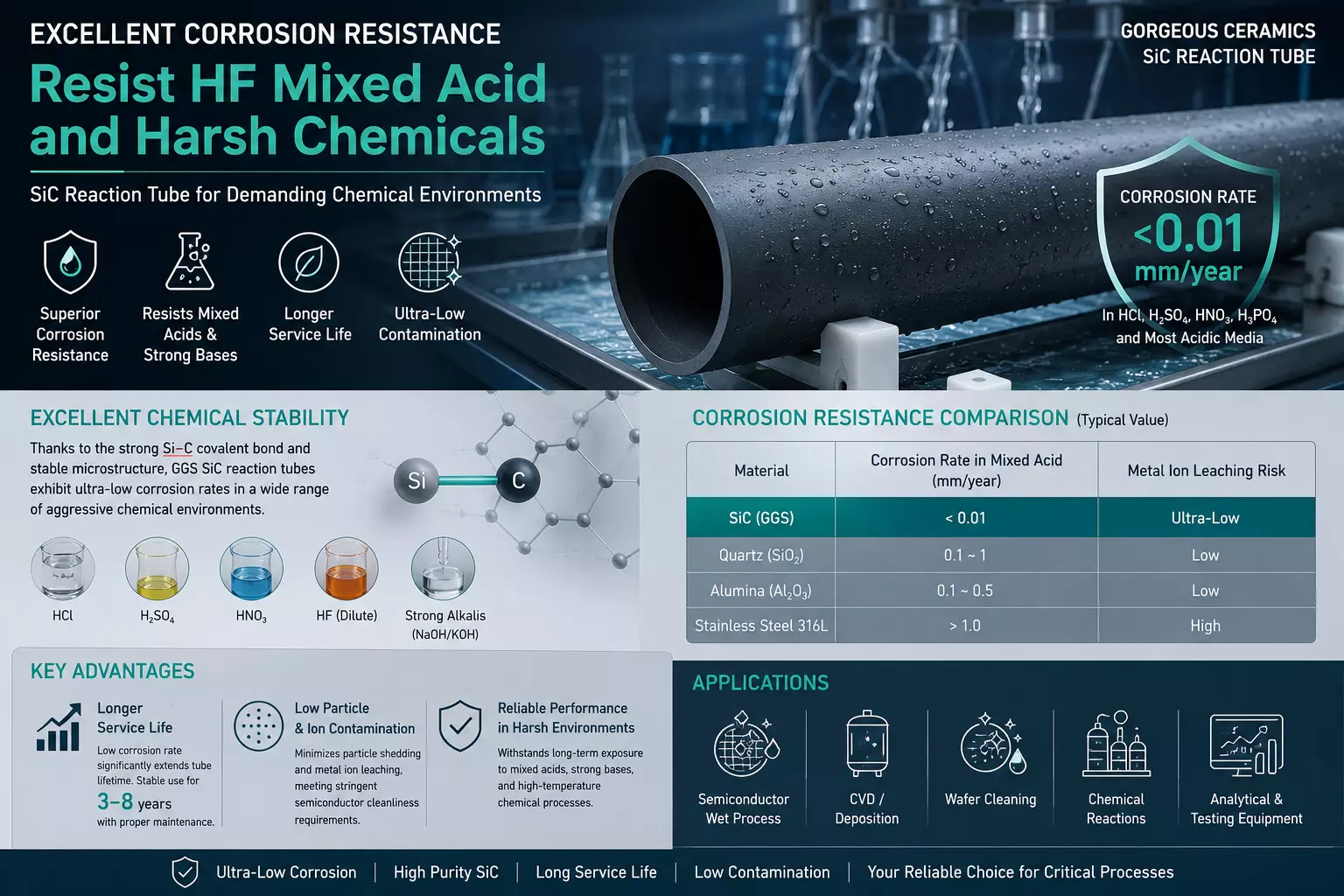
In applications such as semiconductor wet processing, chemical vapor deposition (CVD), wafer cleaning, chemical reactions, and various analytical and testing equipment, reaction tubes are frequently exposed to mixed acid systems—including hydrofluoric, hydrochloric, nitric, and sulfuric acids—as well as strong alkaline solutions. During prolonged, cyclic operation, these acidic and alkaline media continuously corrode the tube surface; if materials with poor corrosion resistance are used, the tube wall thickness may gradually decrease, and the leaching of metal ions can lead to contamination.
In contrast, the silicon carbide (SiC) reaction tubes from GORGEOUS CERAMICS (GGS Ceramic) feature a covalent bond structure that ensures extremely low chemical reactivity and exceptional surface stability. They exhibit a corrosion rate of less than 0.01 mm/year in acidic media such as hydrochloric, sulfuric, nitric, and phosphoric acids, allowing them to perform reliably even in highly corrosive environments.
Potential issues faced by various materials in corrosive media:
|
Bahan |
Potential issues |
|
Quartz glass |
It is susceptible to corrosion by HF, which reduces its service life. |
|
metal alloy |
Pitting corrosion is present, making it prone to the release of metal ions that cause contamination. |
|
Ceramics (alumina, etc.) |
Corrosion resistance decreases after prolonged use; it is inferior to silicon carbide. |
Corrosion resistance advantages of silicon carbide reaction tubes:
- Reduces material corrosion rates and effectively extends the service life of the reaction tube; with proper maintenance, it offers stable operation for over 3 to 8 years.
- Minimizes particle shedding and ionic contamination, meeting the requirements of your semiconductor clean processes.
Pressure resistance exceeding 100 bar, capable of meeting the requirements of various high-pressure reaction environments
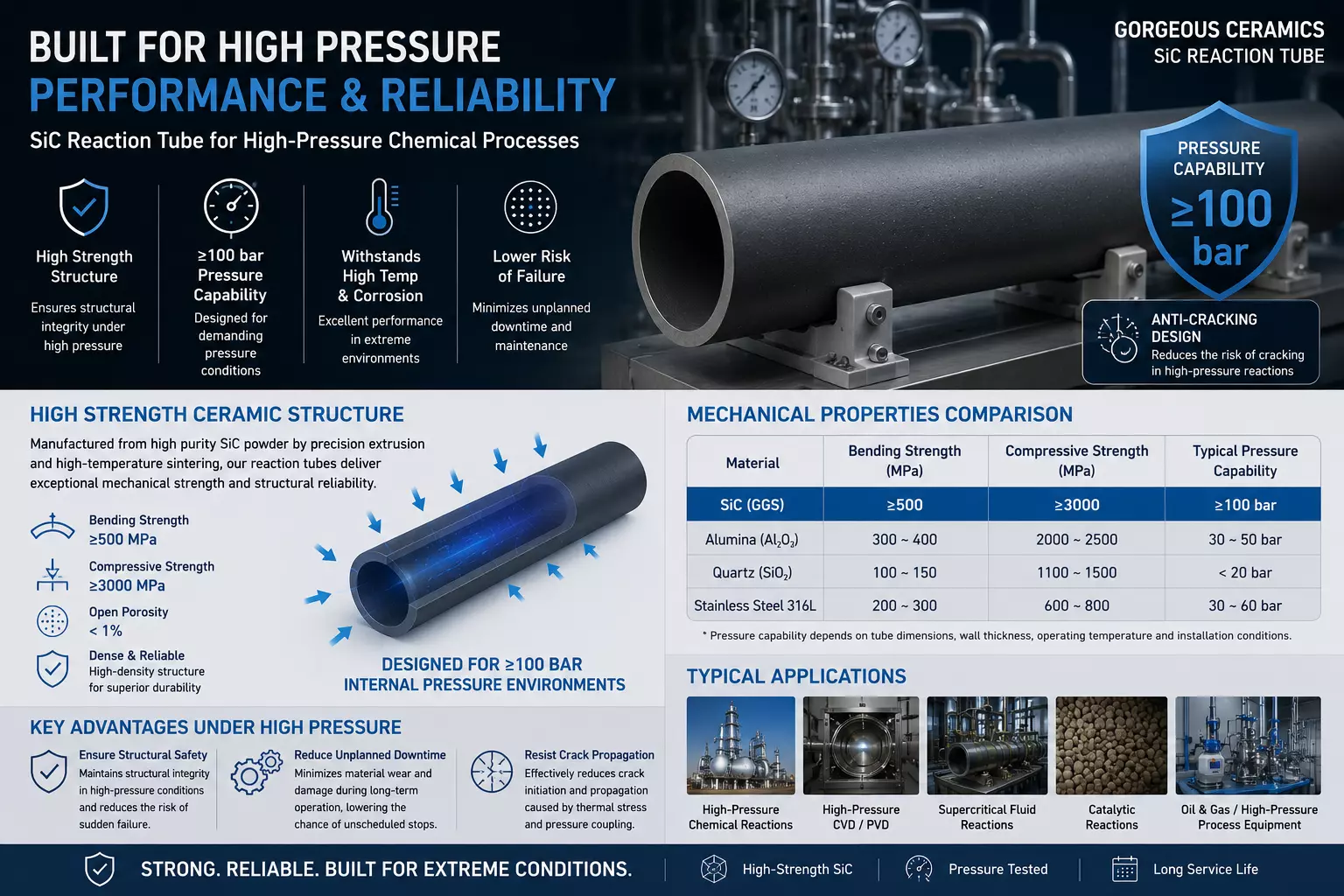
Certain industrial processes—such as high-pressure chemical reactions, high-pressure vapor deposition, and supercritical fluid reactions—subject equipment to not only high temperatures and corrosive environments but also continuous or cyclic exposure to high internal pressures. In these applications, reaction tubes lacking sufficient mechanical strength are prone to cracking due to issues such as excessive porosity or inadequate structural integrity.
GORGEOUS CERAMICS (GGS Ceramic) manufactures silicon carbide reaction tubes using high-purity SiC powder through an extrusion and high-temperature sintering process. These tubes feature a high-strength ceramic structure with a flexural strength of 500 MPa and the ability to withstand pressures of 100 bar or higher, thereby reducing the risk of cracking during high-pressure processes such as gas-liquid and catalytic reactions.
Pressure resistance advantages of silicon carbide reaction tubes:
- Ensures structural integrity under high-pressure operating conditions and reduces the risk of sudden failure.
- Minimizes unplanned downtime caused by material wear resulting from long-term operation.
- Reduces crack propagation driven by the combined effects of thermal stress and pressure.
Features high-temperature stability and withstands temperatures up to 1600°C
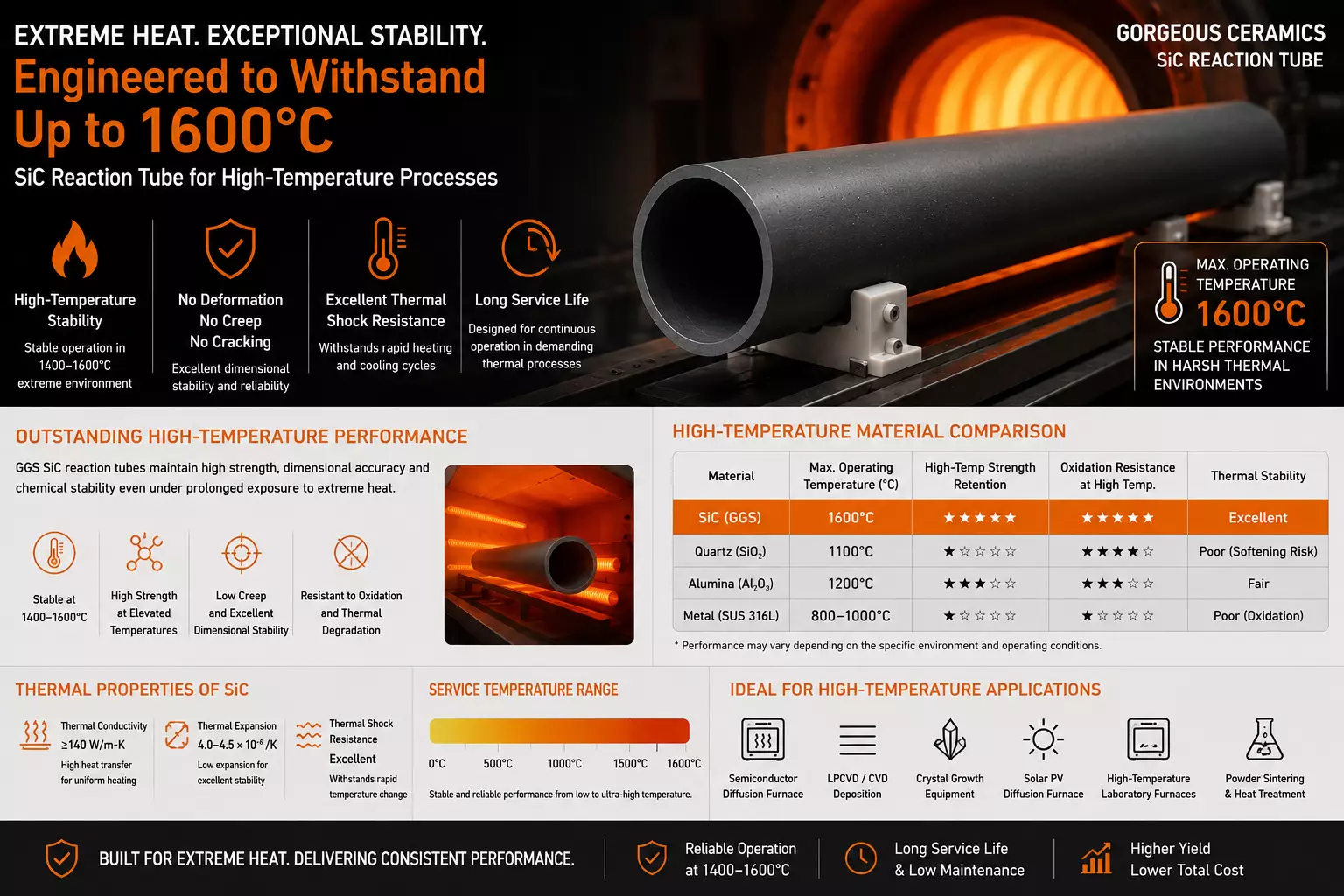
Processes such as semiconductor diffusion, LPCVD/CVD deposition, crystal growth, powder sintering, and high-temperature heat treatment require continuous operation in stable, high-temperature environments ranging from 1000°C to 1600°C.
GORGEOUS CERAMICS (GGS Ceramic) silicon carbide reaction tubes are designed for extreme thermal environments; they operate stably at temperatures between 1400°C and 1600°C without the risk of deformation, creep, or cracking. They are suitable for long-term use in equipment such as semiconductor heat treatment furnaces, photovoltaic diffusion furnaces, crystal growth systems, and high-temperature laboratory furnaces.
In comparison, quartz tubes suffer from temperature limitations and insufficient mechanical strength, while metal tubes are prone to issues such as high-temperature oxidation and corrosion.
|
Bahan |
Temperature tolerance |
|
kuarsa |
1000℃ |
|
Keramik alumina |
1400-1600℃ |
|
Nickel alloy |
1100℃ |
|
Keramik silikon karbida |
1400-1600℃ |
Semiconductor-grade, low-contamination materials that meet your clean manufacturing requirements
In industries requiring high levels of cleanliness, such as semiconductor manufacturing, material contamination control directly impacts wafer yield. Even metal contamination at the ppm level can create defect centers on the wafer surface, reducing carrier mobility, increasing the risk of leakage current, and potentially leading to chip failure.
In processes such as CVD deposition and wafer cleaning, reaction tubes are exposed to high-purity gases and corrosive media over extended periods. If a reaction tube contains mobile metal elements, ion leaching is inevitable during prolonged operation.
In contrast, the silicon carbide (SiC) reaction tubes from GORGEOUS CERAMICS (GGS Ceramic) feature a material purity exceeding 99%. Composed primarily of a structure characterized by strong Si-C covalent bonds, the material does not generate metal ions such as Fe, Ni, Cr, or Cu. Under standard process conditions, it poses a negligible risk of ion release, making it fully capable of meeting semiconductor-grade cleanliness requirements.
The spray granulation and extrusion molding process can solve various manufacturing challenges
Manufacturing large-sized silicon carbide reaction tubes presents significant challenges due to their high length-to-diameter ratios, strict wall-thickness requirements, and large dimensions; issues such as uneven density, sintering deformation, inconsistent wall thickness, and cracking are common.
GORGEOUS CERAMICS (GGS Ceramic) utilizes spray granulation technology to enhance powder flowability, resulting in more uniform ceramic forming. Compared to untreated powder, granulated powder fills the mold more evenly, thereby minimizing localized density variations.
For the forming process, we employ extrusion technology—ideal for long tubular structures—which enables rapid, continuous, and high-volume production while ensuring uniform wall thickness and high consistency. Following the forming stage, the reaction tubes undergo high-temperature sintering (exceeding 2000°C) to achieve a high-density structure and stable, superior mechanical properties.
GORGEOUS CERAMICS (GGS Ceramic) Standard Silicon Carbide Reaction Tube Specifications
|
Wall thickness (mm) |
Outer diameter ODmm |
Inner diameterIDmm |
Toleransi ±X mm |
Out of roundness |
Maximum length (mm) |
|
0.50 |
8 |
6 |
±0.1 |
≤0.2 |
1500 |
|
0.50 |
10 |
8 |
±0.1 |
≤0.2 |
1500 |
|
1.00 |
8 |
6 |
±0.1 |
≤0.2 |
2000 |
|
1.00 |
10 |
8 |
±0.2 |
≤0.2 |
2000 |
|
1.50 |
14 |
11 |
±0.3 |
≤0.3 |
4500 |
|
2.25 |
19 |
14.5 |
±0.4 |
≤0.4 |
4500 |
|
3.00 |
25 |
19 |
±0.5 |
≤0.5 |
4500 |
|
5.00 |
35 |
25 |
±0.7 |
≤0.7 |
4500 |
|
5.00 |
38 |
28 |
±0.8 |
≤0.8 |
4500 |
In addition to standard products, we also offer customization services tailored to your specific requirements.
Tanya Jawab Umum
1. In which industries can silicon carbide reaction tubes be used?
Silicon carbide reaction tubes are primarily used in industrial sectors requiring high-temperature resistance, corrosion resistance, and high-purity environments. Key application areas include: semiconductor diffusion furnaces, oxidation furnaces, and CVD equipment; photovoltaic silicon wafer heat treatment equipment; lithium battery material sintering equipment; powder metallurgy sintering furnaces; continuous chemical reaction units; high-temperature catalytic reaction systems; vacuum heat treatment equipment; and research furnaces for scientific institutions and universities.
2. Are silicon carbide reaction tubes suitable for vacuum environments?
Yes, they are. High-density silicon carbide ceramics possess low gas permeability and do not undergo significant high-temperature deformation, unlike some metallic materials. These reaction tubes can be used in vacuum heat treatment furnaces, vacuum sintering furnaces, semiconductor vacuum process equipment, vacuum material preparation systems, and more.
If your application involves ultra-high vacuum (UHV) or requires extremely low outgassing rates, the appropriate SiC material and sealing structure must be selected based on the specific vacuum level requirements.
3. What quality inspections do you perform on your silicon carbide reaction tubes?
To ensure consistent performance, GORGEOUS CERAMICS (GGS Ceramic) conducts multiple inspections after the production of each batch.
Dimensional inspections utilize equipment such as Coordinate Measuring Machines (CMM) and digital micrometers to measure parameters including outer diameter, inner diameter, wall thickness, roundness, and coaxiality.
Material property testing includes density testing (Archimedes method), thermal conductivity testing (laser flash method), flexural strength testing (ASTM C1161), and hardness testing (Vickers hardness).
Microstructural analysis is performed using Scanning Electron Microscopy (SEM) to examine grain size, sintering quality, porosity, micro-cracks, and other features.
4. Who are the leading silicon carbide ceramic manufacturers in China?
China possesses a highly mature advanced ceramics supply chain, capable of supplying advanced ceramic products to various industries, including semiconductors, photovoltaics, chemicals, and high-temperature industrial sectors.
GORGEOUS CERAMICS (GGS Ceramic): A manufacturer specializing in the custom precision machining of advanced ceramics. The company offers silicon carbide reaction tubes, protection tubes, sintering components, and various structural ceramic parts, while also supporting OEM/ODM customization. XC: Possesses extensive manufacturing experience in the fields of advanced ceramics and electronic ceramics, with products covering high-performance ceramic applications.
Shandong Tianyue Advanced Ceramics: Focuses primarily on silicon carbide (SiC) single-crystal substrate materials and holds a prominent position in the SiC industry chain.